
24/7 全天候客户支持

免费退货

当日/次日达

品质保障

开启新人专享福利: 全场免邮 | 低至 2 折 | 免费试用 30 天 JoyPlus 会员
下载 Joybuy
If you are comparing biotin hair, skin and nails supplements, a large choice of capsules, tablets, drinks and hair-care products can make selection difficult. High-strength labels may look impressive, while phrases such as “thicker hair” or “growth support” can create expectations that a product cannot necessarily meet.
A sensible purchase starts with the label rather than the front-of-pack promise. Biotin, also known as vitamin B7, contributes to the maintenance of normal hair and skin under approved nutrition claims, but a supplement is not a guaranteed solution for hair thinning, sudden shedding or brittle nails. Persistent changes should be discussed with a GP or pharmacist.
Products containing biotin 5000 mcg or biotin 10000 mcg are widely available. However, a larger number does not automatically mean a better fit for your diet or routine. The UK Nutrient Reference Value for biotin is 50 micrograms, so high-strength biotin can provide many times this amount.
Check whether you already take a multivitamin, beauty supplement or B-vitamin product. Combining several products may unnecessarily duplicate ingredients.
A biotin shampoo, conditioner or styling product is applied to the hair and scalp, whereas a supplement provides an oral source of biotin. Hair-care products may help create a fuller-looking finish, improve manageability or reduce the appearance of flatness, but they should not be treated as equivalent to dietary supplementation.
For example, a volumising shampoo can make fine hair look more lifted after washing, while a supplement is intended for nutritional support. These products address different parts of a beauty routine.
A product may be advertised as a beauty supplement but still contain ingredients that do not suit your lifestyle. Gelatine capsules are not suitable for vegans or vegetarians, and marine collagen products contain fish. Flavourings, sweeteners and additional botanical ingredients may also matter if you prefer a simpler formula.
Always compare the complete ingredient list, allergen information, dosage and warnings printed on the packaging.
Compare the amount per daily serving, not merely the number printed in the product name. A 2,500 mcg capsule may be taken once daily, while a 10,000 mcg product may require two tablets per day. This affects how long the pack lasts and the total amount consumed.
For adults considering high-strength biotin, follow the stated dose and do not stack multiple high-dose products without professional advice. Biotin can interfere with some blood test results, so tell your doctor, nurse or laboratory technician that you take it before a blood test.
Some hair, skin and nails vitamins contain only D-biotin, while others combine biotin with zinc, selenium, vitamin C, collagen or hyaluronic acid.
Look for clearly stated quantities rather than vague “complex” or “blend” descriptions.
Capsules are convenient for once-daily routines, while tablets may offer a larger supply or multi-ingredient formulation. Effervescent tablets dissolve in water and can be useful if you prefer a drink format.
For external products, check whether the formula suits your hair type. Sulphate-free surfactants, conditioning agents, fragrance and protein ingredients can affect how a shampoo or conditioner feels on your hair. Patch testing a new topical product and following its directions can help reduce avoidable irritation.
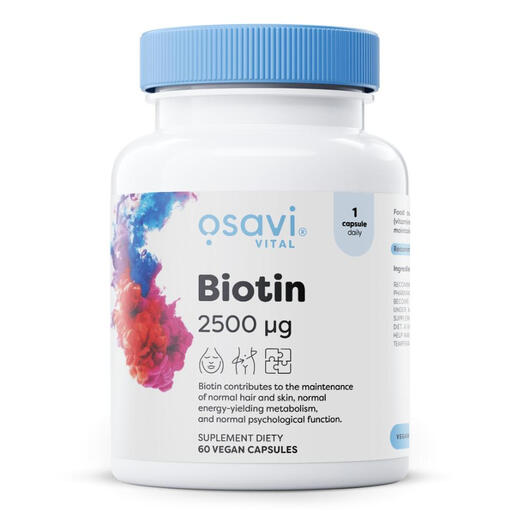
Why This Fits Their Persona: A once-daily vegan capsule with a 60-capsule supply suits shoppers starting a straightforward beauty-support routine without choosing a multi-ingredient formula.
The 2,500 mcg amount is clearly stated per capsule, and the formula lists D-biotin, inulin and a vegan capsule shell rather than hiding quantities in a proprietary blend.
Vegan, gluten-free, lactose-free and soya-free formula; one capsule daily.
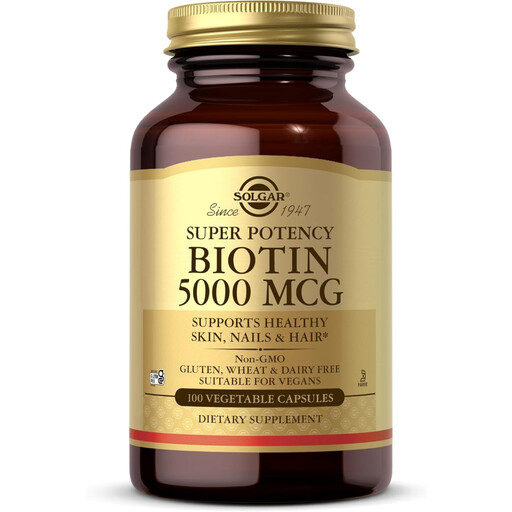
Why This Fits Their Persona: Suitable for adults who want a clearly defined 5,000 mcg serving and a larger 100-capsule pack for a consistent routine.
The label specifies one vegetable capsule per day and identifies the biotin quantity, helping you compare actual serving strength rather than relying on promotional wording.
Vegetable capsule format; 100 capsules with a simple biotin-led ingredient list.
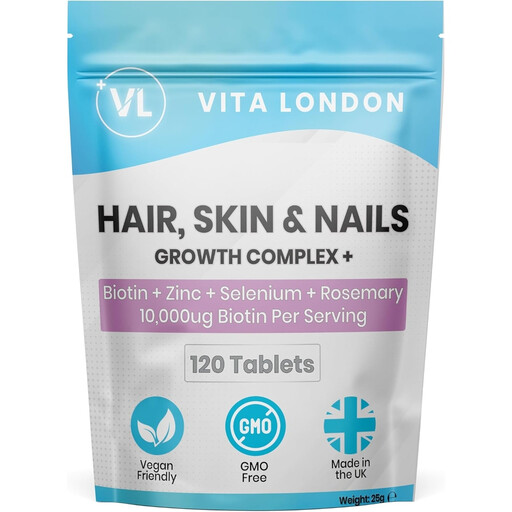
Why This Fits Their Persona: Designed for adults specifically comparing high-strength biotin with added zinc, selenium and rosemary extract in a two-tablet daily serving.
The serving size is stated as two tablets, with separate quantities for biotin, zinc and selenium. This makes the higher-strength formula easier to assess and avoid duplicating with other supplements.
Vegan formula; 120 tablets and a stated two-month supply at the recommended serving.
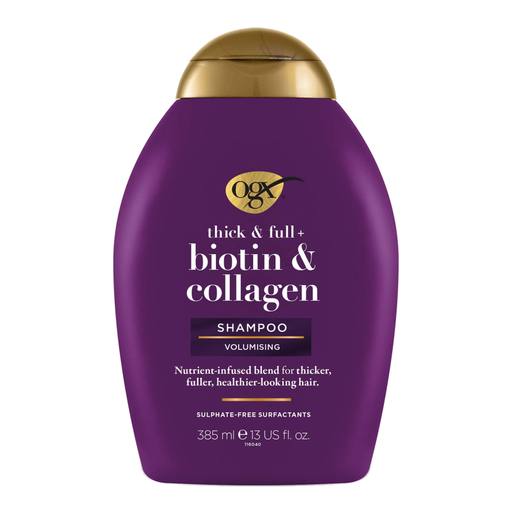
Why This Fits Their Persona: A practical choice for people seeking a fuller-looking finish for fine or flat hair as part of their regular wash routine.
It is clearly an external-use shampoo, so its purpose is not confused with oral biotin supplements. The formula lists biotin, collagen and hydrolysed wheat protein.
385 ml bottle; sulphate-free surfactant system and bergamot, jasmine and vanilla fragrance.
We have compiled a complete, real-time list of products that fully satisfy these strict selection criteria and UK safety regulations.
Many products are designed for one capsule or tablet daily, but suitability depends on the strength, other supplements you take and your personal circumstances. Follow the product label, do not exceed the stated dose and seek advice if you are pregnant, breastfeeding, taking medication or under medical supervision.
Divide the number of capsules or tablets by the recommended daily serving. A 100-capsule product taken once daily lasts 100 days, while a 120-tablet product requiring two tablets daily lasts 60 days. This is a more useful cost comparison than the pack price alone.
Yes. High-dose biotin may interfere with some laboratory test results. Tell your healthcare professional or testing provider that you use biotin, particularly before planned blood tests. Do not change prescribed treatment without medical advice.