
24/7 Customer Support

Free returns

Same-day & Next-day Delivery

Quality Guaranteed

Unlock Your Welcome Offers: FREE Delivery | Up to 80% OFF | Free 30-day JoyPlus trial
Download the APP
By Joybuy Product Recommendation Officer
Bladeless fans can offer a practical alternative to traditional fan designs, particularly in homes with children, pets or limited floor space. However, the term “bladeless” does not automatically tell you whether a product will provide suitable airflow, remain quiet at night or cost little to run.
The right choice depends on where you will use it, how often you need to recharge it and whether you want cooling only or year-round temperature control. This guide explains the main buying pitfalls, the specifications worth checking and our top recommendations for different households.
A portable neck fan, wearable neck fan or compact USB fan is designed for personal airflow rather than cooling an entire room. It may help you feel more comfortable at a desk, on a walk or while travelling, but it will not replace a floor-standing tower fan for distributing air across a bedroom or lounge.
Before buying, check the product’s intended coverage and airflow information. A small rechargeable fan is convenient because it can run without a mains cable, while a tower fan is more suitable for shared spaces.
Noise descriptions can be difficult to compare when one listing provides a decibel figure and another simply uses the word “quiet”. For bedrooms and home offices, look for a stated dB or dBA rating, a sleep mode and several lower speed settings.
Remember that the highest airflow setting will usually produce more noise than the lowest setting. A fan with precise speed control can therefore be more useful at night than one with only two basic modes.
A rechargeable fan’s advertised running time depends on its speed, operating mode and battery condition. “Up to” figures normally refer to low-speed use, so check whether the listing provides a range rather than a single headline number.
Also check the charging time, connector type and whether the fan can operate while charging. Lithium-ion products should be kept away from high heat and moisture, and you should stop using one if it becomes unusually hot, swollen or gives off an odour.
For personal use, look for airflow outlets aimed towards the face and neck, multiple speed levels and a comfortable shape. A hands-free fan should sit securely without restricting movement, especially if you intend to use it while walking, working outdoors or travelling.
For a desk or bedroom, consider:
A tower fan generally takes up less floor width than a conventional pedestal fan, while a desk fan suits smaller rooms and workstations.
Battery capacity is usually shown in mAh, but capacity alone does not determine operating time. Compare the stated runtime at different speeds and check the input requirement. USB-C charging can be convenient for use with a compatible plug, laptop or power bank, but always follow the supplied charging instructions.
The JISULIFE Portable Neck Fan Life 4, for example, lists a 5,000mAh battery, USB-C charging and a stated operating range of 2.5 to 16.5 hours, depending on speed and use. Its listed charging time is 3–4 hours.
A heater and cooling fan can provide year-round functionality, but heating mode requires more electricity than ordinary fan operation. Place any mains-powered heater on a stable, level surface, keep air inlets and outlets clear and leave space around the appliance. Keep fabrics and other flammable materials away from the unit.
For UK use, check the product information for an appropriate mains supply, safety instructions and manufacturer or responsible-person details. Never cover a heater, operate it near water or continue using it after signs of damage.
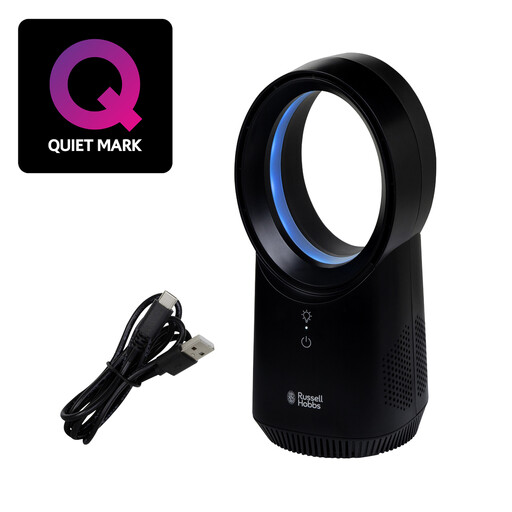
Why This Fits Their Persona: A compact choice for a desk, bedside table, study area or occasional travel, with cordless operation for spaces where a mains cable is inconvenient.
Its stated wireless, USB-rechargeable design avoids relying on a permanently connected cable, while multiple speed levels provide more control than a simple single-speed unit.
USB rechargeable, portable design; listed 2-year manufacturer's guarantee; approximately 0.8kg.
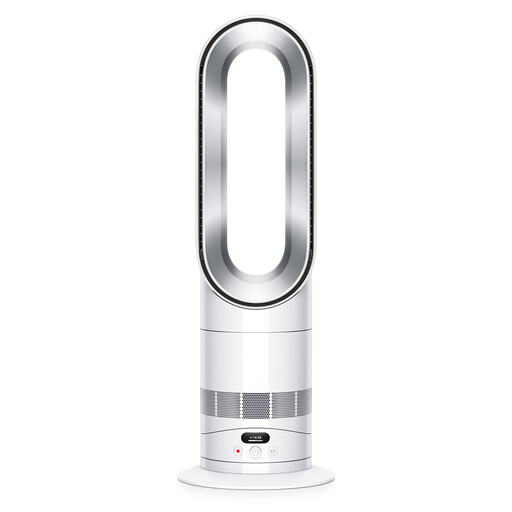
Why This Fits Their Persona: Suitable for buyers seeking one connected appliance for cooling and heating, with remote control, scheduling and app-based temperature settings.
The listing provides specific operating information, including 26dB Sleep mode, 15–70° oscillation and a 12–32°C temperature range, rather than relying only on general quietness claims.
2,250W heater and 30W fan power; tip-over protection, child lock and thermostatic control.
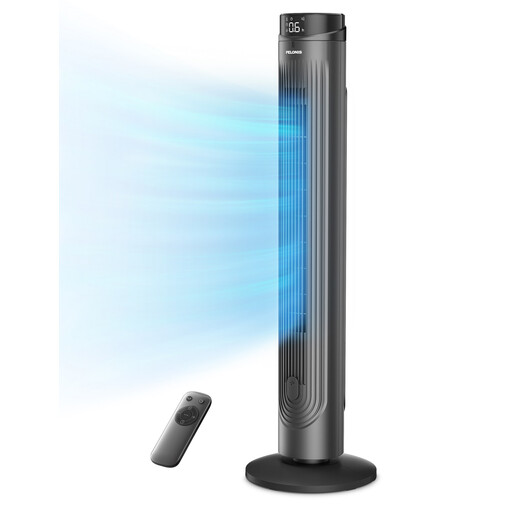
Why This Fits Their Persona: A floor-standing option for bedrooms, lounges and home offices where wider air distribution, frequent adjustment and longer unattended operation are priorities.
It lists 12 speeds and a 24-hour timer, making it easier to select a lower setting or limit operation instead of leaving a basic fan running continuously.
42-inch tower format; DC motor; remote control, LED display and oscillating airflow.
Before placing an order, confirm:
We have compiled a complete, real-time list of products that fully satisfy these strict selection criteria and UK safety regulations.
Many are suitable, provided the noise level, placement and controls match your needs. Look for a low-speed or Sleep mode, timer and dimmable display. A tower fan may distribute air more widely, while a compact desk fan is easier to position beside the bed.
Running cost depends on wattage, speed, usage time and your electricity tariff. A rechargeable fan can avoid continuous mains operation, but it still needs charging. Heating mode on a 2-in-1 heater and cooling fan generally uses substantially more power than fan-only operation, so use thermostatic controls and timers where available.
The usable battery period varies with speed, charging habits and battery condition. Treat the stated runtime as a guide rather than a guarantee. Follow the manufacturer’s charging instructions, avoid extreme heat and discontinue use if the battery shows swelling, overheating or unusual odour.