Writers with limited sockets
If you write branching conversations at a desk with few spare outlets, wireless typing can leave a mains socket free during normal use. You still need a practical way to power the keyboard between sessions.


Choose a wireless keyboard that can run without a dedicated mains socket during typing, but plan how you will recharge it or replace its batteries. A compact layout leaves more desk room, while a larger layout may keep the navigation keys, number pad or familiar shortcut positions you use to edit dialogue trees; check the physical key layout and compatibility with each device before buying.
If you write branching conversations at a desk with few spare outlets, wireless typing can leave a mains socket free during normal use. You still need a practical way to power the keyboard between sessions.
If you repeatedly create, move and label dialogue nodes, programmable keys or remapping may help with commands you use often. Check that the controls work with your editor and computer.
If your work moves between a computer, tablet or phone, device switching may matter more than a single permanent connection. Check Bluetooth and operating-system compatibility for every intended device.
For dialogue-tree writing with limited sockets, settle the keyboard's power plan first, then check the keys your editor needs and how the keyboard connects to your devices.
| Concern | What to check | Who this matters to |
|---|---|---|
| Keeping a socket free | Check whether the keyboard recharges or takes replaceable batteries, and whether you have a suitable USB charging source if needed. | If I have few outlets at my writing desk, I want to type without reserving one for the keyboard. Around 42% of consumers put keeping a socket free first. |
| Editing keys and shortcuts | Compare the exact key layout with your editor's commands; check whether remapping requires software or a wired setup. | Repeatedly moving and labelling dialogue nodes makes direct access to my usual commands important. Roughly 33% of consumers prioritise editing keys and shortcuts. |
| Switching devices | Check each host's Bluetooth compatibility, the keyboard's device-switch controls and whether a preferred mode needs a USB receiver. | When I move a dialogue draft between devices, I want to use one keyboard without setting it up afresh each time. Around 25% of consumers make device switching their primary concern. |
A rechargeable keyboard still needs periodic charging. Microsoft states that its Designer Compact Keyboard instead uses four CR2032 batteries.
Before choosing, identify a usable USB charging source or plan to keep the specified replacement batteries available.
A 2.4 GHz receiver avoids relying on Bluetooth but occupies a compatible computer port. HP specifies a USB-A receiver connection for the HP 975.
If you also have few USB ports, check whether Bluetooth works with every intended device before choosing a receiver-based connection.
Mini and 75% layouts save desk space but can change how you reach navigation, function or number-pad commands.
List the keys you use in your dialogue editor, then compare that list with the exact variant's layout image or manual.
A product-family name does not establish its physical key arrangement. Keychron lists a UK-ISO K3 Max variant alongside other layouts.
Check the selected variant's layout, switches, compatibility and current availability before checkout.
The MX range includes compact and full-size wireless keyboards for writing across compatible devices.
The K3 Max is a compact mechanical option for writers interested in remapping and several connection modes.
The HP 975 is a full-size rechargeable keyboard with Bluetooth and receiver connection options.
The British English Magic Keyboard is a compact Bluetooth option for the Apple devices listed in its compatibility information.
The Designer Compact Keyboard is a Bluetooth option for a Windows-oriented desk setup.
These wireless keyboards offer compact, full-size and space-conscious layouts for dialogue-tree work. Compare their stated key layouts and connection options with your own devices and charging arrangements.
 No image available
Consider this model if you want wireless typing and a smaller desk footprint while editing dialogue trees.
The product name identifies a UK keyboard. Check which connection mode you intend to use, the ports it needs and how you will recharge it.
 No image available
This is a choice to consider if you prefer a full-size writing layout and want to move between compatible devices.
The product name specifies Bluetooth, a UK variant and a white finish. Allow for periodic charging and check that its size suits your desk.
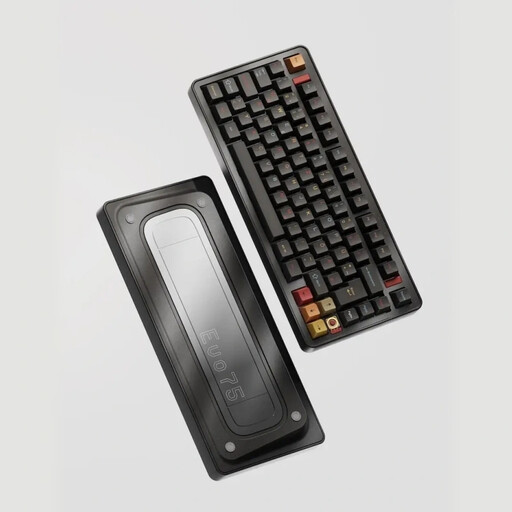 No image available
Consider this variant if you want to configure keys for repeated dialogue-editor commands and are comfortable with a US layout.
Its name specifies tri-mode wireless, VIA compatibility, hot-swappable switches and an 8000mAh battery. Check host compatibility and how many Bluetooth devices it can remember before buying.
 No image available
This variant may suit a writer who wants a full-size key arrangement and wireless use without a dedicated mains socket while typing.
Its name specifies tri-mode wireless, an 8000mAh battery and hot-swappable switches. Check the US key arrangement, host compatibility and device-switching support against your workflow.
 No image available
Consider this keyboard if you want a UK layout and number keys in a more closely arranged format for writing and navigation.
The product name specifies a wireless UK variant. Confirm how it recharges and which port or connection mode you would use; do not assume a stated battery duration applies across different lighting settings.
It can free a dedicated mains socket during normal typing, but it still needs power over time. Apple specifies USB-C charging for Magic Keyboard, HP specifies USB-C recharging for the HP 975, and a keyboard using replaceable cells needs fresh batteries instead.
Yes, if both the keyboard and your computer support a compatible Bluetooth connection. Put the keyboard in pairing mode, add it through the computer's Bluetooth settings and follow any displayed pairing instructions, as described in Logitech's setup guidance.
Choose Bluetooth when your host supports it and you need to keep its USB ports free. A receiver is another connection option if Bluetooth is unsuitable, but check its connector: HP specifies a USB-A receiver for the HP 975.
Check the physical layout and legends of the exact variant you intend to order, rather than relying on the keyboard's family name. Keychron lists a UK-ISO K3 Max variant alongside other ISO layouts, while some other wireless keyboards specify a US layout.