
24/7 Customer Support

Free returns

Same-day & Next-day Delivery

Quality Guaranteed

Unlock Your Welcome Offers: FREE Delivery | Up to 80% OFF | Free 30-day JoyPlus trial
Download the APP
Buying flour sounds straightforward until a cake fails to rise, bread turns dense or a dumpling dough becomes difficult to handle. The main issue is that plain flour, self-raising flour, bread flour and specialist Asian cooking ingredients are not interchangeable.
Whether you bake for your family, prepare vegetarian or vegan meals or buy in bulk for regular cooking, checking the flour type, protein level and allergen information can prevent wasted ingredients and disappointing results.
Plain flour is a flexible everyday option, but it does not provide the same dough strength as bread flour or strong flour. Conversely, using high-gluten flour for a delicate sponge may create a chewier texture than intended.
The name on the front of the pack is only a starting point. Check the ingredient list, protein content and intended use before adding flour to your basket.
Self-raising flour contains raising agents, while plain flour generally does not. If a recipe already specifies baking powder or bicarbonate of soda, using self-raising flour without adjusting the quantities can affect the texture, flavour and rise.
Some specialist cake flours also include raising agents. Read the label rather than assuming that a finely milled or “sponge” flour is simply a softer version of plain flour.
Glutinous rice flour is made from sticky rice and is naturally gluten-free; “glutinous” describes its cooked, chewy texture. It is not the same as wheat-based high-gluten flour.
However, not every rice-based product has the same function. Rice flour, rice starch, tapioca starch and glutinous rice flour produce different levels of elasticity, crispness and chewiness.
Protein gives wheat dough its structure. As a practical guide:
For comparison, the Baisha High-Gluten Wheat Flour listed here provides 12.5g protein per 100g, while Allinson’s Strong White Bread Flour lists 12g per 100g. These figures are useful indicators, but hydration, kneading, fermentation and recipe ratios also affect the final result.
Check whether the flour contains calcium phosphate, sodium bicarbonate or another raising agent. A self-raising flour can save preparation time, but plain flour gives you more control when a recipe uses a specific baking powder quantity.
For sponge cakes, a dedicated sponge flour may be convenient. McDougalls Supreme Sponge Flour includes raising agents and lists 9.3g protein per 100g, a specification more aligned with soft cake textures than a strong bread flour.
UK food labels must identify allergens such as wheat and other cereals containing gluten. If you have coeliac disease or a wheat allergy, select products clearly labelled gluten-free and check the full packaging information, including any cross-contamination statement.
For Asian cooking, match the ingredient to the dish:
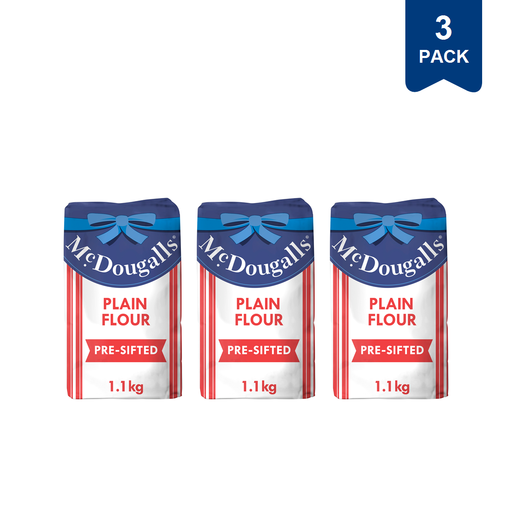
Why This Fits Their Persona: A multi-pack suits households that regularly make cakes, pastries, sauces and general baking recipes.
It is plain flour, so it avoids accidentally adding extra raising agents to recipes that already specify them.
Three 1.1kg packs; pre-sifted; suitable for cakes, pastries, sauces and other everyday recipes.

Why This Fits Their Persona: Suitable for bakers who prioritise a clearly specified wheat flour for bread, pizza dough, bagels and other yeast-raised recipes.
Its label specifies 100% wheat and 12.5g protein per 100g, making it easier to distinguish from ordinary plain flour.
One-kilogram pack; no additives listed; high-gluten specification for structured doughs.
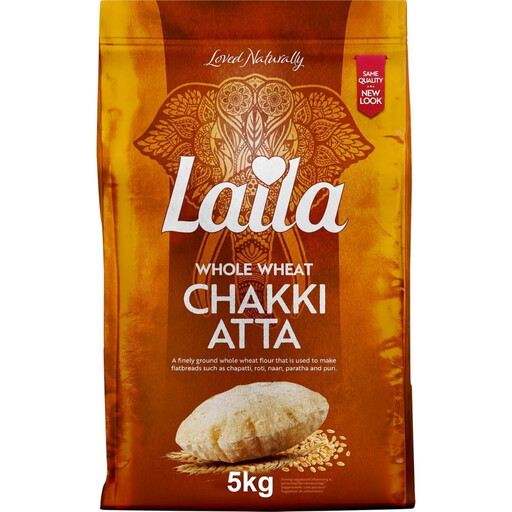
Why This Fits Their Persona: A larger pack for families and regular cooks preparing chapatti, roti, paratha or puri.
It is clearly identified as wholemeal wheat flour, avoiding confusion with refined plain flour or rice-based alternatives.
Five-kilogram quantity; wholemeal wheat flour; listed fibre content of 14g per 100g.
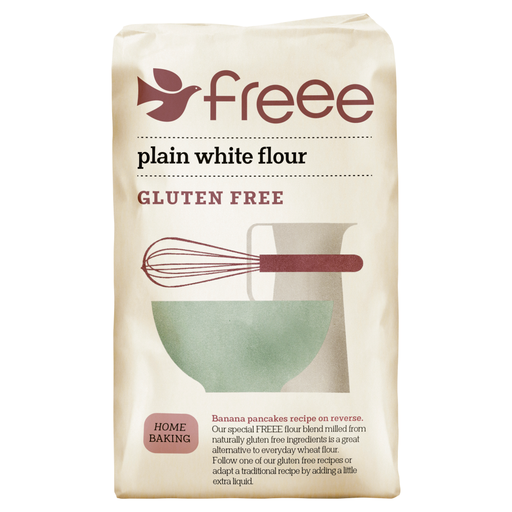
Why This Fits Their Persona: A practical option for gluten-free baking, family kitchens and recipes requiring a plain white flour alternative.
The ingredient blend is stated as rice, potato, tapioca, maize and buckwheat rather than wheat flour.
One-kilogram pack; gluten-free flour blend; suitable for adapting baking recipes with additional liquid where required.
We have compiled a complete, real-time list of products that fully satisfy these strict selection criteria and UK safety regulations.
They are broadly similar in everyday use, but terminology varies by country and product. Plain flour is commonly used in the UK for cakes, pastry, biscuits, sauces and general cooking. Always follow the recipe and check the protein level when texture matters.
Choose bread flour, strong flour or high-gluten flour for yeast-raised bread, pizza dough and bagels. These types generally contain more protein than standard plain flour, helping the dough develop structure. Wholemeal bread flour can provide a denser crumb and more pronounced grain texture.