
24/7 Customer Support

Free returns

Same-day & Next-day Delivery

Quality Guaranteed

Unlock Your Welcome Offers: FREE Delivery | Up to 80% OFF | Free 30-day JoyPlus trial
Download the APP
A foot spa massager can turn a few quiet minutes into a useful home-care routine after work, exercise or a long day on your feet. However, the right choice depends on more than the number of rollers or the promise of a “spa-like” experience.
Some models are designed for warm water and bubbles, while others provide dry kneading, compression or simple rolling. Before buying, UK shoppers should check how the product heats, massages, drains and stores. These details often make the difference between a device that becomes part of your routine and one that stays in a cupboard.
A heated foot spa may maintain the temperature of warm water rather than heat cold water quickly. Some products can take around 20 minutes to reach their fixed temperature, while others offer adjustable settings and water circulation.
If you want to use an electric foot spa immediately, check whether it has:
Never rely only on phrases such as “fast heating” without checking the specifications and instructions.
A foot spa with rollers may use motorised rotating rollers, manual rollers that move as you slide your feet or a combination of vibration and bubbles. These create noticeably different sensations.
A Shiatsu foot massager with powered kneading may suit shoppers looking for a more active massage. A manual foot massage roller is usually lighter, quieter and easier to store, but it requires you to move your feet yourself. Check the mechanism before assuming that a high roller count means stronger or deeper massage.
Water-based appliances need regular draining and drying. A design with no convenient drainage outlet can be awkward to empty, particularly when the basin is full. Internal channels may also require extra care if you use bath salts, oils or herbs.
Look for:
For electrical safety, unplug the appliance before filling, emptying, cleaning or moving it. Do not immerse the main unit, plug or cable in water.
A foot massager with heat should provide clear temperature information. Some models offer a range such as 35°C to 48°C, while others maintain a single setting. Adjustable heat gives more control for different preferences, but a fixed-temperature model may be simpler to operate.
Always test the water with your hand before use. Follow the product’s maximum session time and do not use a heated foot spa while standing.
Consider whether you want:
Those searching for a plantar fasciitis foot massager or deep tissue foot massager should treat these terms as descriptions of massage style, not medical guarantees. Persistent foot pain, numbness, wounds or suspected plantar fasciitis should be discussed with a qualified healthcare professional before using a massage device.
Check the maximum foot size, internal basin dimensions and whether the unit reaches only the feet or also the ankles and calves. A deep tub can offer a more immersive soak, but it also holds more water and may be heavier to move.
For smaller UK homes, a portable foot spa with a handle, wheels or collapsible basin can be more practical. Also consider whether you have a stable, waterproof floor near a suitable mains socket.
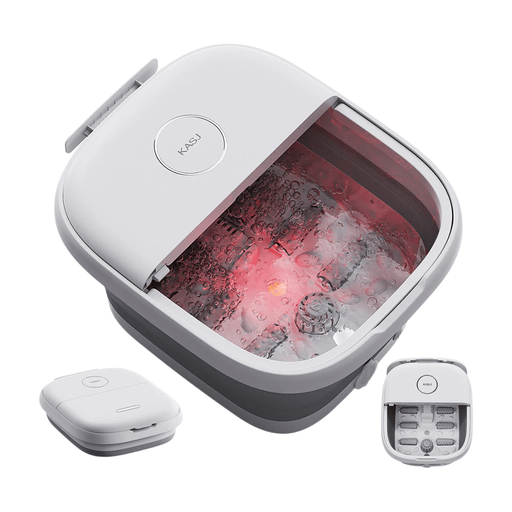
Why This Fits Their Persona: A practical option for occasional home use, especially where cupboard space is limited. It folds to approximately 11 cm in height and includes a carry handle.
Its fixed 45°C setting is clearly stated, so shoppers are less likely to expect adjustable temperature control. The drainage outlet also reduces lifting when emptying.
Collapsible storage, bubble jets, six non-motorised rollers and a built-in drainage outlet.
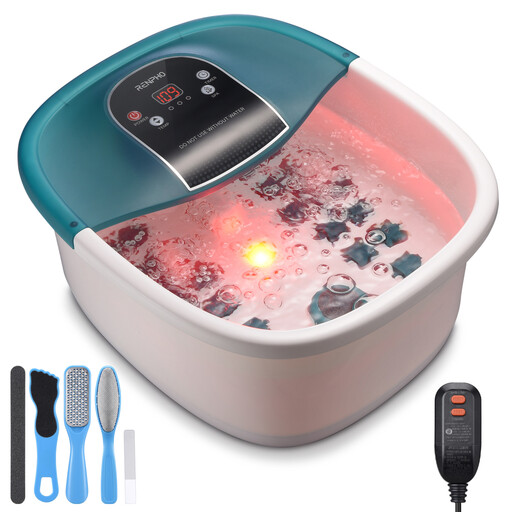
Why This Fits Their Persona: Suitable for shoppers wanting several massage modes and a larger fit for regular home relaxation, including feet up to UK size 13.
The specification separates its three programmes—Shiatsu, vibration and bubbles—rather than presenting every feature as the same type of massage.
Up to approximately 48°C, 22 massage rollers, three programmes, an auto-off timer and a pedicure kit.
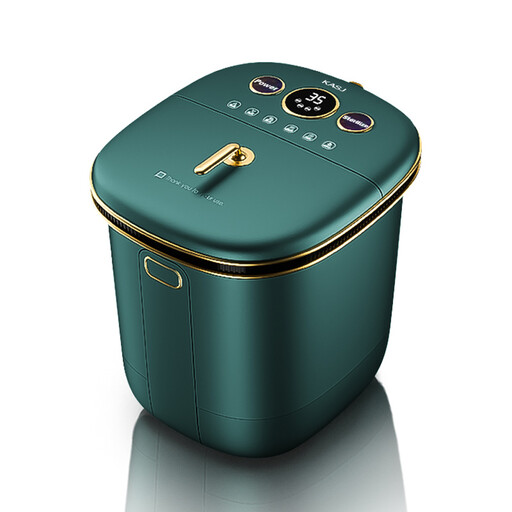
Why This Fits Their Persona: A deep-tub design reaching towards the calves may suit people who spend long periods standing or want a fuller water soak at home.
Its adjustable 35°C–48°C range, LED temperature display, timer and water circulation provide more specification detail than a generic heated foot spa.
Six rotating roller sets, two moving acupressure-node sets, UV function, quick drainage and four wheels.
We have compiled a complete, real-time list of products that fully satisfy these strict selection criteria and UK safety regulations.
Use any water-based foot bath on a stable, dry floor while seated. Do not exceed the recommended water level or session length. Clean and dry the basin after every use, and avoid additives unless the manufacturer states that they are suitable. Salts, oils and loose herbs can affect pumps and internal components.
Running cost depends on wattage and the length of each session. To estimate electricity use, multiply the appliance’s power rating in kilowatts by the hours used, then multiply by your electricity tariff. Heating water generally requires more energy than using a simple manual roller.
It may be suitable when used according to the manufacturer’s instructions, including the stated session duration. Inspect your feet before and after use, stop if you notice pain or unusual redness, and seek medical advice before use if you have diabetes, reduced sensation, circulation concerns, wounds or skin inflammation.
This varies by model. A fixed-temperature portable foot spa may take around 20 minutes from a cold start, while adjustable models may work more quickly when filled with warm water. Always check the product instructions and never operate the unit without water.
A dry foot massager usually needs less cleaning because it has no water basin. A foot spa can offer heat, bubbles and soaking, but it must be drained, wiped and fully dried after use. Choose according to whether the bathing ritual or quick daily massage matters more to you.