Fast-flick aim trainees
If you practise target switching and repeated directional changes, you need a mouse you can move quickly without losing control of its shape in your hand.


Choose a mouse whose shape lets you keep a consistent grip through repeated movements before prioritising its DPI or polling-rate ceiling. An adjustable high-polling model is worth considering if your PC, aim trainer and games remain stable at higher settings; otherwise, a comfortable shape and stable 1,000 Hz setting are a sound starting point. Higher polling alone does not establish an improvement in your reaction time.
If you practise target switching and repeated directional changes, you need a mouse you can move quickly without losing control of its shape in your hand.
If you use a palm, claw or fingertip grip, shell length, hump and hand support may affect your choice more than a headline sensor figure. SCAN UK and Glorious Gaming both emphasise grip and fit when choosing a mouse.
If the same mouse serves both practice sessions and everyday PC use, consider how its connection options and battery routine fit each activity.
For reaction-timing practice, start with grip fit, test the reporting setting in the software you actually use, then decide how much wireless upkeep suits your routine.
| Concern | What to check | Who this matters to |
|---|---|---|
| Grip fit and shape | Compare the exact shell dimensions with your hand and natural grip; consider whether you can assess the fit before committing to it. | Repeated flicks are hard to control if the shell shifts in my grip or leaves my hand poorly supported. Around 36% of consumers put grip fit first. |
| Stable reporting | Check the exact model's polling options and any receiver requirements; test higher settings in your aim trainer and main game. | I want responsive input, but not at the expense of smooth play on my PC. Stable reporting is the primary concern for around 29% of consumers. |
| Wireless continuity | Check the connection modes, charging or battery arrangement, and the conditions attached to runtime claims. | Practice and everyday work share my mouse, so interruptions and connection convenience matter to me. Around 21% of consumers prioritise wireless continuity. |
| Useful core features | Look for a suitable shape and stable settings before choosing a higher polling-rate ceiling you may not use. | If my games run reliably at a conventional setting, I would rather focus on features I will use regularly. Around 14% of consumers make that their primary concern. |
MouseTesting explains that higher polling shortens the interval between reports but can increase CPU demand. A higher setting is not, by itself, evidence that your reaction-time results will improve.
Start at 1,000 Hz, then try higher settings in your own aim trainer and games. Keep a setting that maintains stable play.
A sensor headline cannot tell you whether the shell supports your hand through repeated movements. SCAN UK and Glorious Gaming both place importance on finding a shape that suits your grip.
Identify your natural palm, claw or fingertip grip, compare the exact mouse dimensions and check the retailer's return terms if you cannot handle it before ordering.
SteelSeries states up to 200 hours for the Rival 3 Wireless Gen 2 and up to 450 hours over Bluetooth. Those figures should not be treated as equivalent runtime under the same connection settings.
Check the connection mode and use conditions behind each claim, along with whether the exact mouse needs charging or replacement batteries.
The Viper V3 Pro is a reference point for a lightweight symmetrical wireless mouse with a high-polling option. Razer lists a 54 g design and HyperPolling up to 8,000 Hz for this model.
The PRO X SUPERLIGHT 2 is another lightweight wireless option. Logitech G lists 60 g, HERO 2 tracking and polling up to 8 kHz for the model.
The Rival 3 Wireless Gen 2 is relevant when wireless endurance and everyday use matter alongside gaming practice. SteelSeries states up to 200 hours of battery life, or up to 450 hours via Bluetooth.
These choices cover lightweight wireless mice with high-polling options and an ergonomic esports mouse for a different shape preference. Compare the exact fit and settings of each rather than treating the list as a reaction-time ranking.
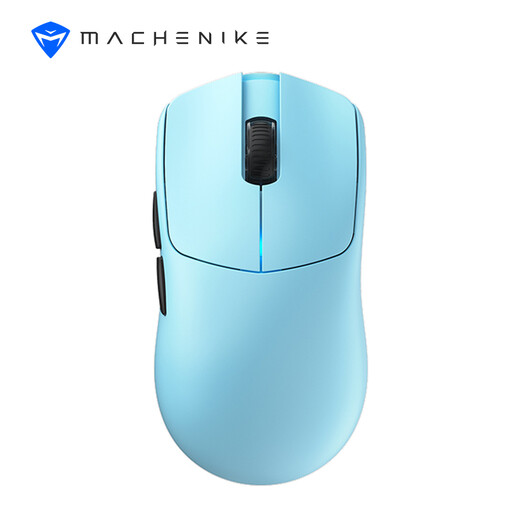 No image available
Consider this model if you want a wireless mouse with an 8K option for practice. Compare its shape with your grip and test higher polling in the games you use.
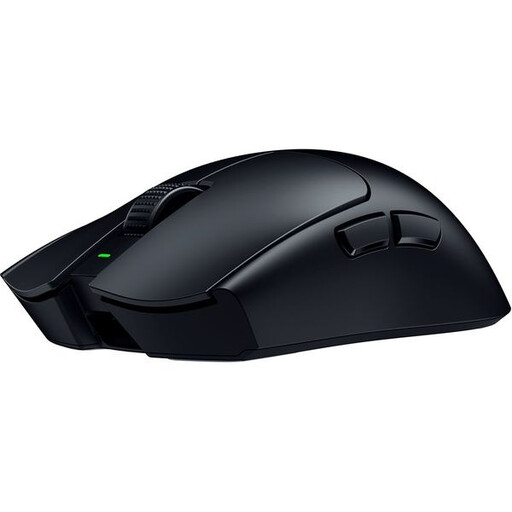 No image available
For buyers considering a lightweight wireless mouse for repeated movements, Razer lists a 54 g design, Focus Pro 35K Optical Sensor Gen-2 and polling up to 8,000 Hz. Check the shell against your grip and test whether higher polling runs smoothly on your setup.
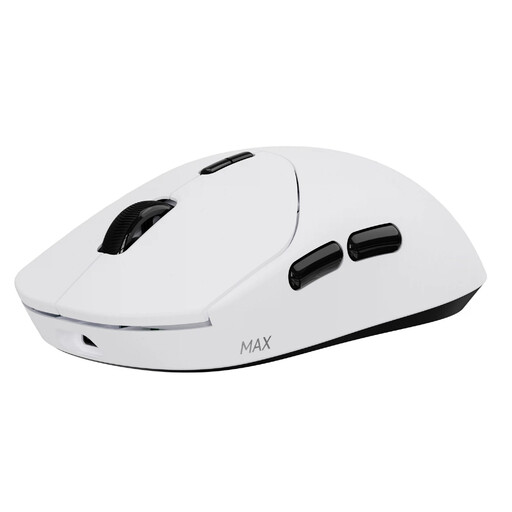 No image available
Consider this model if both a high-polling option and fewer charging interruptions matter. Its title states 53 g and True 8K wireless polling; the stated runtime of up to 750 hours applies at 1,000 Hz with low-power mode unlocked by a driver update, not necessarily at 8,000 Hz.
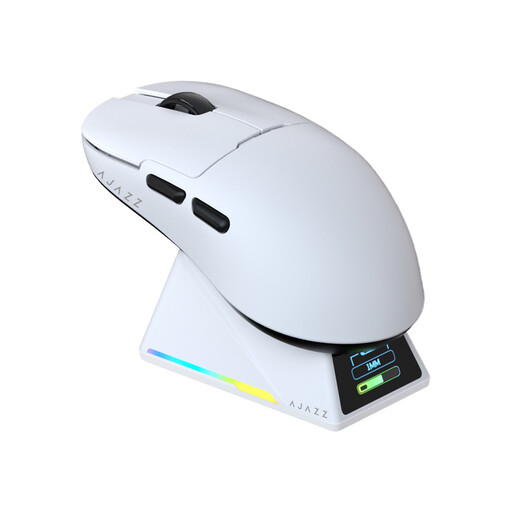 No image available
Consider this model if you want a lightweight wireless mouse with a high-polling option and a magnetic charging base. Its title states 56 g and 8 kHz polling. Confirm the exact connection modes and sensor specification before ordering, as the product information gives conflicting descriptions.
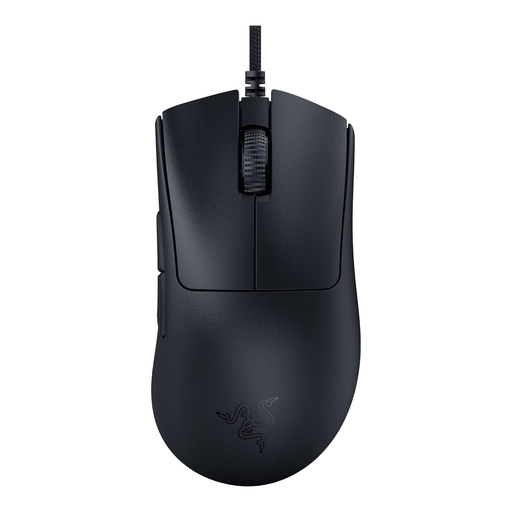 No image available
Consider its ergonomic shell if shape matters more to you than choosing an 8,000 Hz option. Compare its dimensions with your hand and confirm that its connection and polling settings suit your practice setup.
Not necessarily. MouseTesting explains that 8,000 Hz shortens the theoretical reporting interval to 0.125 ms, compared with 1 ms at 1,000 Hz, but higher polling can demand more CPU resources. Test the setting in your aim trainer and main game rather than assuming the shorter interval will improve your results.
No: a wired connection is not an automatic requirement. SCAN UK describes high-end wireless gaming mice as competitive with wired models; compare the exact mouse's connection, your cable preference and the battery routine you can maintain.
Compare its dimensions with your hand and check the seller's return terms before using it extensively. Citizens Advice says purchases made online from a business generally have a 14-day cooling-off period starting the day after delivery, subject to exceptions; check the applicable process and return-postage terms.
No. Citizens Advice states that warranties and guarantees add to legal rights rather than replacing them. Keep your order confirmation and warranty details, and distinguish a claim for a fault from a change-of-mind return.