
24/7 Customer Support

Free returns

Same-day & Next-day Delivery

Quality Guaranteed

Unlock Your Welcome Offers: FREE Delivery | Up to 80% OFF | Free 30-day JoyPlus trial
Download the APP
In the high-stakes arenas of FPS and Battle Royale games, the gear you use can be the deciding factor between victory and defeat. A fraction of a second in response time or a moment of physical fatigue can make all the difference. A heavy, cumbersome mouse with noticeable input lag is a significant handicap. This is why the demand for a lightweight wireless gaming mouse has surged among competitive players.
As the Joybuy Product Recommendation Officer, my role is to help you navigate the complex world of gaming peripherals. This guide cuts through the marketing jargon to focus on the specifications that truly matter for performance. We will explore the key features to look for and present our top recommendations for 2026, helping you find a mouse that feels like a natural extension of your hand.
Choosing the right esports mouse involves more than just picking a brand. Understanding the technology is key to making an informed decision that will elevate your gameplay.
The trend towards ultra-light mice is driven by pure performance. A mouse under 60 grams, often referred to as a 50g gaming mouse, requires less force to move and stop. This translates to faster flicks, quicker target acquisition and reduced wrist fatigue during long gaming sessions. However, weight must be balanced with an ergonomic gaming mouse design that suits your grip style (palm, claw or fingertip) to ensure comfort and control.
Polling rate measures how often your mouse reports its position to your computer. While 1000Hz was the standard for years, the new frontier is the 8000Hz gaming mouse. An 8K polling rate mouse sends data 8,000 times per second, resulting in exceptionally smooth cursor movement and a tangible reduction in input delay. For players on high-refresh-rate monitors (144Hz and above), this creates a more responsive and connected feel, making it a cornerstone of a low latency wireless mouse.
A high DPI gaming mouse is essential for tracking accuracy, but the quality of the sensor is what truly counts. Modern optical sensors, like the PixArt (PAW) series, offer flawless 1:1 tracking without acceleration or prediction, ensuring your movements are translated perfectly on-screen. Additionally, a tri-mode gaming mouse provides ultimate versatility. Use the 2.4GHz wireless mode for competitive play, a wired connection for charging or guaranteed stability and Bluetooth for on-the-go productivity.
We have analysed the market to identify models that deliver on the promise of high performance, low weight and cutting-edge technology.
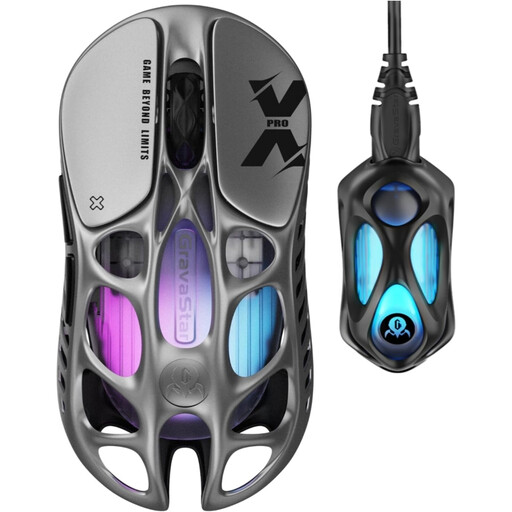
Why It Stands Out: The Mercury X Pro makes a statement with its unique hollow-skeleton design crafted from magnesium alloy. This construction achieves an impressive weight of just 49g while maintaining structural integrity. It combines this featherlight build with a top-tier sensor and an included 8K dongle for elite performance.
Pros:
Who is it for? Gamers who want an exceptionally light mouse with a striking, futuristic aesthetic and the technical specifications to compete at a high level.
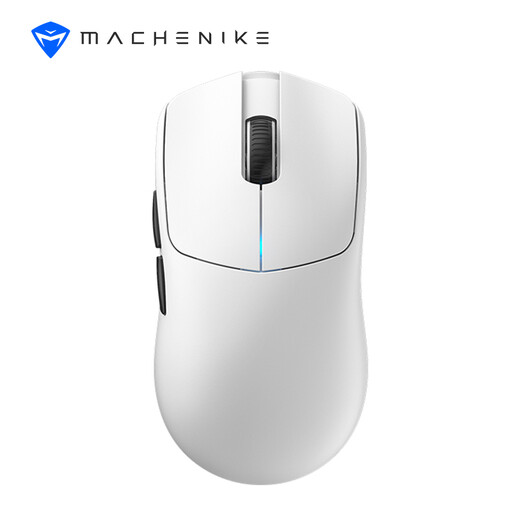
Why It Stands Out: The Machenike L9X1 focuses on delivering pure, unadulterated speed. It matches the 49g weight class with a portless, symmetrical design suitable for various grip styles. Its key feature is the dual 8000Hz polling rate, which functions over both 2.4G wireless and wired connections, offering maximum performance flexibility.
Pros:
Who is it for? Competitive players who prioritise a symmetrical shape and demand the lowest possible latency across both wired and wireless connections.
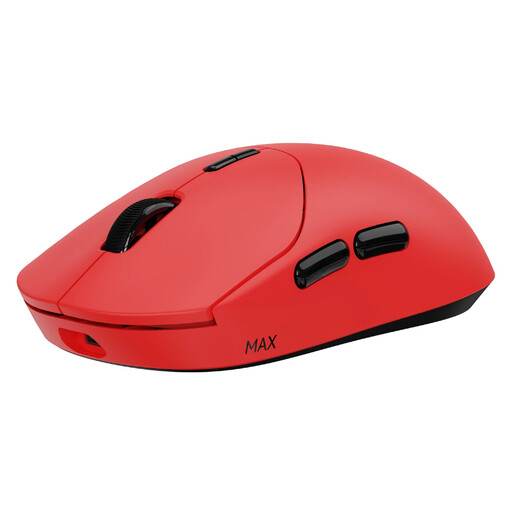
Why It Stands Out: The RAPOO VT2 MAX tackles one of the biggest concerns with high-performance wireless mice: battery life. While still very light at 53g, it incorporates an ultra-low-power Nordic MCU that provides up to 750 hours of battery life at a 1000Hz polling rate. It also delivers a true, native 8K wireless polling rate without needing extra software.
Pros:
Who is it for? Marathon gamers and users who value exceptionally long battery life alongside native 8K wireless performance in a lightweight, ergonomic package.
These three models represent some of the most compelling options on the market, but the perfect mouse is a personal choice. If you are looking for a different shape, button layout or feature set, we have more to see.
Explore our full collection of lightweight gaming mouse with side buttons to find the ideal peripheral for your grip and playstyle.
For many competitive players, especially those using high-refresh-rate monitors (144Hz and above), the difference is noticeable. An 8K polling rate mouse can provide visibly smoother cursor movement and reduce the micro-stutters that can occur with lower polling rates. This leads to a more consistent and responsive aiming experience, which is critical in fast-twitch shooters.
Weight is a crucial factor for performance in FPS games. A lightweight wireless gaming mouse, particularly one in the sub-60g or 50g range, reduces the physical inertia you have to overcome. This allows for quicker directional changes, faster flicks onto targets and less physical fatigue during extended gaming sessions, providing a tangible competitive advantage.
A tri-mode gaming mouse offers three distinct connection methods: a high-speed 2.4GHz wireless connection (via a USB dongle), a wired connection (typically for charging and playing) and Bluetooth. For serious gaming, the 2.4GHz mode is essential for its low latency wireless performance. The added versatility of Bluetooth is useful for connecting to laptops or other devices for productivity, making it a great all-in-one solution for users who do more than just game on their PC.