Choose a PC around the terrain software and the size of your projects, rather than the gaming label alone. A desktop for map layouts and layer editing need not be chosen on the same basis as one for Blender scenes or large real-time landscapes; check the application’s operating-system, memory and graphics requirements before deciding how much space the computer and its peripherals will need.
Who is this for?
GIS and map-layout creators
If you chiefly edit elevation data and map layers, draw features or prepare layouts, start with the requirements of your geographic information system (GIS). QGIS describes map creation, digitising, analysis and reporting among its uses; those tasks do not, by themselves, establish a need for a high-end gaming graphics card.
3D terrain artists
If you build terrain meshes, textures and rendered scenes in Blender, compare the whole configuration rather than the graphics card alone. The Blender Foundation’s Windows recommendations include eight CPU cores, 32 GB of system RAM and 8 GB of graphics memory.
Interactive landscape builders
If the terrain must be explored or rendered in Unreal Engine or Twinmotion, identify the project scale and rendering features before choosing hardware. Epic Games distinguishes smaller Twinmotion projects from large landscapes and publishes separate recommended hardware for Unreal Engine.
What matters when choosing?
Name the application, version and intended project size first. Then check compatibility and capacity against the software publisher’s guidance before deciding which tower or laptop fits the home office.
| Concern |
What to check |
Who this matters to |
| Real-time terrain graphics |
Check the exact GPU’s dedicated graphics memory and the rendering features required by your application. Epic Games recommends at least 8 GB of graphics RAM and a DirectX 12-compatible card for its published Unreal Engine Windows configuration. |
If I need to navigate a detailed interactive landscape, I want the graphics specification checked against that scene and renderer before choosing a PC; roughly 31% of consumers put real-time graphics first. |
| Memory and project size |
Check installed RAM and SSD capacity against your project files. The Blender Foundation and Epic Games each list 32 GB RAM in their respective Windows recommendations for Blender and Unreal Engine; that is not a requirement for every map. |
When my terrain files, textures and other assets grow, I need room to work without choosing solely by gaming specifications; around 31% of consumers make memory and project capacity their primary concern. |
| Software compatibility |
Confirm the application, version, plug-ins, operating system and renderer. QGIS is available on Windows, macOS and Linux, while Esri lists Windows editions and separate software prerequisites for ArcGIS Pro 3.7. |
If a particular GIS tool or plug-in is essential to my work, it must run on the system I buy; about 23% of consumers prioritise software compatibility above the other factors here. |
| Home-office setup |
Measure the intended location and check display connections and peripherals. For Blender, the Blender Foundation recommends a 1920 × 1080 display resolution and a three-button mouse. |
I need the computer, screen and input devices to fit the space where I make maps; roughly 15% of consumers put workspace fit and setup first. |
Mistakes to avoid
-
Choosing by the word “gaming” alone
Layer editing, 3D modelling and interactive landscapes call for different checks. For example, Esri lists Windows and separate software prerequisites for ArcGIS Pro 3.7, while Epic Games gives graphics guidance for Unreal Engine.
Write down the terrain application, version, plug-ins and renderer, then compare the exact PC configuration with that publisher’s requirements.
-
Using a minimum specification for a large landscape
Epic Games places Twinmotion projects with less than 1 GB of geometry and data in its small-to-average category and identifies large landscapes above 1 GB as high-end projects. A light mapping task is not a sound basis for choosing a large-landscape configuration.
Check Twinmotion’s guidance for the size of your intended project and any rendering features you plan to use before selecting memory and graphics hardware.
-
Overlooking the screen, mouse and workspace
A suitable tower alone does not complete a terrain-modelling setup. The Blender Foundation recommends a 1920 × 1080 display resolution and a three-button mouse for its Windows setup.
Check what peripherals come with the exact PC and measure where the computer and display will sit. Plan how you will back up project files as well.
-
Assuming a product family has one specification
HP lists OMEN configurations ranging from 16 GB RAM and a 1 TB SSD to systems with 64 GB RAM and a 2 TB SSD, with different graphics options. The family name therefore cannot tell you which configuration is being offered.
Compare the exact model and configuration shown at checkout with the RAM, graphics memory, storage, ports and dimensions your work requires.
Desktop brands to consider
These ranges offer different configurations to check against your software and workspace requirements; a brand or range name is not a specification for an individual PC.
HP OMEN
HP’s UK OMEN desktop listings include compact and larger tower configurations.
- HP lists options with different RAM, SSD and graphics configurations, giving buyers distinct specifications to compare.
- Check the exact model: HP’s listed memory and storage capacities vary substantially within the range.
Lenovo Legion
Lenovo presents Legion Towers as gaming desktops with discrete graphics and memory and storage options.
- Lenovo describes upgradeable memory and storage within its tower range.
- Confirm the installed components, available connections, upgrade access and dimensions for the particular tower you are considering.
Alienware
Dell’s UK Alienware desktop range includes the mid-sized Aurora and larger Area-51.
- Dell lists Aurora configurations up to RTX 5080 graphics and Area-51 configurations up to RTX 5090 graphics.
- Those are range-level configuration ceilings, not specifications for every model or a like-for-like measure of terrain-work performance.
MSI
MSI distinguishes its Aegis desktop series from its smaller-form-factor Trident series.
- The different form factors give buyers a way to consider desk space alongside configuration.
- MSI’s series descriptions do not establish an individual PC’s graphics memory, expansion options or suitability for a particular terrain project.
CyberPowerPC UK
CyberPowerPC UK lists prebuilt and configurable gaming PCs alongside creator-oriented desktops and workstations.
- A configurable system lets buyers specify components after establishing what their terrain software requires.
- Check every selected component, the operating system, warranty terms and build lead time for the configuration ordered.
Joybuy PCs for terrain work
These choices include gaming towers to assess for 3D or real-time terrain work and two laptops for a setup with a built-in display. The laptops are alternatives to a separate tower, not desktop towers; for every model, compare the exact configuration with your application and project requirements.
 No image available
CyberPowerPC JOYB1013 desktop, Ryzen 7 9800X3D and RTX 5080 16 GB
Consider this tower if your 3D or real-time terrain application calls for a dedicated graphics configuration; confirm its software and renderer requirements before choosing it.
Listed configuration: AMD Ryzen 7 9800X3D, NVIDIA GeForce RTX 5080 16 GB, 32 GB DDR5 RAM, 2 TB NVMe SSD and Windows 11 Home. Check the tower’s fit, connections and peripheral needs for your workspace.
View on Joybuy
 No image available
Lenovo Legion Pro 7 16IAX10H laptop, 83F5000UUK
This laptop is a form-factor alternative if you want a built-in display rather than a separate tower; check the demands of your terrain application against its exact graphics configuration.
Listed configuration: 16-inch display, Intel Core Ultra 9, 64 GB RAM, 2 TB SSD, NVIDIA GeForce RTX 5090 and Windows 11 Home. Confirm the graphics memory, connections and sustained-workload requirements relevant to your project.
View on Joybuy
 No image available
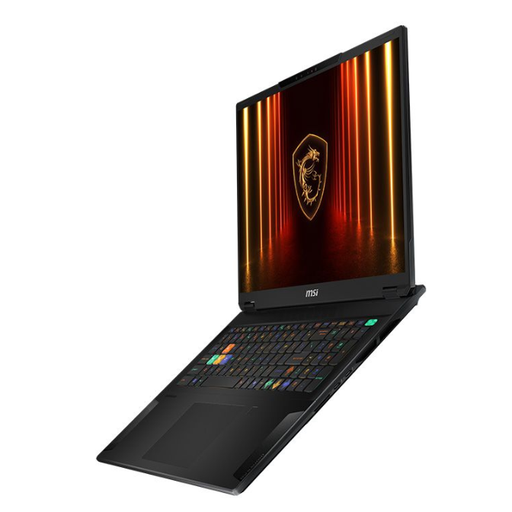
MSI Stealth 18 AI Studio laptop, A1VGG-001UK
For terrain modelling at a desk without a separate tower, compare this laptop’s configuration with your modelling software and intended scene size.
Listed configuration: 18-inch display, Intel Core Ultra 9, 32 GB RAM, 2 TB SSD and NVIDIA GeForce RTX 4070. Check the exact graphics-memory specification and the connections needed for your setup.
View on Joybuy
 No image available
Stormforce Cyclone desktop, Core i7 and RTX 5080
This tower is worth comparing with the requirements of a 3D terrain or real-time landscape workflow, particularly if a fixed desktop workstation suits your room.
Listed configuration: Intel Core i7, 32 GB RAM, 2 TB SSD, RTX 5080 and Windows 11. Confirm the exact graphics memory, physical fit and ventilation needs before choosing it.
View on Joybuy
 No image available
CyberPowerPC JOYB1010 desktop, Core Ultra 7 265KF and RTX 5070 12 GB
Consider this tower for terrain software whose requirements match its memory and graphics specification, while checking how much storage your project assets will need.
Listed configuration: Intel Core Ultra 7 265KF, NVIDIA GeForce RTX 5070 12 GB, 32 GB DDR5 RAM, 1 TB NVMe SSD and Windows 11 Home. Confirm software compatibility and the display connections required at your desk.
View on Joybuy
Common questions
Do I need a Windows gaming PC to create terrain maps?
Not for every terrain-mapping workflow: QGIS is available on Windows, macOS and Linux. If you need ArcGIS Pro, check Esri’s Windows requirements and separate software prerequisites for your version; choose the operating system after identifying all the applications and plug-ins you intend to use.
Is 32 GB RAM a useful comparison point for terrain work?
Yes, if your work includes Blender modelling or Unreal Engine: the Blender Foundation and Epic Games each list 32 GB RAM in their respective Windows recommendations. It is not a universal requirement for 2D mapping, so check your application and project size before treating it as a target.
When does a terrain project need a closer look at high-end requirements?
A large Twinmotion landscape calls for a different check from a simple map or smaller visualisation. Epic Games distinguishes small-to-average Twinmotion projects below 1 GB of geometry and data from high-end large projects above 1 GB; compare your intended project with its current guidance before selecting hardware.


