
24/7 Customer Support

Free returns

Same-day & Next-day Delivery

Quality Guaranteed

Unlock Your Welcome Offers: FREE Delivery | Up to 80% OFF | Free 30-day JoyPlus trial
Download the APP
Finding the right hair conditioner can feel like a lottery. You buy a promising bottle, only to find it leaves your hair greasy, flat or no different than before. Many of us in the UK have a collection of half-used conditioners under the sink, each a testament to a purchase that didn't quite live up to its claims.
As a Joybuy Product Recommendation Officer, my role is to help you navigate the crowded shelves and avoid common purchasing mistakes. Before you spend another pound, let's look at the frequent pitfalls that lead to buyer's remorse.
To make an informed choice, focus on matching the product's formulation to your specific hair needs. Here are the two most important parameters to consider.
Your hair's type and condition are the most critical factors. A conditioner is not a universal product; it's a targeted treatment.
Beyond the marketing, the ingredient list tells the real story. Look for these functional components:
Based on these practical criteria, we've matched some effective conditioners to specific user needs.
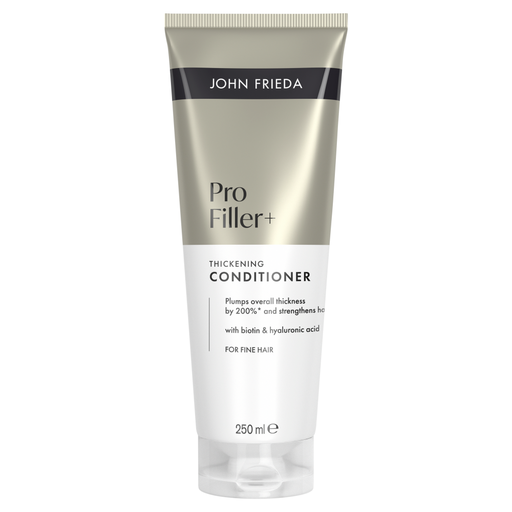
Why This Fits Their Persona: This is for the person who finds most conditioners make their fine hair look flat and lifeless. They need hydration and strength without the weight, which is exactly what this lightweight formula aims to provide.
It directly counters the "one-size-fits-all hydration" trap by being a targeted thickening conditioner for fine hair, ensuring it moisturises without sacrificing volume.
Infused with Biotin and Hyaluronic Acid, it works to strengthen and hydrate each strand from within. The formula is also silicone-free and lightweight.
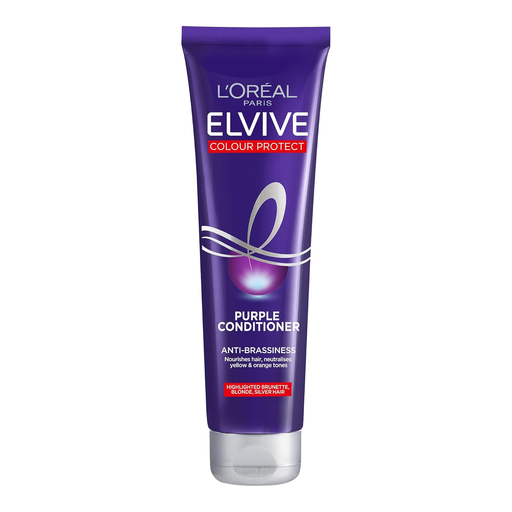
Why This Fits Their Persona: Ideal for anyone with highlighted, bleached blonde or even grey hair who notices unwanted yellow or orange tones appearing between salon visits. They need a functional product that delivers visible results.
This avoids the "natural ingredients" trap by focusing on a scientifically proven principle: colour theory. It uses functional purple pigments to solve a specific problem, rather than relying on vague botanical claims.
Its primary function is to neutralise brassy tones with purple pigments while providing intensive nourishment for colour-treated hair. It's a targeted, effective treatment.
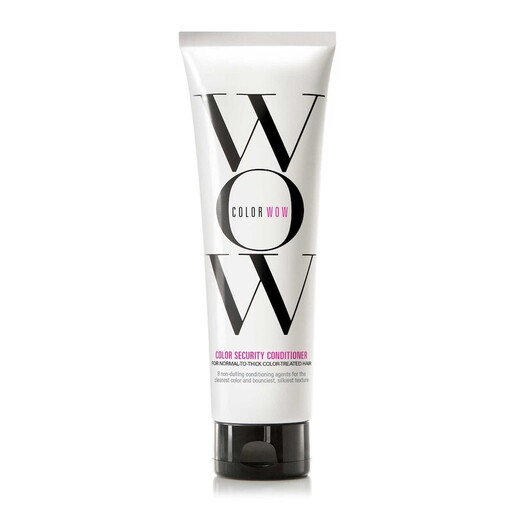
Why This Fits Their Persona: This user has thick or coarse hair that is also colour-treated. They need deep hydration to manage their hair's texture but also require ingredients that help protect their colour investment from fading.
It is a highly specific formula, not a generic hydrating conditioner. It is explicitly designed for normal-to-thick hair, providing the right level of rich moisture without being unsuitable for other hair types.
It delivers rich hydration to smooth and soften thick hair while also helping to maintain colour vibrancy. The formula includes Hydrolysed Keratin to support hair strength.
We have compiled a complete, real-time list of products that fully satisfy these strict selection criteria and UK safety regulations.
1. How often should I use a purple conditioner? For most people, using a purple conditioner for blonde hair once a week is sufficient to keep brassiness at bay. If your hair is particularly prone to yellowing or you've just had it coloured, you might use it twice a week. Overuse can sometimes impart a slight lilac tint, so it's best to start with once a week and adjust as needed.
2. Can a conditioner make my hair greasy? Yes, if you use the wrong type for your hair. If you have fine or oily-prone hair and use a heavy, rich hydrating conditioner designed for coarse hair, it can weigh your hair down and make it feel greasy. This is why choosing a formula matched to your hair type, such as a volumising conditioner, is so important. Always focus application on the mid-lengths and ends, avoiding the scalp.
3. What's the difference between a regular conditioner and a leave-in conditioner? A regular rinse-out conditioner is a thicker, more concentrated treatment designed to be applied in the shower and rinsed out after a few minutes. Its main job is to smooth the cuticle and restore moisture post-shampoo. A leave-in conditioner is a much lighter product, often a spray, that is applied to towel-dried hair and left in. It provides continuous light hydration, detangling and protection from heat and environmental factors throughout the day.