
24/7 全天候客户支持

免费退货

当日/次日达

品质保障

开启新人专享福利: 全场免邮 | 低至 2 折 | 免费试用 30 天 JoyPlus 会员
下载 Joybuy
As a Joybuy Product Recommendation Officer, my role is to help you navigate the crowded market of home appliances. When it comes to laundry, choosing a new tumble dryer can feel overwhelming. With so many technologies and features advertised, it is easy to make a choice that seems right at first but leads to frustration and high electricity bills down the line. This guide will help you understand the key considerations for selecting a new dryer, focusing on how to avoid common pitfalls and identify the features that truly matter for UK households.
Before looking at models, it is crucial to be aware of a few common traps that can lead to buyer's remorse. Understanding these will help you filter out the marketing jargon and focus on what delivers real value.
To make a sound investment, focus on these non-negotiable specifications. They determine the performance, running cost and longevity of your appliance.
This is the most important decision you will make.
Both are freestanding tumble dryer types that do not require external venting, offering flexible installation. However, for long-term savings and better fabric care, heat pump technology is the clear frontrunner.
A tumble dryer with sensor dry technology is a must-have feature. Instead of running for a fixed time, internal sensors measure the moisture level of your laundry. The cycle automatically stops once the desired level of dryness is reached (e.g., ready for ironing or completely dry for storage). This prevents over-drying, which wastes electricity and can damage your clothes and it ensures your machine runs only for as long as it needs to.
Choosing the right drum size is key to efficient drying. Here is a simple guide:
Based on these practical criteria, here are some models suited to different UK household needs.
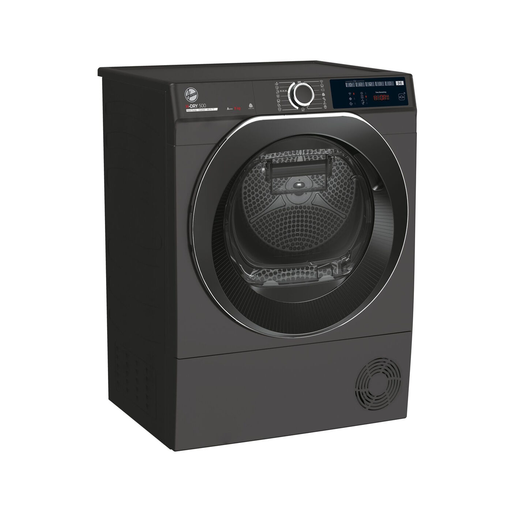
Why This Fits Their Persona: For a family juggling school runs, work and endless laundry, this model combines a 9kg capacity with top-tier A+++ energy efficiency. The full Wi-Fi connectivity via the hOn app is genuinely useful, allowing you to start a cycle from anywhere and get a notification when it is done, so wet clothes are never forgotten in the drum.
It sidesteps the "gimmicky smart feature" trap with a robust app that offers real remote control and diagnostics. Its A+++ rating directly counters the high running cost pitfall of less efficient machines.
Exceptional energy efficiency (A+++) for low running costs. The Aquavision in-door water tank is easy to see and empty.
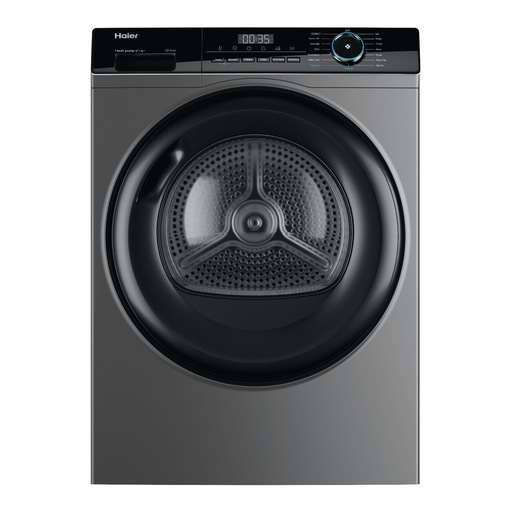
Why This Fits Their Persona: Perfect for a couple or small family focused on minimising bills. This 8kg model provides ample capacity for regular use without being excessive. The A++ heat pump technology ensures running costs are kept low, delivering long-term value that outweighs the initial investment compared to a cheaper condenser model.
It directly avoids the "low upfront cost" trap by offering excellent long-term savings through its A++ rating. The Sensor Dry system also prevents energy waste from over-drying clothes.
Features a dedicated Hygienic function to remove bacteria, which is great for peace of mind. The 3-in-1 filter system simplifies maintenance.
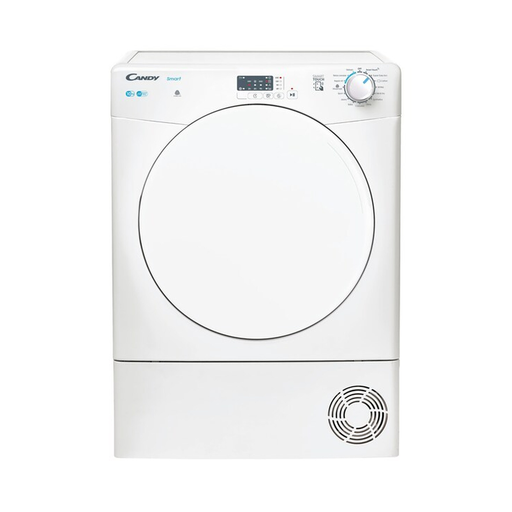
Why This Fits Their Persona: For households where maximum capacity is the absolute priority and usage is less frequent, this 10kg condenser model offers a solution. It can handle the largest loads, like king-size duvets, at a lower initial purchase price than a comparable heat pump model.
This choice acknowledges the "running cost" trap. It is suitable for users who understand the trade-off: they get a huge capacity for a low upfront cost but will pay more per cycle in electricity due to the B energy rating.
Massive 10kg drum capacity is its main selling point. It also includes Sensor Dry technology to prevent over-drying, which helps mitigate some of the inherent inefficiency of condenser technology.
We have compiled a complete, real-time list of products that fully satisfy these strict selection criteria and UK safety regulations.
No, they do not. A heat pump tumble dryer operates as a closed-loop system. Much like a condenser dryer, it extracts moisture from your clothes and collects it in a removable water tank or drains it away via a plumbing connection. This means you can place it anywhere in your home with a standard power socket.
While exact costs depend on your electricity tariff and usage, a heat pump model is significantly cheaper to run. An A++ rated heat pump dryer can use less than half the energy of a B-rated condenser dryer per cycle. Over a year of regular use, this can translate into savings of over ?100 on your electricity bills, allowing the appliance to pay back its higher initial cost over time.
Heat pump dryers do sometimes have slightly longer cycle times because they use lower temperatures to dry clothes. A typical cycle might take 20-30 minutes longer than a hot condenser cycle. However, this gentle heat is better for your fabrics, reduces the risk of shrinkage and is the key to their exceptional energy efficiency. Many models also feature quicker programmes for smaller loads when you are in a hurry.