
24/7 Customer Support

Free returns

Same-day & Next-day Delivery

Quality Guaranteed

Unlock Your Welcome Offers: FREE Delivery | Up to 80% OFF | Free 30-day JoyPlus trial
Download the APP
Searching for the best home treadmill usually means comparing much more than price. A machine may look compact in a product photo but prove difficult to store, too narrow for running or louder than expected in a flat. The right choice depends on your available space, exercise style, user weight, preferred speed and tolerance for maintenance.
This guide highlights common buying traps, explains the specifications that matter and matches several treadmill designs to different UK households.
Motor descriptions can be difficult to compare. A stated horsepower figure may refer to peak output rather than continuous operation. For regular jogging or running, check the speed range, motor type, maximum user weight and intended use together rather than choosing a treadmill based on horsepower alone.
A walking pad treadmill designed for 1–6 km/h is suitable for light walking, but it is not equivalent to a treadmill for walking and running that reaches 12 km/h or more.
A folding treadmill still needs clearance when opened. You should measure:
For a home office or flat, a compact treadmill or under-desk treadmill may be more practical than a larger running machine. However, compact designs can have shorter or narrower belts, which may feel restrictive for taller users or faster running.
Noise comes from the motor, belt, foot impact and flooring. A quiet home treadmill may still transmit vibration through wooden floors or ceilings. Look for stated noise figures where available, use a suitable exercise mat and place the machine on a stable, level surface.
Also check whether the product has a safety key, emergency stop function and clear operating instructions. Do not assume that app connectivity or a Bluetooth speaker indicates a complete safety package.
A longer belt generally gives more room for a natural stride. A short walking pad treadmill can work well for desk-based walking, but a taller user or runner may prefer a larger running surface.
Compare the belt size with your stride and intended speed. If you expect to alternate between walking and running, prioritise a stable deck and sufficient length over the smallest folded footprint.
For light movement during work, 1–6 km/h may be enough. Jogging and running require a higher top speed. Some products offer a manual incline, while others provide an automatic treadmill with incline that can be adjusted from the console.
Incline increases workout intensity, but it also affects headroom, stability and the effort required from the motor. Check whether the incline is manual or electrically controlled. For example, the CITYSPORTS PRO WP9 provides manual settings of 0% and 8%, whereas the YOSUDA model offers an automatic incline of up to 18%.
The stated maximum load should not be treated as a target. Leave a sensible margin, particularly if the treadmill will be used for running. A steel frame can provide a firm structure, but the overall design, belt quality and deck support also matter.
Cushioning may reduce perceived impact during use, but it does not replace suitable footwear or correct positioning. Check the manufacturer’s maintenance instructions for belt alignment and lubrication, as neglect can increase noise and wear.
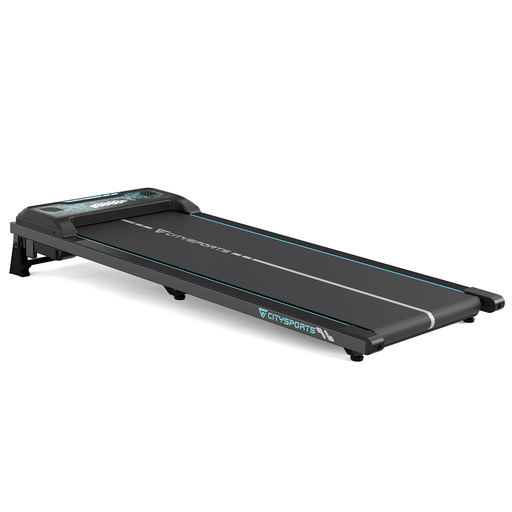
Why This Fits Their Persona: Its 1–6 km/h range suits beginners who want to add gentle indoor walking to a daily routine without committing to a full-size running machine.
The speed range makes its intended walking use clear, while the slim design and transport wheels address storage concerns in a home office or flat.
No assembly is required; it includes a remote control, LED display, cushioned belt and a stated 120 kg maximum user weight.
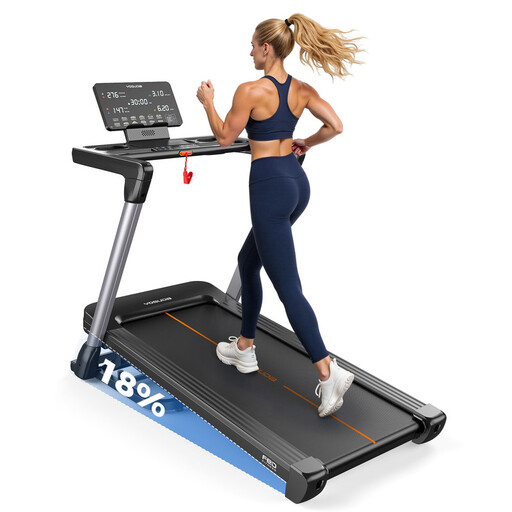
Why This Fits Their Persona: This suits users who want structured home workouts, adjustable incline and app-compatible progress tracking in one folding treadmill.
The specifications identify the automatic incline, frame material, cushioning arrangement and maximum load rather than relying on vague performance wording.
It has a 3.0 HP brushless motor, automatic incline up to 18%, a 172 kg stated capacity, Bluetooth app compatibility and four-way cushioning.
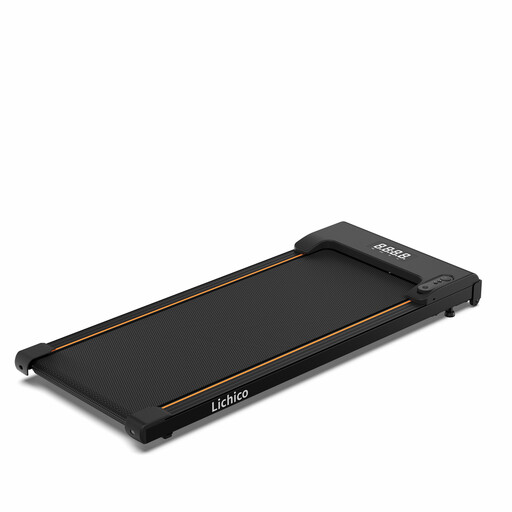
Why This Fits Their Persona: Its under-desk format is designed for home-office users who need a low-profile walking machine that can support up to 130 kg.
Its stated dimensions of 120 cm by 50 cm by 10.5 cm make it easier to assess against a standing desk before purchase.
It uses a steel frame, rubber belt and remote or control-panel operation for walking, step goals and light cardio at home.
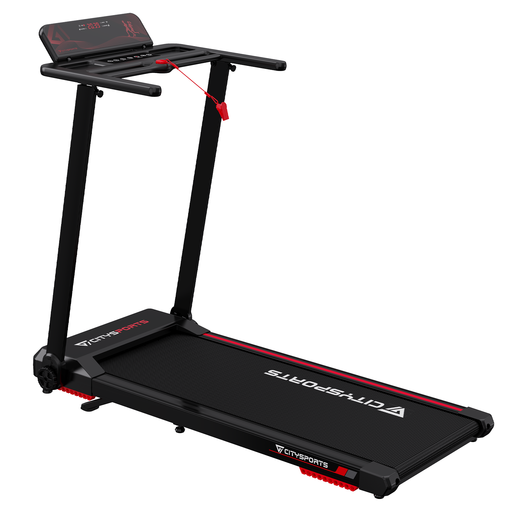
Why This Fits Their Persona: This folding treadmill is suited to UK flats and smaller rooms where walking, jogging and occasional running need to share floor space.
The 123.2 cm length, 61 cm width and 26.5 kg net weight provide useful information for checking storage and movement around a home.
It offers 1–12 km/h, two manual incline settings, a six-layer belt, app control and operation below 45 dB as stated in the product information.
A walking pad treadmill is generally easier to slide beneath furniture and may suit desk walking or low-impact routines. An under-desk treadmill typically has no raised handrail, so it may be less suitable for faster exercise.
A full electric treadmill with a handrail and safety key offers more support for jogging and running. If you want entertainment, look for a treadmill with Bluetooth app compatibility, but confirm which apps and devices are supported before ordering. Connectivity should be treated as an additional feature, not a substitute for checking the belt, motor, capacity and dimensions.
For heavier users, prioritise a clearly stated high-capacity treadmill with a stable frame and suitable running deck. Never exceed the published maximum user weight.
We have compiled a complete, real-time list of products that fully satisfy these strict selection criteria and UK safety regulations.
Running cost depends on the machine’s electrical rating, workout duration and domestic electricity tariff. A treadmill used for short walking sessions generally consumes less electricity than one used for frequent high-speed running. Check the product’s wattage and unplug it when it will not be used for an extended period.
Lifespan varies with build quality, frequency of use, user weight and maintenance. Keep the belt clean, check its alignment and apply lubricant according to the manual. A treadmill used beyond its intended speed or capacity may experience increased wear.
It can be, provided the floor is level and strong enough for the equipment and user. Consider vibration, delivery access and noise transmission. An exercise mat may help reduce movement, but check the machine’s dimensions and the required safety clearance before setting it up.