
24/7 Customer Support

Free returns

Same-day & Next-day Delivery

Quality Guaranteed

Unlock Your Welcome Offers: FREE Delivery | Up to 80% OFF | Free 30-day JoyPlus trial
Download the APP
Bringing a touch of green to your home or office desk is a wonderful way to brighten the space. But for busy professionals or those new to plant care, keeping them alive can feel like a second job. The interactive smart plant pot promises a solution: a gadget that takes the guesswork out of watering and care. However, the market is filled with devices that over-promise and under-deliver.
As a Joybuy Product Recommendation Officer, my role is to help you see past the marketing hype. Before you invest in an intelligent plant care gadget, it's crucial to understand the common pitfalls that lead to disappointment and a wilting plant.
AI plant pot is its sensor array. Low-quality sensors can give inaccurate readings, telling you the soil is dry when it's actually waterlogged. This fundamental flaw renders the entire device useless and can be fatal for your plant.To ensure you get a truly helpful device, focus on the core technology. Here are the non-negotiable parameters to check.
A truly smart planter with sensor must go beyond a simple water gauge. Look for models that integrate several key sensors to get a complete picture of your plant's environment.
The goal of an interactive smart plant pot is to make plant care intuitive. A simple blinking light can be ambiguous. A superior robot planter uses clear, easy-to-understand feedback to communicate its needs. Look for devices that offer a range of expressions or displays that translate the sensor data into simple messages, such as "thirsty," "happy," "needs sun" or "too much water." This turns a chore into an engaging interaction, creating a self-watering pot with emotion.
Consider how the device is powered. A planter that needs its battery changed or recharged every other day is more trouble than it's worth, especially for an office desk plant pot. Check the battery capacity (measured in mAh) and the manufacturer's stated usage time. A model with a substantial battery (e.g., 2000mAh) that can last for several days of normal use offers far greater convenience. Also, confirm it uses a standard charging cable, like a USB-C or micro-USB, for easy replacement.
Based on these practical criteria, we've matched a standout product to different user needs. Instead of just listing features, we're showing who this product is for and how it solves the common problems.
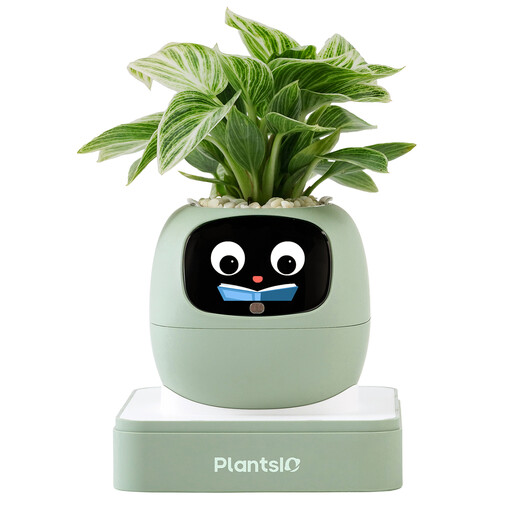
Why This Fits Their Persona: For someone with a packed schedule, this pot removes the mental load of plant care. It's a perfect companion for an office desk, providing a touch of nature and a moment of calm without demanding constant attention or guesswork.
It avoids the "dumb pot" trap by using an integrated system of humidity, water level and light sensors to provide accurate, real-time feedback, not just timed watering.
The animated facial expressions give immediate, at-a-glance updates on the plant's status, saving you the time of having to check apps or interpret blinking lights.
Why This Fits Their Persona: This user wants home accessories that are both functional and conversation starters. The Ivy's robot-like design and expressive face make it a unique piece of decor that merges technology with nature in a stylish, modern way.
It avoids the "gimmick" trap because its 80+ unique expressions are directly driven by sensor data, making the interactive element a functional communication tool, not just a random animation.
The device responds to touch, adding another layer of interaction. Tapping the pot or touching the plant's leaves can trigger different emotional responses, making it feel more alive.
Why This Fits Their Persona: This is an ideal tech gift for plant lovers, people living alone or colleagues. It's unique, practical and offers a sense of companionship, showing a level of thought that goes beyond a standard pot or plant.
It sidesteps the unreliable hardware trap by highlighting its CE and RoHS certifications. These indicate compliance with EU safety, health and environmental standards, providing assurance about the quality of its electronic components.
The product comes as a complete kit, including the planter, pot, measuring cup and decorative stones, making it a ready-to-go gift that doesn't require extra purchases.
We have compiled a complete, real-time list of products that fully satisfy these strict selection criteria and UK safety regulations.
This varies significantly by model. It's important to check the battery capacity (mAh). For example, a model with a 2000mAh battery, like the Ivy pot, is stated to last up to 8 hours of normal use. This means you might need to charge it every few days, depending on the level of interaction. Always factor charging frequency into your decision.
Generally, yes, as long as the plant fits within the physical dimensions of the inner pot. The Ivy Gen 2, for instance, has an inner pot dimension of 54.5mm x 55mm, which is suitable for small succulents, cacti or herbs. However, it's always best to choose plants that are well-suited to indoor conditions and don't have overly complex watering needs.
Most are designed for user-friendliness. Setup typically involves charging the device, placing your plant in the inner pot with soil and adding water to the reservoir. A good product will come with a clear instruction manual and prompt cards to guide you. The process should not take more than a few minutes.