
24/7 Customer Support

Free returns

Same-day & Next-day Delivery

Quality Guaranteed

Unlock Your Welcome Offers: FREE Delivery | Up to 80% OFF | Free 30-day JoyPlus trial
Download the APP
A good kitchen sieve is one of the most versatile tools you can own. From rinsing quinoa to sifting flour for a perfect sponge, it’s a quiet workhorse. Yet, many of us have faced the disappointment of a new sieve rusting after a few washes, or a handle bending under the weight of freshly boiled potatoes. Choosing the right one isn't about finding the most expensive model, but about understanding a few key details that separate a durable tool from a disposable one.
As the Joybuy Product Recommendation Officer, my role is to help you navigate the market and identify the features that truly matter. Before you add another sieve to your basket, let’s look at the common pitfalls that lead to buyer's remorse and how to avoid them.
To ensure your next purchase is a lasting one, focus on these non-negotiable specifications. They are the difference between a tool that serves you well for years and one that ends up in the bin.
The single most important factor for longevity and food safety is the material. Look for products explicitly stating they are made from 304 stainless steel, sometimes referred to as 18/8 steel. This grade contains a higher percentage of chromium and nickel, giving it superior resistance to rust and corrosion compared to cheaper metals. A proper stainless steel colander or sieve made from this material can withstand daily use, washing and contact with acidic foods without degrading.
The type of mesh dictates the sieve's function.
A well-designed sieve is comfortable and practical to use.
Based on these practical criteria, here are a few options from our catalogue, matched to different kitchen needs and user profiles.
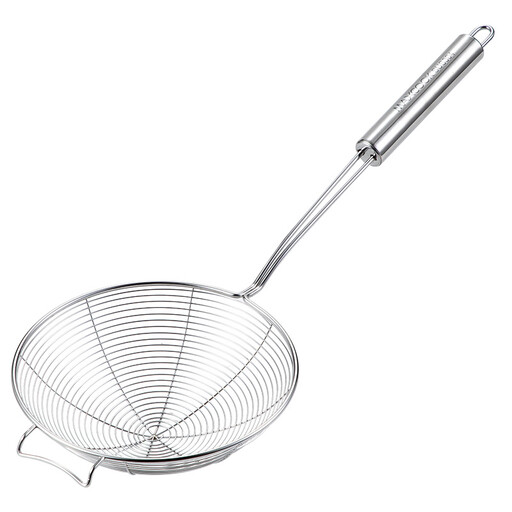
Why This Fits Their Persona: Ideal for anyone who frequently deep-fries chips, scoops dumplings from boiling water or serves from a hot pot. This tool is built specifically for handling hot liquids safely and efficiently.
It directly counters the flimsy construction trap with a robust 304 stainless steel build. The hollow handle is designed to insulate against heat, and a pot rim hook adds stability during use.
Specialised design for high-heat cooking. The wide, deep spoon head allows for scooping large quantities, and the smooth, polished surface is simple to clean.
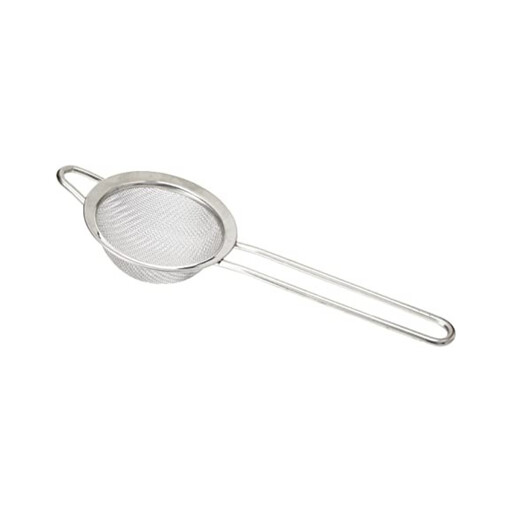
Why This Fits Their Persona: Perfect for those who need precision. Its compact size is ideal for dusting a Victoria sponge with icing sugar, sifting a small amount of cocoa or brewing a single cup of loose-leaf tea.
This sieve avoids the "one-size-fits-all" trap by being a specialised tool for small-scale tasks. Its food-grade stainless steel construction also guards against the rust pitfall.
The very fine mesh strainer ensures no lumps or leaves get through. It's a durable, dishwasher-safe tool designed for precision and easy maintenance.
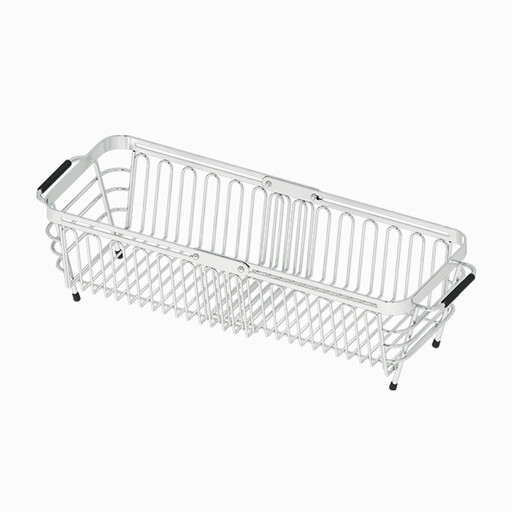
Why This Fits Their Persona: For those with limited counter space or who value multi-functional tools. This basket fits over the sink to wash vegetables, drain pasta or even air-dry dishes, keeping worktops clear.
It's the opposite of a single-use, poorly sized tool. The extendable design (29-44cm) adapts to different sink sizes, and its 304 stainless steel construction prevents rust.
Highly versatile and space-saving. It functions as a large colander and a dish drainer in one, with a raised base for efficient draining directly into the sink.
We have compiled a complete, real-time list of products that fully satisfy these strict selection criteria and UK safety regulations.
1. How can I prevent my stainless steel sieve from rusting? The most effective method is to choose a sieve made from high-grade 304 stainless steel. Beyond that, proper care is key. Always rinse and dry your sieve thoroughly after use, especially after contact with salty or acidic foods. Avoid leaving it to soak in the sink for extended periods and do not use harsh, abrasive scourers like steel wool, which can scratch the surface and create spots for rust to form.
2. What is the difference between a colander and a sieve? While the terms are often used interchangeably, they typically refer to different designs. A colander is usually a larger, bowl-shaped utensil with bigger holes, designed for draining large items like pasta or washing salad. A sieve, or kitchen strainer, has a much finer wire mesh screen. This makes it suitable for separating smaller solids from liquids, sifting dry ingredients like flour or straining things like tea or sauces.
3. Can I put a metal kitchen sieve in the dishwasher? This depends on the manufacturer's guidance. Many modern sieves made from a single piece of high-quality stainless steel are dishwasher safe. However, models with wooden or plastic handles or those with more delicate mesh, may be better suited to handwashing. Washing by hand can often prolong the life of the tool, particularly the joints where the handle and mesh meet. Always check the product details for care instructions.