
24/7 Customer Support

Free returns

Same-day & Next-day Delivery

Quality Guaranteed

Unlock Your Welcome Offers: FREE Delivery | Up to 80% OFF | Free 30-day JoyPlus trial
Download the APP
Choosing your first, or next, microphone for streaming can feel like navigating a minefield of technical jargon and exaggerated claims. With so many options available, it is easy to fall into common traps that lead to buyer's remorse and poor audio quality. As your Joybuy Product Recommendation Officer, my role is to help you sidestep these issues and find a microphone that genuinely suits your needs, whether you're starting a podcast, levelling up your gaming stream or creating content on the move.
Before you add anything to your basket, let's look at three common pitfalls that UK buyers often encounter:
To avoid these pitfalls, focus on a few key parameters that determine a microphone's real-world performance.
Your microphone's connection type dictates how you use it and its potential for future upgrades.
A polar pattern describes the area around the microphone where it is most sensitive to sound. For streaming, one pattern stands out.
Instead of a generic list, here are recommendations matched to specific types of creators.

Why This Fits Their Persona: This kit provides everything a new streamer or podcaster needs to get started with high-quality audio, without the need to buy extra parts. It is a practical, all-in-one solution that delivers clear vocals straight out of the box.
It sidesteps the "cheap kit" pitfall with a durable metal boom arm and an effective shock mount. The dual USB/XLR connection also solves the "dead-end" problem, allowing an easy upgrade path to an audio interface later.
The dynamic capsule and cardioid pattern are excellent for rejecting background noise in a home environment. On-mic controls like a mute button and headphone jack provide essential, real-time control during a stream.
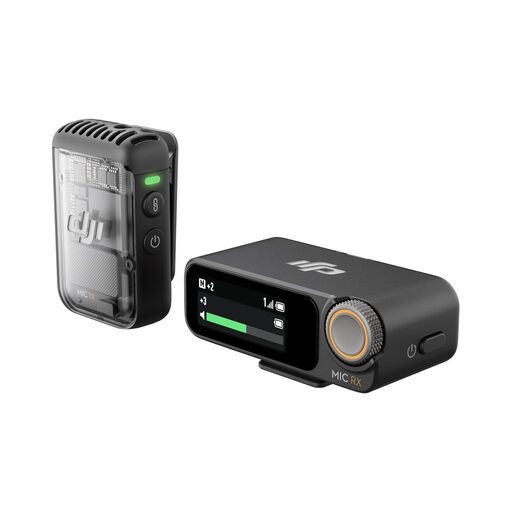
Why This Fits Their Persona: For creators filming outside of a studio, this system offers exceptional audio quality in a tiny, portable package. It is ideal for interviews, vlogs and any content where freedom of movement is paramount. It includes adapters for nearly any camera or smartphone.
This is a purpose-built professional tool, not a repurposed desktop mic. The intelligent noise cancelling feature actively combats unpredictable background sounds, a common issue for mobile creators that a standard mic cannot handle.
The transmitter's ability to record audio internally (32-bit float) acts as a crucial backup, ensuring you never lose a take due to wireless interference or connection issues. The magnetic clip offers discreet and flexible mounting options.
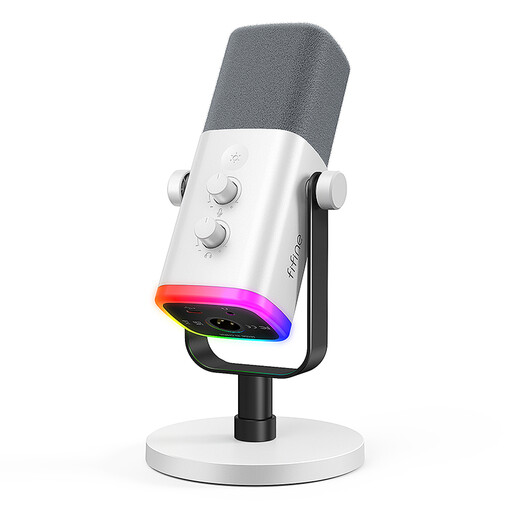
Why This Fits Their Persona: This mic is designed for the modern gaming setup, blending performance with aesthetics. The on-mic controls are perfect for making quick adjustments mid-game without alt-tabbing, and the RGB lighting complements other gaming peripherals.
Like the K688CT, its dual USB/XLR connectivity provides a clear upgrade path, preventing it from becoming obsolete. The dynamic capsule is also far better suited to a typical gaming environment with keyboard and fan noise than a sensitive condenser mic.
The combination of a tap-to-mute button, gain knob and headphone volume control directly on the microphone body gives gamers total command over their audio. The controllable RGB lighting allows for visual customisation.
We have compiled a complete, real-time list of products that fully satisfy these strict selection criteria and UK safety regulations.
You do not need an audio interface for a USB microphone for PC, as it connects directly to your computer and handles all the processing internally. However, if you choose a professional XLR dynamic mic, you will need an audio interface or a mixer. This external device converts the analogue signal from the mic into a digital signal for your computer and provides much greater control over gain, volume and other settings.
The most effective way is to choose the right type of microphone. A dynamic microphone with a cardioid polar pattern is much less sensitive to off-axis sounds than a condenser mic. Additionally, using a sturdy boom arm allows you to position the microphone closer to your mouth and further away from your keyboard, which makes a significant difference.
While the underlying technology is often very similar, the features can be tailored to the use case. A gaming mic often prioritises quick-access controls like a physical mute button, a headphone jack for lag-free audio monitoring and aesthetic elements like RGB lighting. A podcast microphone kit typically focuses on bundling practical accessories like a quality boom arm and pop filter to create a complete vocal recording station. Many modern microphones are versatile enough to excel at both.