
24/7 Customer Support

Free returns

Same-day & Next-day Delivery

Quality Guaranteed

Unlock Your Welcome Offers: FREE Delivery | Up to 80% OFF | Free 30-day JoyPlus trial
Download the APP
Getting a clean, precise angle on a piece of trim can be the difference between a professional-looking finish and a frustrating DIY disaster. For tasks involving soft wood beading, PVC trunking or rubber gaskets, a good pair of mitre shears is an invaluable tool. However, the market is filled with options that look similar but perform very differently. A poor choice can lead to wasted materials, inaccurate cuts and a tool that becomes useless after just one project.
As the Joybuy Product Recommendation Officer, my role is to help you navigate these choices. This guide will highlight the common pitfalls to avoid and break down the essential features you need, ensuring you select a tool that delivers clean, accurate cuts every time.
Before you add any angle cutter for trim to your basket, be aware of these frequent issues that can turn a helpful tool into a source of frustration:
mitre snips are sold as a single unit with no option to replace the blade. Once it's blunt, the entire tool is destined for the bin, making it a poor long-term investment.To ensure your purchase is a lasting one, focus on these three non-negotiable specifications.
The cutting edge is the most critical part of any gasket shear. Look for blades made from SK5 steel, a high-carbon tool steel known for its ability to hold a sharp edge and resist wear. Most importantly, confirm that the blades are replaceable. A model that includes spare blades in the package offers far better value and ensures your tool remains functional for years, not just for a single job.
This is where precision is won or lost. A superior multi angle trim cutter will feature a high-precision engraved scale. Unlike printed markings, these are physically cut into the tool's anvil and will not wear off. Check for a sturdy, adjustable slider that locks firmly into place at common angles (e.g., 45°, 90°, 135°). This guarantees repeatable, accurate cuts for all your moulding shears needs.
The body of the tool should be as durable as its blade. An aluminium alloy handle provides a great balance of strength and low weight, outlasting cheaper plastic alternatives. For comfort and control, look for an ergonomic handle with a PPC (polypropylene copolymer) cover, which provides a secure, non-slip grip. Finally, a simple but effective rotating safety lock is essential for preventing accidents when the tool is not in use.
Based on the critical features outlined above, here are three options tailored to different user needs.
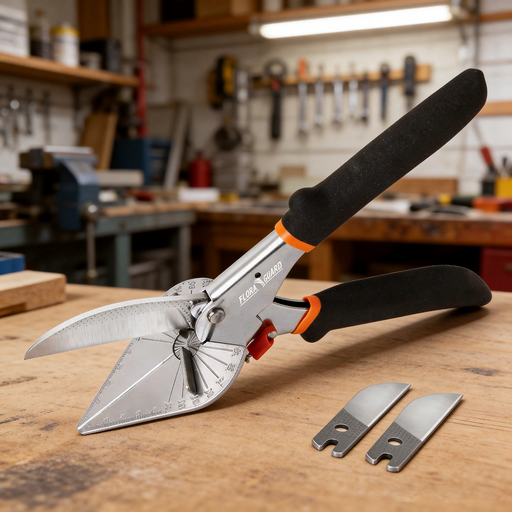
Why This Fits Their Persona: This is an excellent starting point for home DIYers tackling occasional projects like replacing window beading, installing quadrant moulding or cutting PVC trunking for cable management. It provides professional features without a high price tag.
It features a durable engraved angle scale and comes with two replaceable SK5 steel blades, completely avoiding the "disposable tool" and "fading guide" pitfalls.
Includes 2 spare blades, offering great initial value. Features a solid aluminium alloy handle and safety lock for secure handling.
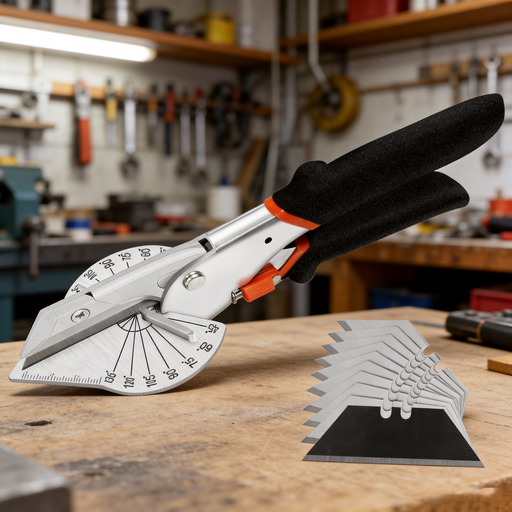
Why This Fits Their Persona: For the serious home renovator, floor layer or joiner who uses their tools daily. If you're tackling a large project with lots of trim work, this model is designed to minimise downtime and keep you working efficiently.
This model directly confronts the "dull blade" problem by providing a generous supply of 10 replacement blades, ensuring the tool remains sharp and effective through extensive use.
The inclusion of 10 spare SK5 blades offers exceptional long-term value and is ideal for high-volume cutting tasks. It shares the same robust build as other models in the range.
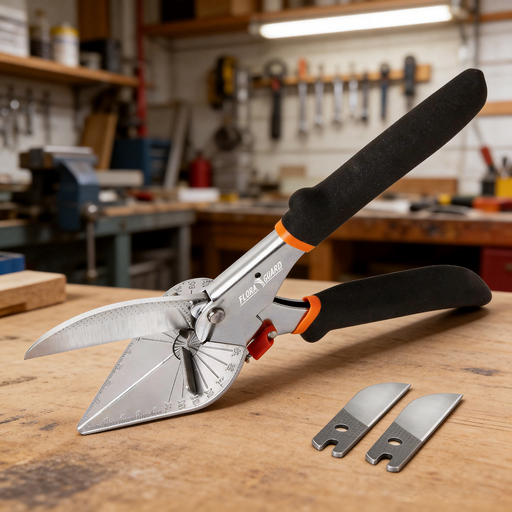
Why This Fits Their Persona: Designed for professionals or those undertaking long, repetitive cutting tasks. The lengthened handle provides extra leverage, reducing the hand strength required for each cut and minimising fatigue over a full day's work.
This model directly addresses the "poor ergonomics" trap. The longer handle design is specifically engineered to improve comfort and reduce strain during prolonged, repetitive use.
The enhanced leverage from the lengthened handle makes cutting easier and more comfortable. It includes 2 spare blades and all the core durable features.
1. What materials can mitre shears actually cut? A pvc trim cutter or mitre shear is designed exclusively for softer materials. This includes pine beading, quadrant moulding, plastic trim, PVC trunking and rubber or vinyl seals. They are not suitable for cutting hardwood, MDF or any type of metal. Attempting to do so will damage the blade and the tool.
2. How often should I change the blade on my mitre snips? The lifespan of a blade depends entirely on the frequency of use and the density of the materials you are cutting. A clear sign that a blade needs changing is when cuts are no longer clean and crisp, or when you need to apply significantly more force. Keeping a stock of replacement blades is the best way to ensure you are always ready for a project.
3. Are quadrant shears better than a mitre saw for small trim jobs? They serve different purposes. For quick, precise angle cuts on small profiles like quadrant shears are often better. They are portable, create no dust and are quiet, making them perfect for finishing work inside a home. A mitre saw is a power tool better suited for larger timber, harder woods and high-volume batch cutting, but it is noisy and creates a lot of dust, requiring a dedicated workspace.