
24/7 Customer Support

Free returns

Same-day & Next-day Delivery

Quality Guaranteed

Unlock Your Welcome Offers: FREE Delivery | Up to 80% OFF | Free 30-day JoyPlus trial
Download the APP
Whether you're navigating a challenging enduro trail, hitting the motocross track or simply enjoying a weekend ride, your safety is paramount. While the thrill of the ride is undeniable, the right protective gear is what allows you to push your limits with confidence. Finding a single solution that covers all your upper body protection needs can feel overwhelming, but a comprehensive piece of motorcycle body armour is often the most effective and practical choice.
As the Joybuy Product Recommendation Officer, my role is to help you understand your options. This guide will walk you through the key features to look for in upper body protection and present a few recommendations to help you make an informed decision for your rides in 2026 and beyond.
Selecting the right gear goes beyond just picking a size. Here are a few crucial factors to consider to ensure you get the protection and comfort you need.
The primary purpose of an armoured jacket is to shield critical areas from impact. A quality piece of upper body armour for adults should provide robust coverage for the back, chest, shoulders and elbows. In the UK and Europe, look for gear that meets CE (Conformité Européenne) safety standards, as this indicates it has been assessed for its protective capabilities. A full motorcycle protective jacket often integrates a spine protector, shoulder cups, elbow guards and a motocross chest protector into one cohesive unit, offering more complete and stable protection than separate components.
It’s a common misconception that heavy-duty protection has to be hot and restrictive. Modern off-road body armour is often constructed from a combination of materials designed for both safety and comfort. Look for designs that incorporate a hard outer shell (often made of PE or TPU) for impact and abrasion resistance, with a shock-absorbing inner layer like EVA foam. Crucially, these elements should be mounted on a breathable mesh fabric base. This construction allows air to circulate, wicking away sweat and keeping you cooler during intense activity or on warmer days.
For body armour to do its job effectively, it must stay in place. A loose-fitting armoured motorcycle jacket can shift during a fall, leaving vulnerable areas exposed. Prioritise gear with multiple adjustment points. Features like wide elasticated waistbands, adjustable shoulder straps and forearm tensioners allow you to create a snug, customised fit that moves with your body without slipping. Thumb loops on the sleeves are another excellent feature that helps keep the elbow pads securely positioned.
Here are a few options from our catalogue that cater to different riding needs and preferences.
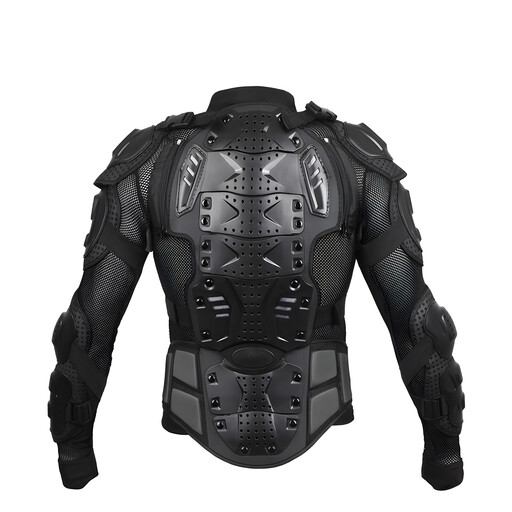
L Size Motorcycle Protective Jacket with Back Protection
Why It Stands Out: This jacket is a complete upper body protection system. It features a removable, articulated back protector that moves with you, alongside high-strength shoulder and elbow guards. The design prioritises both safety and comfort, using a breathable mesh chassis with ventilation holes in the chest plate to optimise airflow.
Pros:
Who is it for? This is an ideal choice for off-road riders, motocross enthusiasts and anyone seeking a single, comprehensive piece of motorcycle body armour that offers a high degree of protection and adjustability.
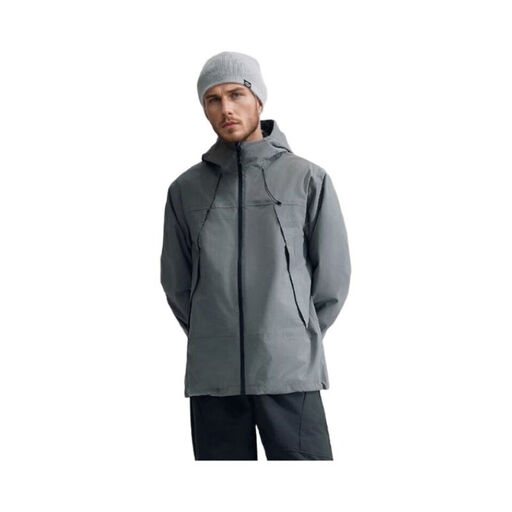
ochama [Pangolin Jacket Basic Edition] Three-in-one Waterproof Jacket
Why It Stands Out: This jacket focuses on protection from the elements. Its key feature is the Teflon-treated outer shell, designed to provide rainstorm-level waterproofing. Paired with a removable polar fleece inner layer, it offers a three-in-one system that can be adapted to changing weather conditions, a common challenge for UK riders.
Pros:
Who is it for? Riders who prioritise weather protection over built-in impact armour. It’s an excellent outer layer to wear over a separate, low-profile chest protector or armoured base layer, providing a complete solution for both impact and weather.
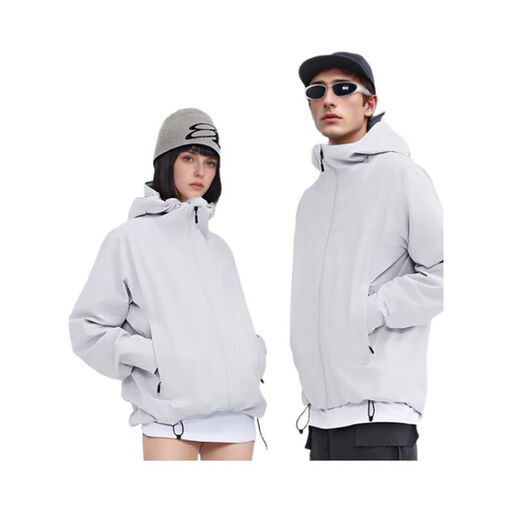
ochama [Pangolin 500 Series] Stretch Jacket Single-layer Hard Shell
Why It Stands Out: This jacket is built for freedom of movement. As a single-layer hard shell made with stretch fabric, it offers a minimalist and lightweight barrier against wind and light rain without restricting your mobility. It’s a departure from traditional, bulky protective gear.
Pros:
Who is it for? This is for the rider who values agility and a minimalist setup. It’s well-suited for trail riding or as a casual jacket that can be quickly thrown on over a separate armoured vest or motocross chest protector when you need an extra layer of elemental protection.
The products featured here represent just a sample of the different types of protection available. Every rider has unique needs, and the right gear for you might be a different style or combination. If you're looking for other features or designs, we invite you to explore our full range of motorcycle jackets to see more choices.
1. Can you wear motorcycle body armour under a normal jacket? Yes, absolutely. Many riders prefer to use a separate body armour system, like the first product featured, underneath a non-armoured outer jacket. This allows you to choose an outer layer for style or weather-specific needs (like a waterproof or thermal jacket) while still having dedicated impact protection underneath.
2. What is the difference between an armoured motorcycle jacket and separate body armour? An armoured motorcycle jacket typically has built-in pockets at the shoulders, elbows and back where armour inserts can be placed. Separate motorcycle body armour is a standalone harness or vest that holds all the protective plates together, which is then worn under other clothing. The latter often provides a more secure and comprehensive fit as it's designed specifically to hold armour close to the body.
3. How should motorcycle body armour fit? It should be snug enough that the protective pads cannot rotate or move away from the areas they are meant to protect (elbows, shoulders, etc.). However, it should not be so tight that it restricts your breathing or range of motion. When you try it on, you should be able to move into a riding position comfortably. Always check the manufacturer's sizing chart and consider your measurements for bust, waist and height.