
24/7 Customer Support

Free returns

Same-day & Next-day Delivery

Quality Guaranteed

Unlock Your Welcome Offers: FREE Delivery | Up to 80% OFF | Free 30-day JoyPlus trial
Download the APP
A warning light does not always point directly to a failed part. A basic car code reader may identify an engine fault, but it might not communicate with the ABS, SRS, transmission, body control or battery systems. For DIY car owners, mobile technicians and independent garages, choosing the right OBD2 diagnostic scanner means looking beyond the number of advertised functions.
The main buying risks are usually:
A suitable scanner should match your vehicle coverage, repair tasks, technical confidence and expected running costs.
A basic OBD2 scanner generally reads and clears powertrain-related diagnostic trouble codes, displays live data and checks emissions readiness. This can be useful for a check-engine light, but it may not access safety and comfort systems.
If you need an ABS and SRS scanner, look for explicit support for systems such as:
A full-system car diagnostic tool can scan available electronic control units and produce a broader vehicle health report. However, coverage depends on the vehicle’s make, model, year, ECU configuration and software database. Always check compatibility before purchase, especially if you need a particular reset or coding procedure.
A bidirectional OBD2 scanner, also called an active test scanner, can send commands to supported vehicle modules. Examples may include switching a cooling fan, operating a window, activating a fuel pump or testing an ABS component.
This is different from simply reading a code. Active testing can help separate a component fault from a wiring, communication or control issue. It should be used carefully and according to the vehicle’s repair procedure.
If you plan to replace or adapt modules, check whether the device is an ECU coding tool and whether coding is online, offline or limited to selected brands. Some procedures may require:
Do not assume that a scanner offering ECU coding can programme every module on every vehicle.
Modern vehicles may use protocols such as CAN, CAN FD, UDS and DoIP. CAN FD and DoIP support can be useful for newer vehicle architectures, but they do not guarantee complete brand coverage.
Also compare the update model:
For FCA vehicles, some functions may require a separate AutoAuth account or manufacturer-related payment. This is separate from the scanner’s own update policy.
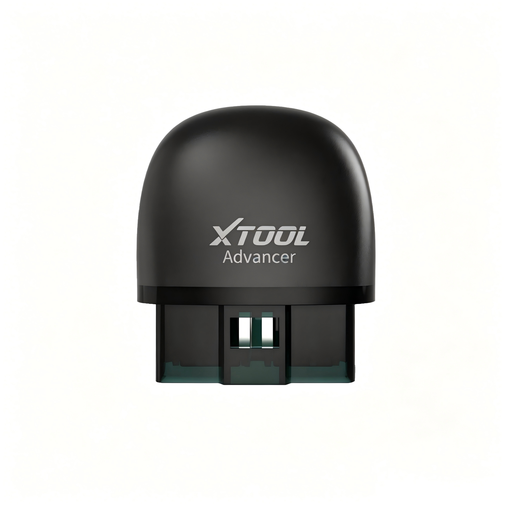
Why This Fits Their Persona: This compact Bluetooth OBD2 scanner suits UK drivers who want phone-based diagnostics, battery checks and routine fault-code information without carrying a tablet.
It is not limited to a basic engine-code display: the product information lists full-system scanning, live data, freeze-frame data and no subscription for standard diagnostics.
Wireless Android and iOS connection, CAN FD support, battery-voltage monitoring and app-based diagnostic guidance.
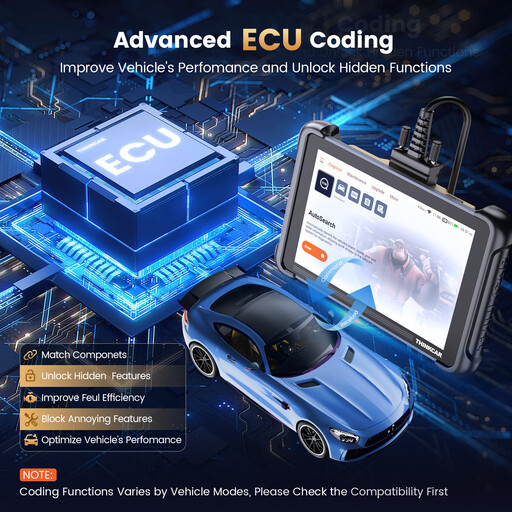
Why This Fits Their Persona: The larger tablet format is suited to home mechanics and technicians who want clearer live-data viewing and dedicated hardware rather than relying on a mobile phone.
The listed specification includes full-system diagnostics, ECU coding, bidirectional testing, CAN FD, DoIP and lifetime free updates, helping address both capability and running-cost concerns.
8-inch display, 34 listed reset functions, 4GB RAM and 64GB storage.
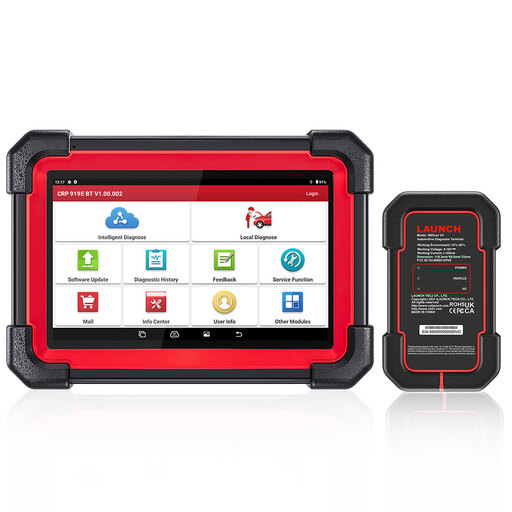
Why This Fits Their Persona: Its wireless VCI, active tests, coding capability and broad service-function list are aligned with independent garages and mobile technicians handling varied vehicles.
The product information clearly notes that coding and active-test availability varies by manufacturer, helping users avoid treating headline function counts as universal.
Bluetooth VCI, CAN FD and DoIP support, full-system access and more than 30 listed service functions.
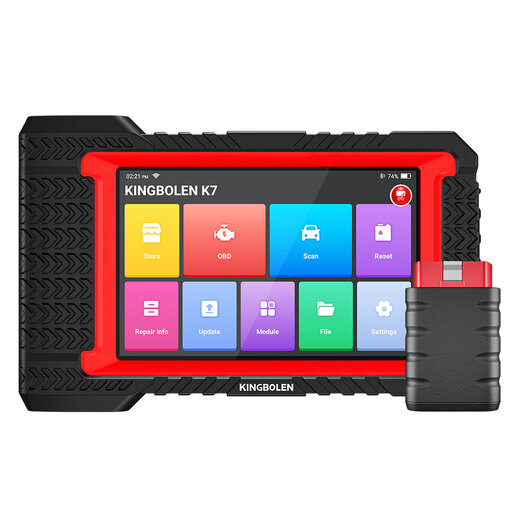
Why This Fits Their Persona: A tablet-based workflow with report sharing, active tests, ECU coding and a broad reset menu can suit workshops working across multiple customer vehicles.
It states lifetime updates, but also advises using a battery maintainer during coding and checking compatibility, making important operating limitations visible.
28 listed reset functions, online and offline coding options, Bluetooth operation and diagnostic report sharing.
We have compiled a complete, real-time list of products that fully satisfy these strict selection criteria and UK safety regulations.
Before connecting any automotive scan tool:
Clearing a warning light does not repair the underlying fault. For braking, airbag, steering or high-voltage vehicle systems, use the relevant repair information and seek qualified assistance where the procedure exceeds your training or equipment.
It can be suitable for code reading, live data and selected service functions. Check phone compatibility, app requirements, Bluetooth range and whether advanced features require a subscription. A dedicated tablet may be more convenient for repeated diagnostics or workshop use.
The physical hardware can remain useful for several years when stored away from moisture, heat and impact. Its practical lifespan also depends on software support, operating-system compatibility, battery condition and access to current vehicle databases.
No. Oil, EPB, BMS, SAS, DPF, injector and throttle functions vary by vehicle. A scanner may list a function but not support it for your particular ECU. Confirm the vehicle identification number and required procedure before ordering.