What to prioritise when buying
For art documentaries, decide how much room light you can control before comparing display types; then assess colour accuracy, seating positions and installation fit on the exact model.
OLED in a dim room
Consider it when: You mainly watch with the lights low and place particular value on dark scenes and subtle tones. RTINGS identifies OLED as a home-theatre-focused route.
Trade-off: Reflections still depend on the particular screen and where your windows and lamps are positioned.
Reflection-focused OLED
Consider it when: You want OLED but cannot always darken the room. LG describes Reflection Free Premium on its OLED G6 line, while Samsung describes Glare Free on the S95H.
Trade-off: Those are manufacturer claims for different models, not interchangeable measurements of how either screen will handle your room’s reflections.
RGB LED or Mini LED
Consider it when: Persistent room light or the availability of a very large screen makes an LED alternative worth comparing. Sony lists its RGB LED BRAVIA 9 II from 65 inches upwards.
Trade-off: Check the exact TV’s dark-scene dimming, reflections and side-seat picture; RTINGS cautions that the Mini LED label has no fixed dimming-zone definition.
| Concern |
What to check |
Who this matters to |
| Faithful colour and detail |
Look for independent pre-calibration colour results where available, or check the exact TV’s cinema-oriented picture modes and adjustment controls. A vivid mode alone is not an accuracy test. |
When I study paintings or restoration footage, I want colours and pale areas to look credible without arranging calibration. Roughly 50% of consumers would make faithful colour and detail their primary concern. |
| Black depth and reflections |
Assess the screen under your usual daylight or lamps, and compare exact-model reflection handling and dark-scene performance. |
If I cannot always dim the room, a reflected window could distract from shadowed artwork. Around 30% of consumers would put lighting and contrast first. |
| Seating and room fit |
Check independent off-axis results where available, then confirm stand or mount requirements, wall space and cable routes for the chosen size. |
With people watching from side seats, I need the picture to remain useful across the room and the screen to fit its planned position. About 20% of consumers would prioritise seating and installation fit. |
Joybuy TV options
These OLED and Mini LED TVs offer different screen sizes for a dim home cinema or for comparing an LED alternative where room light and space affect the choice. Assess colour accuracy, reflections and side-seat viewing for the exact model before relying on its display label.
 No image available
Samsung S90F 55-inch 4K OLED TV (2025)
Consider this OLED model if you mainly watch art documentaries in a room you can dim. Check colour accuracy and how its screen handles your lamps or windows before choosing it for faithful viewing.
55-inch screen; 4K OLED.
View on Joybuy
 No image available
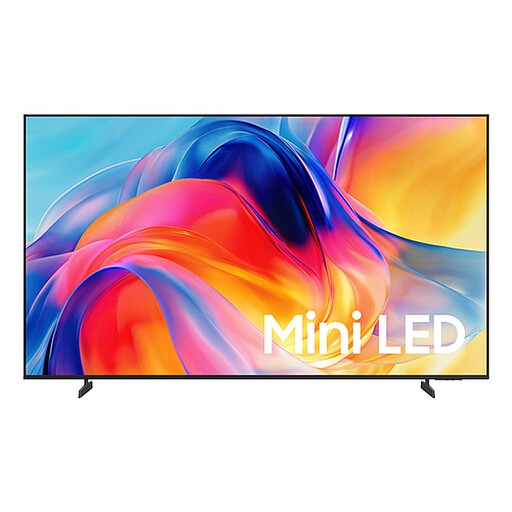
Samsung TU65M70H 65-inch 4K Mini LED TV (2026)
This is an LED alternative to compare with OLED if your viewing room cannot always be darkened. Check its actual reflection handling, colour accuracy and dark-scene dimming for the conditions in which you watch.
65-inch screen; 4K Mini LED.
View on Joybuy
 No image available
TCL 75Q7C 75-inch 4K QD-Mini LED TV
Consider the 75-inch variant if a large screen is central to your home-cinema plans. Confirm that it fits the wall or furniture, and assess colour, reflections and off-centre viewing for the exact model.
75-inch screen; 4K QD-Mini LED; HDR.
View on Joybuy
 No image available
Hisense 55U7Q Pro 55-inch 4K Mini LED TV (55U7QTUK Pro)
This 55-inch Mini LED option gives you another display type to compare with OLED without moving to a larger screen. Check colour accuracy, dark-scene dimming and the view from any side seats.
55-inch screen; 4K Mini LED; HDR.
View on Joybuy
 No image available
TCL 65Q7C 65-inch 4K QD-Mini LED TV
Consider this Q7C size if the 75-inch variant would not suit your planned screen position. Check the 65-inch model’s dimensions and its colour, reflection and viewing-angle behaviour independently of the larger variant.
65-inch screen; 4K QD-Mini LED; HDR.
View on Joybuy
Common questions
Should I use vivid mode for art documentaries?
Start with a cinema-oriented, filmmaker-oriented or similarly restrained mode on your TV rather than assuming vivid mode is accurate. RTINGS assesses white balance, colour accuracy, gamma and colour temperature when evaluating picture fidelity; check exact-model test results if faithful reproduction is a priority.
Will side seats affect the picture?
Side-seat viewing matters more when people are spread across the room. RTINGS notes that viewing angle is important for wide seating arrangements, so check results for the exact TV; it is less central if you usually watch from directly in front.
Is OLED always the right choice for a home cinema?
No: OLED is a strong route to consider for a dim home cinema, while persistent daylight or lamps make reflection-focused OLED and RGB LED or Mini LED models worth comparing. Check the exact screen’s reflections and dark-scene behaviour rather than treating its technology name as a performance guarantee.
What should I do with an old TV when replacing it in the UK?
Use an appropriate electrical recycling route instead of putting the TV in household rubbish. The UK Office for Product Safety and Standards says a retailer must accept an old electrical product free of charge on a like-for-like basis when you buy a replacement; ask the retailer how to arrange take-back.


