Which studio setup fits?

Busy handout studios

For teams giving graduates standard-size prints during a concentrated collection period, repeatable output and a workable media-changing routine matter. DNP Photo Imaging Europe specifies the DS620 for rapid event-photo production.

Portrait-presentation studios

If the agreed deliverable is a larger portrait or the studio uses several paper paths, check A4 borderless capability before prioritising handout speed. Epson specifies both A4 borderless photos and multiple feeds for the EcoTank ET-8500.

Small keepsake stations

For modest demand or a secondary printing point, postcard-size output may be enough. Canon UK specifies 100 × 148 mm postcard prints for the SELPHY CP1500; that format should be agreed before choosing a compact printer.

What matters when choosing?

Professional dye-sublimation printer

Consider when: Graduates will collect repeated standard-size prints during a busy session; DNP Photo Imaging Europe specifies up to 400 prints per hour for the DS620 under its stated conditions.

Trade-off: The DS620 uses supported photo formats up to 15 × 23 cm, rather than A4 portrait paper, and needs a planned media and operator workflow.

A4 photo inkjet

Consider when: A4 borderless portraits, varied paper feeds or copying and scanning are part of the studio's work; Epson specifies these capabilities for the EcoTank ET-8500.

Trade-off: Test the intended portrait workflow against the collection window rather than treating an ink-bottle yield claim as a session print count.

Compact postcard printer

Consider when: A small keepsake desk or secondary station needs postcard prints; Canon UK specifies 100 × 148 mm output for the SELPHY CP1500.

Trade-off: Canon's approximately 41-second postcard print specification calls for a queue test before using the CP1500 as a primary handout printer.

ConcernWhat to checkWho this matters to
Collection queues Work out copies needed in the busiest collection window; test the chosen print size, media changes and operator routine. If graduates are waiting for prints, I need handouts to keep moving rather than a printer that is quick only for an occasional photo. Around 36% of consumers put turnaround first.
Finished format Agree the physical print size and border treatment; check supported media and whether copy or scan functions are needed. For a portrait intended for display, I need the agreed size and finish, not simply any photo print. Larger or more flexible output is the primary concern for around 29% of consumers.
Shared file workflow Confirm the intended device connection and set an operator-controlled process for receiving and separating image files. When several graduates submit images, I want the correct approved file sent to print without another person seeing it. Roughly 21% of consumers prioritise a controlled shared workflow.
Consumable planning Check the exact compatible paper, ink or dye-sub media and plan stock for the busiest session. If supplies run out mid-session, I cannot complete the agreed handouts even if the printer suits the format. For around 14% of consumers, replenishment planning is the first priority.

Mistakes to avoid

  • Using a compact postcard printer for the main queue

    Canon UK specifies about 41 seconds for a SELPHY CP1500 postcard print, while DNP Photo Imaging Europe specifies about 8.9 seconds for a subsequent DS620 print under its stated conditions. Those different specifications are not a like-for-like studio test, but a compact printer's pace may leave graduates waiting.

    Calculate demand at the agreed size and copies per graduate, then test the complete collection workflow before committing.

    A slower-than-needed workflow also takes up staff time during collection.

  • Choosing before agreeing the finished print

    Canon UK specifies postcard media for the CP1500, DNP Photo Imaging Europe lists DS620 photo formats up to 15 × 23 cm, and Epson specifies A4 borderless output for the ET-8500. A printer cannot meet a portrait brief solely because it is described as a photo printer.

    Approve a physical sample size, finish and border treatment with the studio before comparing devices.

  • Treating ink yield as a session guarantee

    Epson's stated photo yield for the ET-8500's included bottles depends on the printing workflow, images, paper and settings; it is not a guaranteed count of finished graduation portraits.

    Test the intended template on the chosen paper and plan compatible consumables for the session.

  • Letting files move unchecked through a shared station

    The University of Essex describes identifiable event photographs as personal data that organisations need to plan and manage carefully. Shared file intake also creates a practical risk of sending the wrong graduate's image to print.

    Set an operator-led submission and file-separation process, explain how images will be used, and ask the organiser's data-protection lead to assess the event workflow.

Relevant brands to consider

DNP Photo Imaging Europe

Its DS620 is a professional event-photo option to examine when repeated standard-size handouts are the priority.

  • DNP specifies DS620 formats from 5 × 15 cm to 15 × 23 cm and output of up to 400 prints per hour under its stated conditions.
  • Those supported photo formats do not provide A4 portrait output.

Epson

Its EcoTank ET-8500 is an A4 photo inkjet to examine when portrait size and paper-handling flexibility matter.

  • Epson specifies A4 borderless output, a six-colour system, photo-size trays, rear feeds, copying and scanning for the ET-8500.
  • Epson's bottle-yield claim should not be treated as a guaranteed count for a particular graduation session.

Canon

Its SELPHY CP1500 is a compact option for modest postcard handouts or a secondary station.

  • Canon UK specifies 100 × 148 mm postcard prints and Wi-Fi, USB-C and compatible memory-card workflows for the CP1500.
  • The stated postcard format and approximately 41-second print time warrant a queue check before using it as the primary studio printer.

Joybuy product choices

These choices address two narrower studio needs: considering a larger-format photo printer and setting up a modest postcard-print station. Check the intended output and busiest-session workflow before choosing either one.

Epson EcoTank ET-18100 printer

Epson EcoTank ET-18100 Printer

Consider this model if larger photo output is part of the studio brief. Confirm the required print size, its pace on the intended media and the compatible ink supply before relying on it for a busy collection session.

View on Joybuy
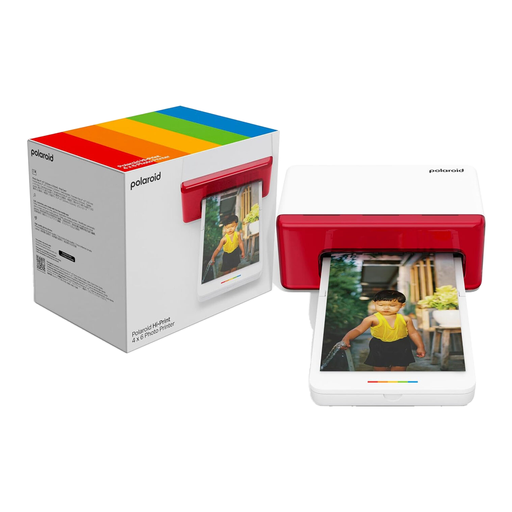
Polaroid Hi-Print Bluetooth 4x6 photo printer in white

Polaroid Hi-Print Bluetooth 4x6 Photo Printer – White

Consider this Bluetooth photo printer for a modest keepsake station if 4 × 6 inch prints meet the agreed brief. Check its printing pace and compatible paper cartridges against the collection plan; it is not an A4 portrait option.

View on Joybuy

Frequently asked questions

Should a shared graduation studio use dye-sublimation or an A4 inkjet?

Choose a professional dye-sublimation printer for repeated standard-size handouts during a busy collection period, or an A4 photo inkjet when larger borderless portraits and varied paper handling are more important. DNP Photo Imaging Europe specifies DS620 formats up to 15 × 23 cm; Epson specifies A4 borderless photos for the ET-8500. Test the chosen workflow at the required size.

Can several people send graduation photos to one printer?

They can use a managed submission process if the chosen printer and devices support the intended connection. Canon UK specifies Wi-Fi, USB-C and compatible memory-card printing for the SELPHY CP1500, while Epson specifies Wi-Fi, Wi-Fi Direct and Ethernet for the ET-8500. Confirm device compatibility and have an operator separate and approve files before printing.

How much paper and ink or dye-sub media should the studio prepare?

Plan supplies around the agreed print size, copies per graduate and busiest session, with compatible media held in reserve. Test the actual portrait template: Epson's stated ET-8500 bottle yield is conditional, so it should not be used as a guaranteed session count.

How should a shared studio handle identifiable graduation photos?

Use a controlled submission, printing and file-handling process rather than leaving graduates' images accessible at a shared station. The University of Essex describes identifiable event photographs as personal data; ask the organiser's data-protection lead to assess the specific workflow and how image use will be communicated. The Information Commissioner's Office noted in August 2026 that its consent guidance was under review.