
24/7 Customer Support

Free returns

Same-day & Next-day Delivery

Quality Guaranteed

Unlock Your Welcome Offers: FREE Delivery | Up to 80% OFF | Free 30-day JoyPlus trial
Download the APP
A portable air conditioner can cool a bedroom, lounge, home office or caravan without the installation work associated with a fixed system. However, choosing by headline BTU alone can lead to disappointing results, excess noise and higher electricity costs.
Before buying, UK households should look beyond promotional phrases such as “powerful cooling” and check the unit’s cooling capacity, exhaust arrangements, controls, safety information and ongoing maintenance requirements.
A 6000 BTU portable air conditioner may suit a smaller bedroom or office, while a 9000 BTU portable air conditioner can provide more capacity for a larger room. A 12000 BTU portable air conditioner is designed for higher cooling demand, but room size is only one factor.
Ceiling height, direct sunlight, insulation, the number of occupants and heat from computers or kitchen appliances can all affect the required capacity. An oversized appliance may cycle frequently, while an undersized unit may run continuously without reaching the desired temperature.
A mobile air conditioner does not simply produce cold air without transferring heat elsewhere. In cooling mode, the hot air must be expelled outdoors through an exhaust hose. A suitable air conditioner with window kit can simplify this process, but buyers should check whether the kit suits their window type.
Keep the hose as short and straight as practical. A poorly sealed window or a kinked hose can allow warm air back into the room and reduce performance.
A 3-in-1 air conditioner commonly combines cooling, dehumidifying and fan modes. A 4-in-1 air conditioner may add a sleep mode or another control function. These settings improve flexibility, but they do not increase the unit’s cooling capacity.
Likewise, an air conditioner with dehumidifier mode can help manage moisture, while fan mode circulates air without active refrigeration. Check the water drainage process and whether the appliance stops automatically when its internal tray is full.
BTU/h is a useful comparison figure, but also review the stated input power in watts. For example, the listed ELECCI 6000 BTU model specifies 673W input, while the 9000 BTU model specifies 995W. The ELECCI X AIRPLUS lists 12,000 BTU and 1,337W cooling input.
These figures are product specifications rather than a guarantee of a particular room temperature. To estimate running cost, multiply the appliance’s input kW by your electricity tariff and the number of hours used. Thermostat cycling, room insulation and the selected mode will affect actual consumption.
Several listed units use R290 refrigerant, also known as propane. R290 has flammable properties, so follow the manufacturer’s instructions carefully. Do not puncture the refrigerant circuit, place the appliance near flames or heat sources, or attempt refrigerant servicing yourself.
Check that air inlets and outlets remain unobstructed. The 9000 BTU model specifies an IPX1 rating, while the 12,000 BTU model specifies IPX0; neither should be treated as waterproof or suitable for use near splashing water.
A portable unit needs stable, level positioning and sufficient clearance for ventilation. Some models have automatic overflow protection, while others may require regular drainage in dehumidifying conditions.
Look for a washable filter and read the maintenance instructions before purchase. The listed 4-in-1 model recommends cleaning its filter and heat pipe every 20 days. Regular cleaning can help maintain airflow, but never clean or move the appliance while it is connected to power.
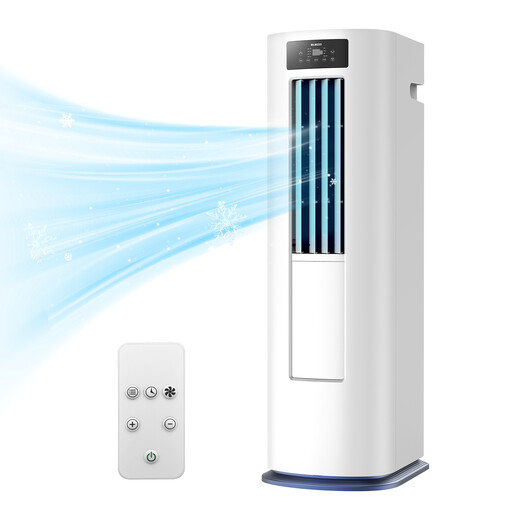
Why This Fits Their Persona: Its 6000 BTU capacity is a practical starting point for smaller UK bedrooms, offices or other modest indoor spaces, with cooling, dehumidifying and fan modes in one appliance.
The included window mount kit supports proper exhaust installation, while the 24-hour timer and automatic water-full protection address common convenience and drainage concerns.
3-in-1 operation, R290 refrigerant, remote control, 24-hour timer and stated Energy Class A rating.
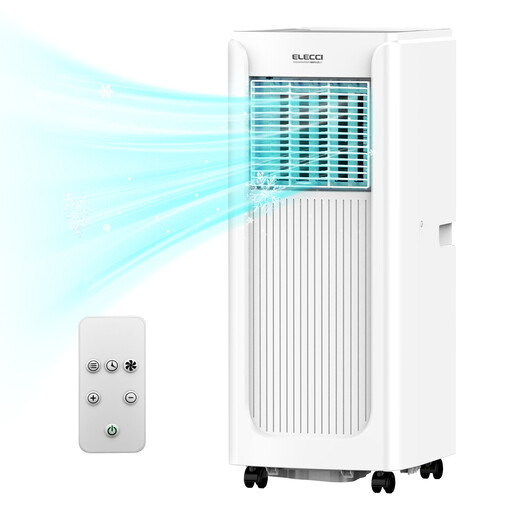
Why This Fits Their Persona: This compact option suits buyers who want more control over daily use, including sleep mode, four fan speeds and adjustable settings from 16°C to 30°C.
Its window adapter, dual drainage ports, washable filter and overflow alert provide practical details often missed in basic product comparisons.
Includes remote control, 24-hour timer, four castors, R290 refrigerant and automatic anti-freezing protection.
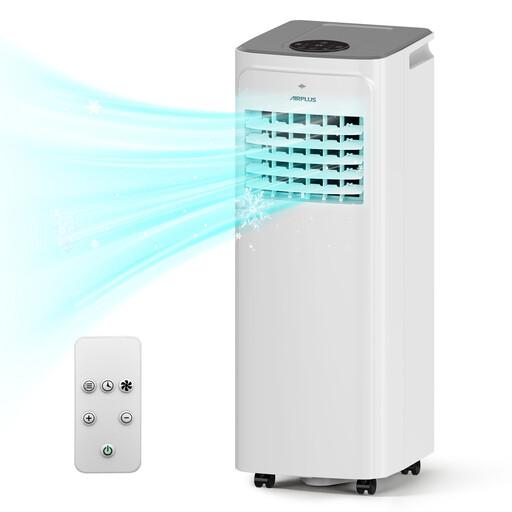
Why This Fits Their Persona: The listed 9000 BTU capacity and stated suitability for rooms up to 30 m² make it relevant for larger bedrooms, living areas and home offices, subject to room conditions.
The required exhaust hose, window kit and ventilation warnings make the installation conditions clear rather than implying that the unit works effectively without outdoor venting.
Cooling, dehumidifier and fan modes, remote control, 24-hour timer and a stated 995W refrigeration input.
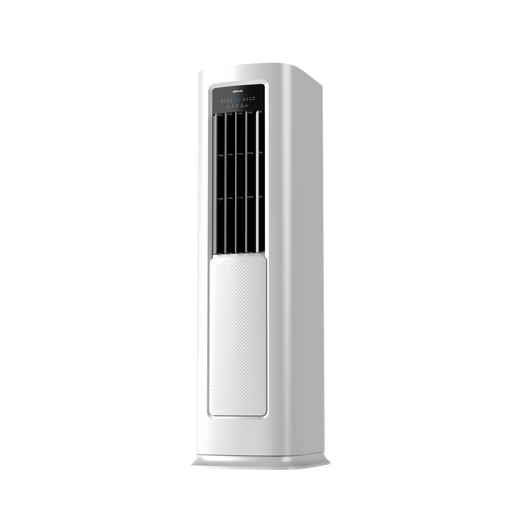
Why This Fits Their Persona: This larger unit is suited to users prioritising higher stated capacity, air swing and movement between rooms, provided the available space and electrical supply are suitable.
The listed 1,337W input, 28kg weight and 1100mm height help buyers assess running cost, handling and storage before ordering.
3-in-1 operation, four fan speeds, automatic horizontal and vertical air swing, remote control and window installation accessories.
We have compiled a complete, real-time list of products that fully satisfy these strict selection criteria and UK safety regulations.
For cooling mode, the hot exhaust air needs to leave the room. A window kit is a convenient method, although the exact installation depends on the window design. Without effective exhaust ventilation, cooling performance can be reduced and the appliance may overheat.
Use the stated input power rather than the BTU figure for a simple estimate. For example, a 995W appliance uses approximately 0.995 kWh for each hour it operates at full rated input. Multiply this by your electricity tariff and usage time. Actual consumption can be lower when the compressor cycles off.
Service life depends on operating frequency, filter cleaning, drainage, storage and handling. Keeping ventilation paths clear, avoiding water exposure and following the manufacturer’s maintenance and refrigerant safety instructions can help preserve reliable operation. Check the warranty and replacement-part information before purchase.