
24/7 Customer Support

Free returns

Same-day & Next-day Delivery

Quality Guaranteed

Unlock Your Welcome Offers: FREE Delivery | Up to 80% OFF | Free 30-day JoyPlus trial
Download the APP
As a Joybuy Product Recommendation Officer, my role is to help you navigate the crowded market of car accessories. A portable car tyre inflator seems like a simple purchase, but many UK drivers find their new gadget is underpowered, unreliable or dead when they need it most. Before you buy, let's look at the common pitfalls that lead to disappointment and how to choose a device that genuinely delivers peace of mind.
The low tyre pressure warning light is a sight no driver wants to see, especially on a cold morning or a remote country lane. While a portable inflator is the obvious solution, the market is filled with devices that over-promise and under-deliver. Here are the three most common traps to avoid.
To avoid these pitfalls, you need to look past the marketing hype and focus on a few core parameters. Understanding these will help you select a reliable tool, whether you need a simple rechargeable air pump or a multi-function car battery booster with tyre inflator.
The power source dictates the convenience and reliability of your inflator.
These two figures determine what your inflator can handle and how fast it works.
If you're considering an all-in-one unit, assess its capabilities as both a jump starter and an inflator. For the jump-starting function, look at the Peak Amps. This number indicates the power it can deliver to start a flat battery. A higher number is needed for larger petrol and diesel engines. For the inflator, check the airflow rate (L/min) to ensure it's not an underpowered afterthought. A well-designed jump starter with air compressor can be an invaluable part of your emergency car kit.
Instead of a generic list, we've matched specific products to the real-world needs of UK drivers.
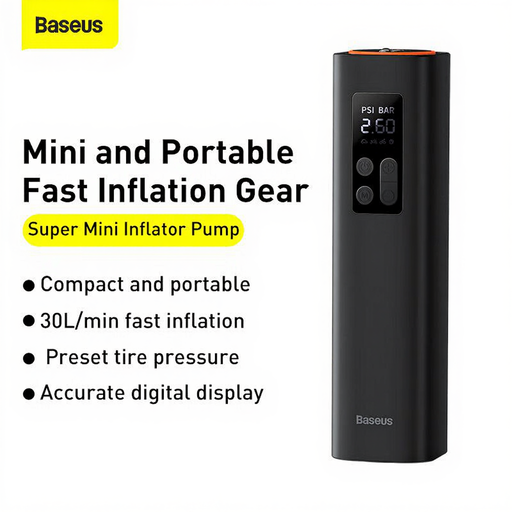
Why This Fits Their Persona: Perfect for the daily driver who needs a simple, no-fuss tool for routine pressure checks and top-ups. Its ultra-compact size means it lives in the glovebox, not the boot, and the 3-metre cable easily reaches all four tyres.
This 12V-only model completely sidesteps the battery self-discharge pitfall. It's always ready to go as long as your car's 12V socket is functional.
Reliable Power: No need to remember to charge it. Compact Design: Small enough to be stored conveniently within arm's reach.
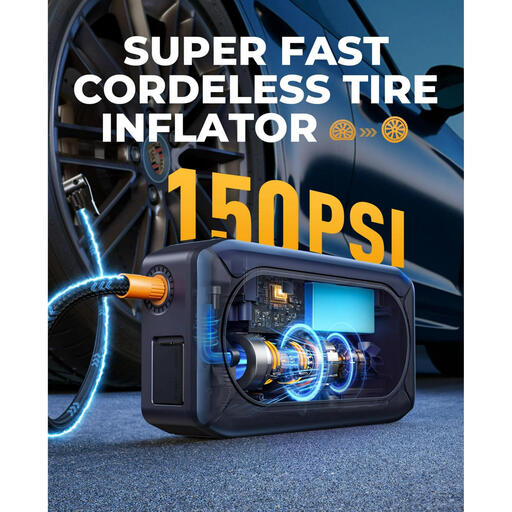
Why This Fits Their Persona: For the family car, SUV or road trip vehicle. This is a serious multi-tool that provides genuine peace of mind, covering both a flat battery and a flat tyre. It's robust enough for larger vehicles, making it a versatile choice for UK households with more than one car.
It avoids the "compromised all-in-one" trap by offering strong specifications for both functions: a high 4500A peak current for jump-starting large engines and a capable 150 PSI digital inflator.
High Power: Capable of starting petrol engines up to 9.0L and diesel up to 8.0L. Smart Features: Includes 10 safety protections and an auto-shutoff inflator.
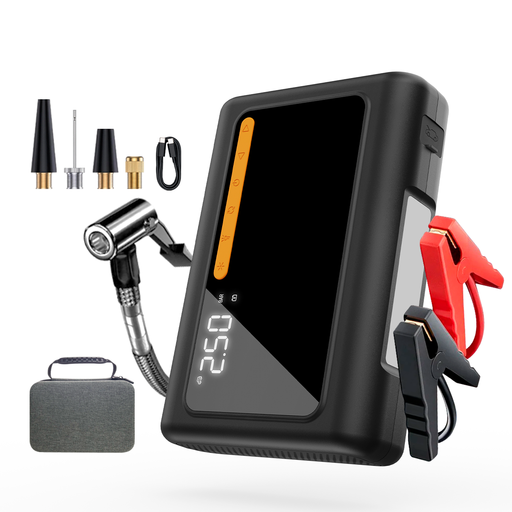
Why This Fits Their Persona: For the driver who values long-term reliability and safety above all. This unit's sodium-ion battery technology is designed to be left in a car year-round, through freezing winters and summer heatwaves, without the safety concerns or rapid self-discharge of lithium.
It directly solves the "dead battery" pitfall. The manufacturer states its ultra-low self-discharge rate allows it to hold a charge for years, eliminating the need for constant recharging.
Long-Term Standby: A true "set and forget" tool. Wide Temperature Range: Operates safely from -40°C to 80°C, making it suitable to be stored in a vehicle permanently.
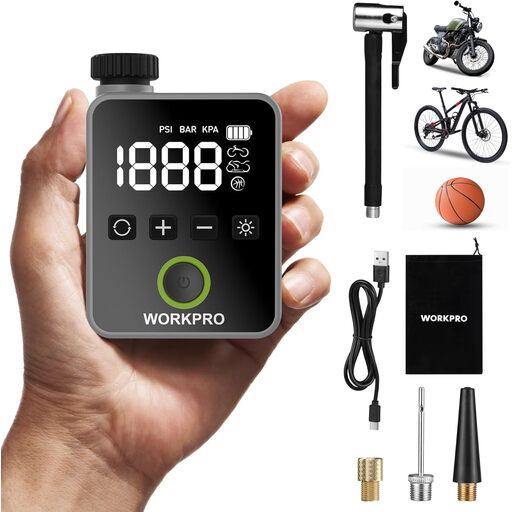
Why This Fits Their Persona: For motorcyclists and cyclists, portability is everything. Weighing just 270g, this cordless mini-inflator is small enough to fit in a pannier, backpack or even a jacket pocket. It's designed specifically for the lower volume, higher pressure needs of two-wheeled vehicles.
It avoids the "misleading claims" trap by being upfront about its limitations. The product information clearly states it is *not* suitable for car tyres, managing expectations and targeting the right user.
Extreme Portability: Exceptionally lightweight and compact for easy carrying on a bike or motorcycle. Niche Focus: Designed specifically for two-wheelers and sports balls.
We have compiled a complete, real-time list of products that fully satisfy these strict selection criteria and UK safety regulations.
The lifespan depends on two factors: the motor and the battery. The motor's durability is related to its build quality and how it's used; avoid running it continuously for longer than the manufacturer recommends (usually 10-15 minutes) to prevent overheating. For cordless models, the battery's lifespan is measured in charge cycles. A quality lithium-ion battery should last for several hundred cycles, which translates to many years of typical emergency or top-up use.
Most inflators have a specified operating temperature range, often from around -20°C to 60°C. This is generally sufficient for the UK climate. However, extreme cold can temporarily reduce a lithium battery's performance and output. While it's usually safe to store in the car, for optimal performance in freezing conditions, it can be helpful to bring the device indoors to warm up before use if possible. Models with newer battery technologies, like sodium-ion, often have a wider stable operating temperature range.
Yes, provided you choose the right one. The key is not just the maximum PSI but the airflow rate (L/min). A larger SUV tyre holds a greater volume of air, so a pump with a low airflow rate will take a very long time to inflate it. For SUVs and larger vehicles, look for a 12V compressor with an airflow of 35 L/min or higher for efficient inflation. Always check your vehicle's recommended tyre pressure, usually found on a sticker inside the driver's door jamb.