
24/7 Customer Support

Free returns

Same-day & Next-day Delivery

Quality Guaranteed

Unlock Your Welcome Offers: FREE Delivery | Up to 80% OFF | Free 30-day JoyPlus trial
Download the APP
A portable car tyre inflator can be useful for routine pressure checks, gradual air loss and roadside top-ups. However, product listings often highlight a large PSI figure or a compact design without explaining how the pump is powered, how long it can run or whether it suits your vehicle.
Three common buying traps are worth avoiding:
A 12V tyre inflator draws power from a car’s cigarette lighter socket. This is practical for longer inflation sessions because it does not depend on a small internal battery. Look for a cable long enough to reach all four wheels without placing strain on the connector. The Baseus Ultra-Mini Air Pump includes a 3-metre 12V power cable, which can be useful around larger vehicles.
A cordless tyre inflator is easier to use away from the car and can suit bicycles, motorcycles and sports equipment. Check the charging method, charging time and whether the battery can be replaced or topped up from a USB connection. For an electric vehicle, confirm that the vehicle provides a usable 12V outlet; the high-voltage traction battery does not directly power a standard portable air compressor.
A digital tyre pressure pump allows you to set a target value and monitor the reading on a display. Automatic stop functions can reduce the risk of continuing to inflate after reaching the selected pressure, although you should still check the final reading with a reliable gauge.
Use the pressure shown in your vehicle handbook, on the door-frame label or inside the fuel filler flap. Do not use the maximum pressure printed on the tyre sidewall as your normal setting. Check tyres when they are cool and remember that front and rear recommended pressures may differ.
A high advertised maximum, such as 150 PSI, is more relevant to small high-pressure items than ordinary car tyres. For everyday use, accuracy, airflow and operating time are more useful comparison points.
A small car tyre air pump is convenient to store in a glove compartment, boot or motorcycle luggage. The trade-off is that compact motors may need cooling breaks, particularly when inflating a significantly under-pressurised car tyre. Follow the instructions and allow the unit to cool between extended sessions.
Check what is included:
A bicycle pump or ball inflator may have different fittings and pressure requirements from a car pump. Multi-purpose accessories are useful, but they should not distract from the pump’s main vehicle compatibility.
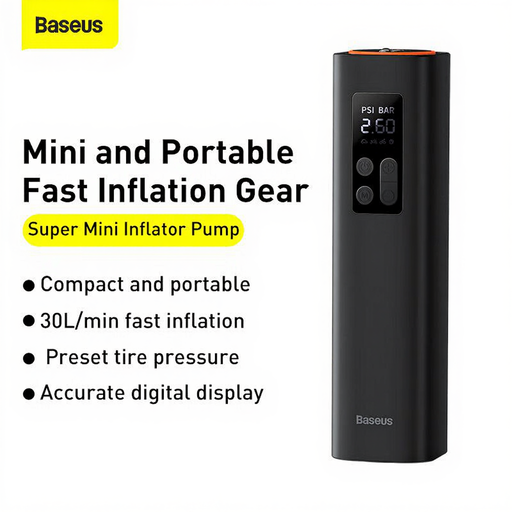
Why This Fits Their Persona: A compact option for drivers who want one pump for occasional car, bicycle and electric vehicle top-ups, with no separate battery charging routine.
Its 3-metre 12V cable avoids short-cable restrictions, while three air nozzles make the kit more versatile than a car-only inflator.
12V vehicle power; supplied hose and three nozzles; suitable for car and bicycle applications.
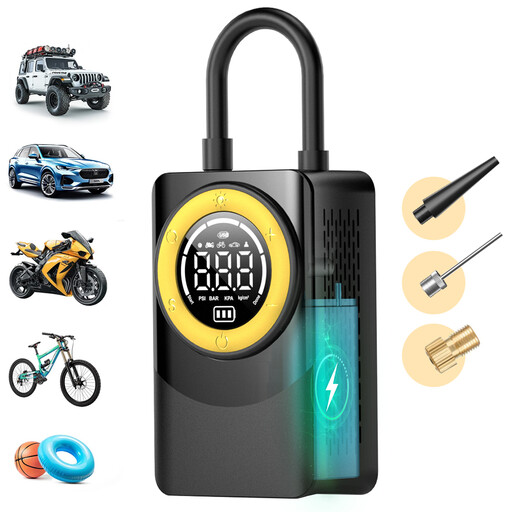
Why This Fits Their Persona: A cordless choice for EV drivers and motorists who prefer a display-led setup without routing a power cable around the vehicle.
The built-in battery removes dependence on a 12V socket, but buyers should charge it fully before keeping it for roadside use.
Cordless operation; built-in battery; digital display; described for cars, motorcycles and bicycles.
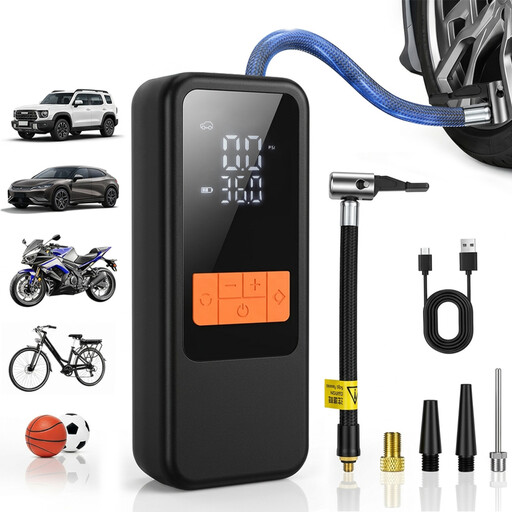
Why This Fits Their Persona: Suitable for people who regularly switch between car, motorcycle, bicycle and ball inflation and want a rechargeable unit with selectable modes.
The stated runtime and inflation figures set clearer expectations than relying only on a headline PSI number. It also has five inflation modes.
4000mAh battery; 150 PSI maximum pressure; Type-C charging; LED light with steady and SOS modes.
Before using an emergency roadside inflator, park safely, apply the handbrake and switch on hazard lights where appropriate. For a corded pump, the supplied instructions may require the engine to run to reduce the risk of draining the 12V battery. Keep the hose and connector clear of moving or hot parts.
An inflator is intended to restore pressure temporarily or maintain a tyre. If a tyre repeatedly loses air, has visible damage or will not hold pressure, arrange a professional inspection rather than continuing to refill it. Store the device dry, avoid leaving a battery model in extreme temperatures and inspect cables, hoses and valve connectors periodically.
We have compiled a complete, real-time list of products that fully satisfy these strict selection criteria and UK safety regulations.
Yes, but storage conditions matter. Avoid prolonged exposure to direct sunlight, damp boot compartments and extreme temperatures. Recharge cordless models periodically so they are not flat when needed.
A 150 PSI rating indicates the stated maximum pressure, not the expected inflation speed. For car tyres, compare airflow, hose connection, pressure display and continuous-use guidance. Always inflate to the vehicle manufacturer’s recommended pressure.
They can be, provided the connector fits the tyre valve and the battery has sufficient charge. A cordless electric vehicle tyre pump does not normally connect to the EV’s traction battery. Check the product instructions and your vehicle’s equipment before relying on it for roadside use.