Who the kit needs to serve
The useful starting point is the task your household would need the equipment to perform, rather than the number of devices in the kit.
Households prioritising phone charge
If keeping existing phones powered is the main concern, choose a power bank alongside the correct cable and a routine for recharging it before storage. The UK government’s Prepare campaign includes a portable power bank in its emergency-preparation advice.
Households wanting another route to updates
A battery or wind-up radio offers a way to receive broadcasts without relying on home broadband. Check the power method, keep suitable spare batteries if needed, and find stations you can receive locally. Prepare includes a radio in its advice for power cuts.
Households storing a kit for long periods
Keep the battery formats manageable, use chargers specified for the equipment and make inspection part of the household routine. Duracell advises storing loose batteries in a dry place at room temperature; follow each device’s own storage instructions as well.
What to check when choosing
Check phone compatibility and a usable charging routine first, then decide whether broadcast updates, lighting and spare batteries also belong in your kit. A radio receives information but does not charge a phone or provide two-way contact.
| Concern |
What to check |
Who this matters to |
| Keeping phones chargeable |
Match the phone connector and cable to the power bank’s output ports; plan when to recharge the bank. |
If I need my phone for contact during a power cut, I want a cable that fits and a power bank that is ready to use. About 28% of consumers put phone-charge continuity first. |
| Receiving broadcast updates |
Choose a reception type and power method you can maintain; test reception and note useful stations. |
When home internet is unavailable, I want another way to hear updates, even though a radio cannot let me reply. Receiving broadcasts is the primary need for about 22% of consumers. |
| Lighting and spare cells |
Confirm each device’s specified battery size and whether it uses replaceable or built-in rechargeable cells. |
I want a torch and the right spares ready without keeping track of many battery sizes. For about 22% of consumers, manageable lighting and spares come first. |
| Battery handling |
Check the manufacturer’s charger instructions and inspect equipment before use; use an appropriate recycling route at end of life. |
If equipment will sit in storage, I need to know how to charge, inspect and dispose of its batteries safely. Battery handling is the main concern for about 28% of consumers. |
Prepare notes that internet connection and possibly mobile signal can be lost during a power cut. Treat a charged phone and a radio as parts of a household plan, not substitutes for official warnings or emergency services.
Relevant brands for reference
These brands illustrate different equipment choices; a brand’s range does not establish that every model has the same features.
Anker
Anker’s power-bank range is relevant when portable USB charging is the household’s main requirement.
- Anker lists a 20,000mAh model with an 87W shared-output specification; those figures apply to that model, not the whole range.
- Check the selected model’s ports and output against your phones and cables.
Roberts Radio
Roberts offers portable-radio options for households considering broadcast updates.
- Roberts describes its SolarDAB 99 as combining DAB/DAB+ and FM reception with rechargeable, USB-C, hand-crank and solar charging options.
- Those power options are specific to SolarDAB 99; test reception and maintain the charge of whichever model you choose.
Panasonic
Panasonic’s RF-D15 illustrates a conventional battery-or-mains radio route rather than a hand-crank arrangement.
- Panasonic specifies DAB+/FM reception and four direct preset buttons for the RF-D15.
- Confirm availability, the required batteries and reception before treating that particular model as a purchase option.
Duracell
Duracell is relevant when choosing replaceable cells, rechargeable cells or chargers for compatible equipment.
- Its UK range includes AA and AAA batteries, rechargeable batteries and chargers.
- Duracell recommends dry, room-temperature storage and removing batteries from devices left unused for several months; follow the instructions for the particular device and cells.
Joybuy power-bank selections
These portable power banks are options for keeping household phones chargeable during a disruption. Check the actual phones and cables before choosing either one; add a separately chosen radio if receiving broadcasts is part of your plan.
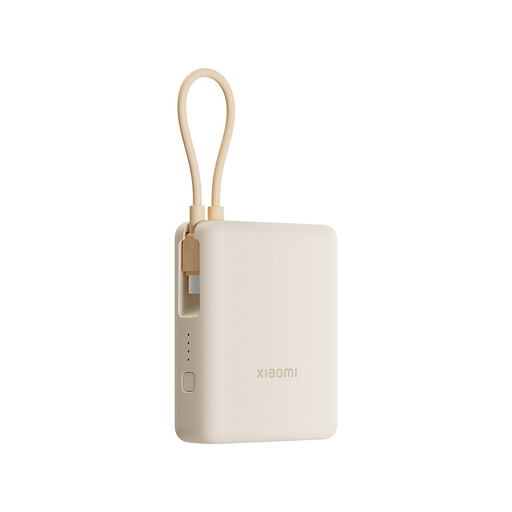 Image unavailable
Xiaomi 33W Power Bank 10000mAh with Integrated Cable, Tan
A portable charging option for a household keeping phones ready for a power cut. Check that the integrated cable and available connections suit your phones, and charge the bank before storing it. Its stated capacity does not establish how many times it will recharge a particular phone.
View on Joybuy
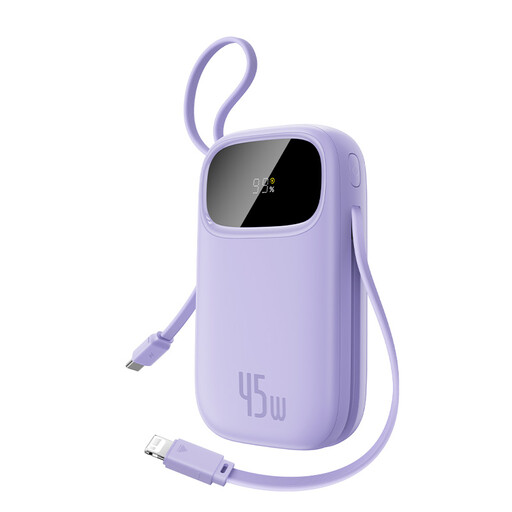 Image unavailable
Baseus EnerFill FC31 Qpow 3 10000mAh 45W Power Bank with USB-C and iP Cables, Nebula Purple
A portable charging option if the built-in cable types match the devices in your household. Confirm the rated capacity before buying: the title states 10,000mAh, while the accompanying description gives 5,000mAh at 7.3V/36.5Wh. Also check the charging requirements of each device you intend to connect.
View on Joybuy
Questions about power-cut equipment
What can I keep for updates during a power cut?
The UK government’s Prepare campaign suggests a battery or wind-up radio for updates during a power cut. Check that you can receive useful stations and keep the specified spare batteries if the radio needs them.
Will a power bank let me contact emergency services?
A power bank can supply charge to a compatible phone, but it cannot guarantee a mobile signal or internet connection. Prepare warns that both internet connection and possibly mobile signal can be affected by a power cut; keep following official warnings and your household emergency plan.
How should I charge and store the equipment?
Follow each device’s instructions and use its manufacturer-recommended charger. Scottish Fire and Rescue Service advises against charging lithium-ion batteries while asleep or away from home; Duracell recommends keeping loose batteries dry and at room temperature.
What should I do with used batteries?
Use a suitable battery or electrical-waste recycling route rather than ordinary household waste. GOV.UK advises that lithium-battery terminals should ideally be taped before recycling; a device whose battery cannot be removed should be handled as electrical waste.
What if my household relies on a landline or connected alarm?
Ask your communications provider how the service you rely on is supported during a power or network outage. Prepare identifies personal alarms and connected health-monitoring equipment among services that can be affected by phone and broadband outages; a power bank or radio is not a substitute for arrangements specific to those services.


