Quiet-study app testers
If you repeatedly enter text, complete forms or test shortcuts near other people, limiting key noise may matter more than a pronounced mechanical sound.


For desktop-app testing in a quiet study, start with a scissor-key keyboard described as quiet, or choose a mechanical keyboard only after checking its exact quiet-switch variant. If repeated shortcuts, macros or a wired connection are essential, weigh those requirements alongside typing sound, software compatibility, layout and desk fit. A quiet label alone cannot tell you how a keyboard will sound in your study.
If you repeatedly enter text, complete forms or test shortcuts near other people, limiting key noise may matter more than a pronounced mechanical sound.
If you repeat test flows or move between machines, programmable keys, macros or device switching may shape your choice. Check that the configuration software works with your test setup.
If you test for extended periods, consider keyboard height, layout and placement as part of your whole workstation. The Health and Safety Executive advises considering equipment, furniture and working conditions together in workstation assessments.
Decide which requirement would determine your choice if you had to compromise. For quiet-study desktop-app testing, the key decisions are typing disturbance, repeatable commands and connection options, and workstation fit.
Consider it when: Limiting typing disturbance takes priority over changing mechanical switches. Logitech says increased key stability reduces noise on MX Keys S; CHERRY describes the SX scissor keys in STREAM DESKTOP as quiet.
Trade-off: Check whether your preferred model has the shortcut configuration and keyboard-only or bundled format you need.
Consider it when: You want mechanical feedback but still need to limit disturbance. Logitech offers MX Mechanical with a Tactile Quiet switch option.
Trade-off: MX Mechanical also comes in Clicky and Linear versions, so the model-family name alone does not identify the switch you will receive.
Consider it when: Remapped commands or connection choice drive the purchase. Keychron describes the K5 Max as supporting VIA macros and wired, Bluetooth and 2.4 GHz connections.
Trade-off: Those configuration options do not establish that its typing sound will suit a quiet study; assess the exact switch variant.
| Concern | What to check | Who this matters to |
|---|---|---|
| Typing noise | Check the exact key mechanism or switch variant, then assess whether its sound suits your study. | If repeated keypresses might disturb other people, I would put a restrained typing sound ahead of switch customisation. Around 40% of consumers put limiting typing disturbance first. |
| Shortcuts and connections | Confirm the required macro software and operating-system compatibility; check for any connection mode your test setup needs. | When I repeat commands or move between test devices, I need the controls and connection options to fit that workflow. For around 30% of consumers, this is the primary concern. |
| Layout and desk fit | Check key layout, numeric-keypad needs and available mouse space; consider keyboard placement within the whole workstation. | For a long session at a small desk, I need room to reach the pointer and any keys I use regularly. Workstation fit comes first for around 30% of consumers. |
Switch variants can change the decision. Logitech sells MX Mechanical with Tactile Quiet, Clicky and Linear options; the quiet-study case for one variant does not automatically apply to the others.
Check the full switch name on the product listing and order details, particularly if avoiding clicky typing is a priority.
Remapping and automation depend on the configuration tool and the operating system used by your test machine.
Check the software requirements for features such as Logitech Smart Actions or Keychron VIA macros, then confirm that your required app shortcuts work after setup.
Keyboard position is only part of a setup that also includes the desk, chair, display, pointing device and working conditions. The Health and Safety Executive advises considering the whole workstation in assessments.
Arrange the keyboard around the full setup. If you are an employee using display screen equipment daily for continuous periods of an hour or more, follow your workplace assessment process.
A numeric keypad may help with repeated number entry, while a wider board can leave less room for the mouse on a small study desk.
Choose a full-size layout if its keys serve your test flows; otherwise, measure your usable desk space and compare a compact format.
Its MX Keys S scissor-key and MX Mechanical ranges offer different approaches to desktop work.
The K5 Max is a low-profile, full-size UK-ISO mechanical option for workflows that use remapping and connection choice.
The STREAM DESKTOP set pairs a keyboard using CHERRY SX scissor keys with a mouse.
These choices include full-size and compact keyboards, plus a keyboard-and-mouse set. Compare their stated layouts and variants against your need for quiet typing, repeatable test commands and space for the rest of your workstation.
 No image available
Consider this full-size option if you want the listed Silent Tactile switch variant for repeated typing, while checking how it actually sounds in your study.
The name specifies a 108-key US layout, three connection modes, hot-swappable design and 8000 mAh battery. Check that US key mapping suits your test setup and confirm macro support if your workflow requires it.
 No image available
This is a full-size wireless option to consider if you want a keyboard identified as a UK variant; check whether its typing sound suits your quiet study.
Confirm its exact connection options, key layout and configuration features before choosing it for a test workflow that depends on wired use or macros.
 No image available
Consider the set if you need a keyboard and mouse together, but check the typing sound rather than relying on the Silent name.
The product name specifies 2.4 GHz wireless operation and a US keyboard layout. Check whether the mouse and key mapping suit your setup, and confirm any wired or macro requirement separately.
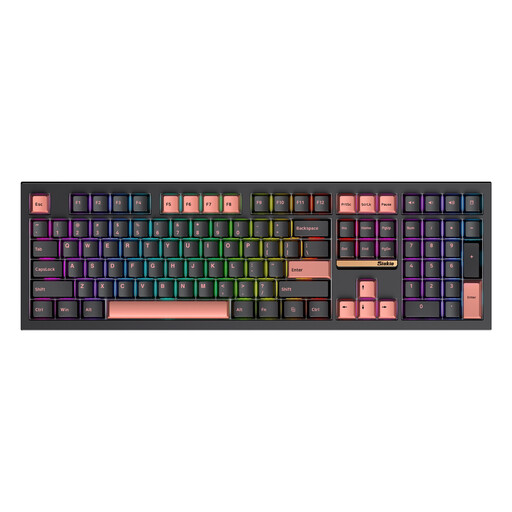 No image available
Consider its full-size format if your app tests use many dedicated keys; assess the exact switch sound before choosing it for a quiet study.
The name specifies detachable switches and three-mode operation. Check the keyboard layout, individual connection modes and macro support against your test setup.
 No image available
Consider this compact format when desk space matters, provided its keys cover the commands you use during testing.
The name specifies an 80% US layout, three-mode operation and the Latte Switch variant. Check typing sound, key mapping and macro support; compare the compact key arrangement with any need for a full-size numeric keypad.
If low typing disturbance is your priority, check a quiet-switch configuration instead of choosing a Clicky variant. Logitech lists Tactile Quiet, Clicky and Linear as distinct MX Mechanical options, so verify the exact switch before buying.
A wireless keyboard can fit a test setup that permits its connection method; choose a wired-capable model if a cable is required for your workflow. Keychron lists wired, Bluetooth and 2.4 GHz connections for the K5 Max, while Logitech describes multi-device switching for MX Keys S. Check the modes of the exact product you plan to buy.
No keyboard choice accounts for the whole workstation. The Health and Safety Executive advises considering equipment, furniture, work conditions, the job and individual needs; employees using display screen equipment daily for continuous periods of an hour or more should follow their employer's workstation assessment process.
Check an electrical-equipment recycling route rather than assuming the keyboard belongs in general waste. GOV.UK identifies the Waste Electrical and Electronic Equipment Regulations 2013, as amended, as the underpinning UK legislation; check current retailer take-back and local authority arrangements for a practical disposal option.