
24/7 全天候客户支持

免费退货

当日/次日达

品质保障

开启新人专享福利: 全场免邮 | 低至 2 折 | 免费试用 30 天 JoyPlus 会员
下载 Joybuy
Buying rechargeable batteries and chargers can reduce the number of disposable cells used in your household, but choosing the wrong combination may lead to poor runtime, slow charging or damaged devices. The key is to match the battery size, chemistry and capacity with the charger and the equipment you use.
Whether you need power for gaming controllers, cameras, toys, remote controls or wireless keyboards, the following guide explains the specifications worth checking before you buy.
A higher capacity, shown in mAh, generally means a battery can store more charge. However, capacity is not the only consideration. High-capacity cells may take longer to charge, while low-drain devices such as clocks and remote controls may not need the highest available rating.
For frequently used or high-drain equipment, such as digital cameras and gaming controllers, AA rechargeable batteries 2500mAh can offer longer use between charges. For compact devices, AAA rechargeable batteries 900mAh may provide a suitable balance between size and runtime.
A charger designed for NiMH rechargeable batteries should not be used with alkaline, lithium or other non-compatible chemistries. Battery size also matters. Some chargers accept only AA and AAA cells, while a universal battery charger may support AA, AAA, C, D and 9V NiMH batteries.
Check the product specification rather than relying on the word “universal”. Also look for features such as reverse-polarity protection, damaged-cell detection and automatic shut-off.
Charging time depends on battery capacity, the number of cells inserted and the charger’s charging current. A charger that advertises a four-hour charge may refer to a particular battery size and capacity, rather than every possible combination.
Independent charging channels are useful because they allow cells to be charged individually or in different quantities. This is more practical than chargers that require two or four batteries to be inserted as matched groups.
AA and AAA are the most common household sizes. NiMH rechargeable cells typically provide a 1.2V nominal voltage, compared with the 1.5V rating commonly shown on disposable alkaline batteries. Most household devices designed for standard AA or AAA batteries accept this difference, but always check the device instructions if it has specific voltage requirements.
Capacity indicates the amount of electrical charge a battery can store under specified test conditions. It is not a guaranteed runtime figure because actual performance varies by device, temperature and usage pattern.
As a practical guide:
Avoid mixing batteries with different capacities, brands or charge levels in the same device. Use matching cells as a set and recharge them together.
A suitable rechargeable battery charger should clearly state its compatible chemistry and sizes. Helpful features include:
A USB battery charger is convenient for travel, desks and homes with spare USB ports. A mains charger may be more convenient if it stays in one location and you regularly charge several sets.
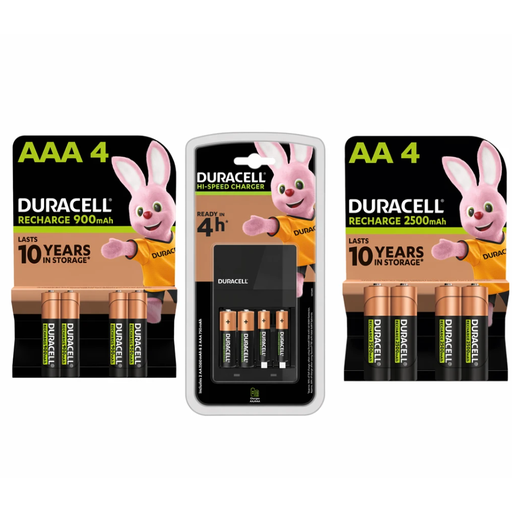
Why This Fits Their Persona: This rechargeable battery starter kit gives a household both common battery sizes, plus a UK-plug charger and starter cells, reducing the need to purchase each component separately.
The charger is specified for NiMH AA and AAA batteries and includes overcharge protection, temperature control and damaged-battery detection.
Includes four 2500mAh AA cells, four 900mAh AAA cells and independent charging channels.
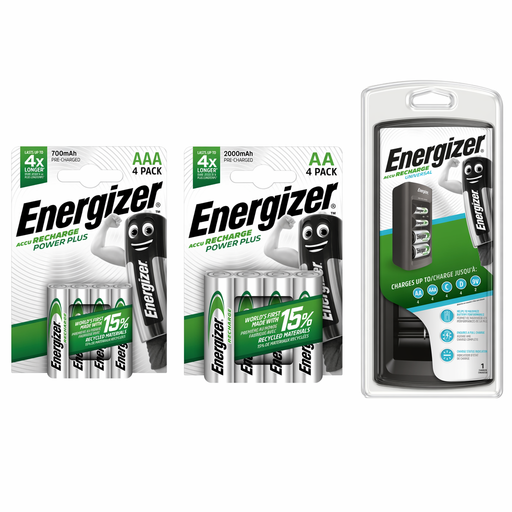
Why This Fits Their Persona: It is suited to UK households that want one compact charger for several NiMH sizes, including regular AA and AAA use.
The charger specifies support for AA, AAA, C, D and 9V NiMH batteries, with individual LED indicators and protection features.
Includes four 2000mAh AA and four 700mAh AAA batteries, with a foldable UK plug for storage.
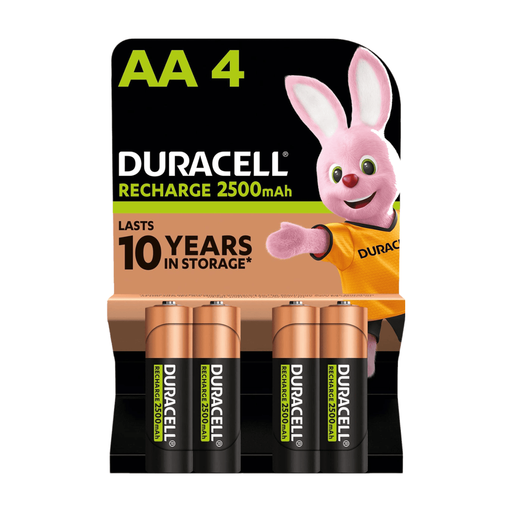
Why This Fits Their Persona: These high-capacity AA cells are aimed at frequent users of cameras, gaming controllers, torches and other equipment that draws more power.
The 2500mAh rating is clearly stated, so buyers can compare capacity with lower-rated AA cells rather than relying on vague runtime language.
Four 1.2V NiMH AA batteries, supplied pre-charged and designed for repeated recharging.
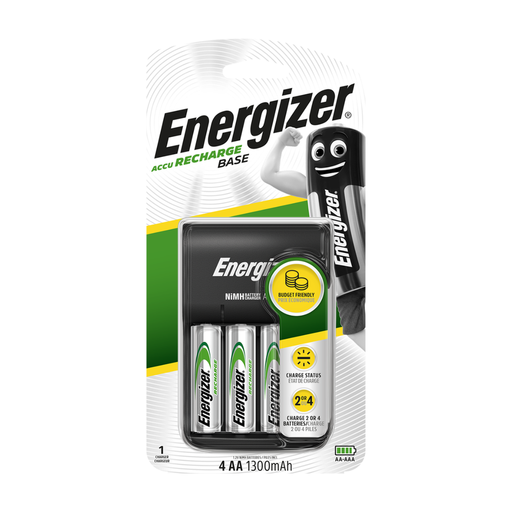
Why This Fits Their Persona: The USB connection works well beside a laptop, desktop computer, power adapter or travel setup where a mains charger may be inconvenient.
It states compatibility with NiMH AA and AAA batteries and includes automatic shut-off, overcharge prevention and faulty-battery detection.
Charges two or four cells through USB and includes four pre-charged 1300mAh AA batteries.
We have compiled a complete, real-time list of products that fully satisfy these strict selection criteria and UK safety regulations.
Use batteries in matching sets and insert them with the correct polarity. Do not place rechargeable cells in a charger designed for a different chemistry. Remove batteries when charging is complete if the instructions recommend doing so, and unplug the charger when it is not in use.
Store cells in a cool, dry place away from direct sunlight. Do not use batteries that are swollen, leaking or visibly damaged. Used rechargeable batteries should be taken to a suitable battery recycling collection point rather than placed in general household waste.
They can offer better long-term value for devices used regularly because the same cells can be recharged repeatedly. The overall saving depends on the purchase price, charger cost, electricity use and the number of charge cycles achieved.
Only if the charger specifically supports both sizes. Some models allow AA and AAA cells to be charged at the same time, while others require a particular arrangement. Follow the charger instructions and avoid mixing different chemistries or significantly different battery conditions.
Battery lifespan depends on usage, storage, charging method and product design. Many NiMH cells are specified for hundreds of recharge cycles, while some product descriptions state higher figures. Treat cycle counts as guidance rather than a guarantee, and replace cells if runtime becomes unsuitable or there is visible damage.