What matters when choosing?
Start with where the projector can sit and how much light you can control. Then check the playback connection against the particular restoration or streaming source you intend to use.
Conventional home-cinema projector
Consider it when: You can darken the room and position the projector at the distance required for your screen.
Allow for: A fixed installation needs a model-specific check of throw distance and adjustment range.
Portable smart projector
Consider it when: Screenings move between rooms and a compact setup matters more than a permanent installation.
Allow for: Check its usable image size and brightness in each intended room, not just its setup features.
Ultra-short-throw projector
Consider it when: The room cannot accommodate a longer projector-to-screen distance.
Allow for: Close-to-wall placement still calls for a suitable projection surface and control of ambient light.
| Concern |
What to check |
Who this matters to |
| Faithful playback |
Check the restoration's delivered signal, your player's output settings and the projector's compatible video inputs. |
I want the film to play at its supplied cadence without imposing a single historic speed on every title. Around 31% of consumers put faithful playback first. Eye Filmmuseum notes that silent-film recording speeds varied, while digital formats commonly play at 24 or 25 frames per second. |
| Readable monochrome image |
Assess light control and the intended screen size together with usable brightness in a suitable picture mode. |
If I am watching in a darkened room, I want intertitles and darker scenes to remain legible at my chosen image size. For around 31% of consumers, that image quality is the primary concern. |
| Room fit |
Compare the required throw distance and placement adjustment with the available space. |
My room is shared or short on projection distance, so a setup I can position without obstructing it matters most. Room fit comes first for around 23% of consumers. |
| Simple viewing setup |
Check the required inputs, audio connections and availability of any streaming app you plan to use. |
I want to start a screening without changing devices or connections each time, while keeping a workable way to play my chosen films. Around 15% of consumers prioritise that simplicity. |
Portable projector options on Joybuy
These portable smart projectors are options for screenings in flexible or multipurpose rooms. Compare their placement and connection requirements with your room and playback source; their inclusion does not establish how a restoration will look on your intended screen.
 No image available
Magcubic HY350Max portable projector, native 1080P
Consider its rotating design if you need to change where the image is aimed in a flexible room.
The title lists 180° rotation, auto keystone correction, Android 14 and HDMI connectivity. It describes 8K as supported, not as the native resolution.
Check the required projection distance, usable brightness at your screen size and compatibility with your player's video output.
View on Joybuy
 No image available
XBJ 360° portable projector, European Version
Its rotating design is relevant if you want the option to aim at a wall or ceiling.
The title lists Full HD 1080P, 360° rotation, auto keystone correction and HDMI connectivity.
Before planning around the advertised 120-inch image, check the projection distance, room light and your playback device's output compatibility.
View on Joybuy
 No image available
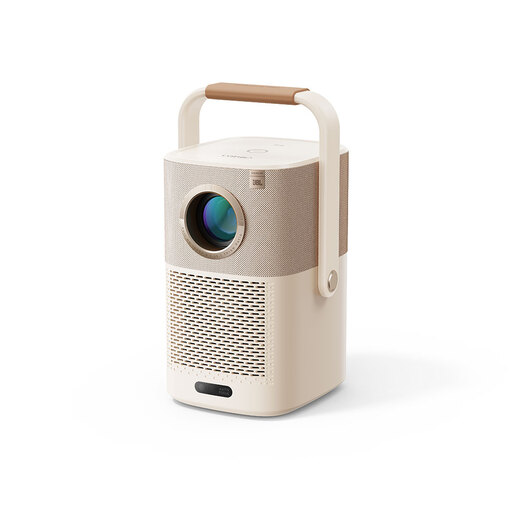
Yaber T2 Plus GTV portable projector, native 1080P
The built-in battery may suit occasional screenings away from a fixed mains position.
The title lists a built-in battery, Wi-Fi 6 and Bluetooth; it does not establish how long the battery will last for your film.
Check runtime against your screening plans, as well as throw distance, room-light suitability and the intended video signal.
View on Joybuy
 No image available
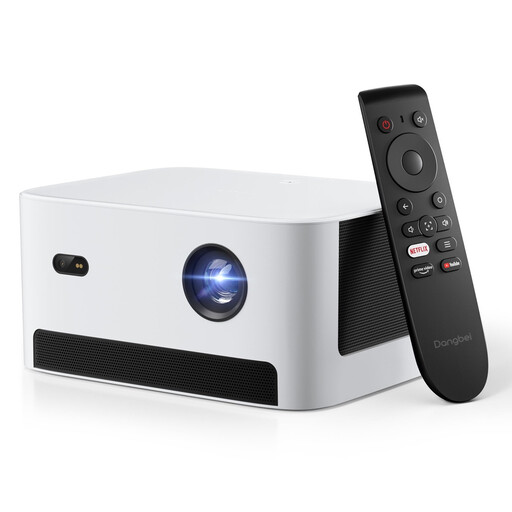
Dangbei Neo DLP projector, 1080P
Consider this portable smart model if automatic focus and keystone adjustment would make a changing setup easier.
The title specifies 540 ISO lumens and lists Wi-Fi and Bluetooth. That brightness figure alone cannot establish readability at your chosen image size.
Check throw distance, the services and connections you need, and compatibility with the restoration's delivered signal.
View on Joybuy
 No image available
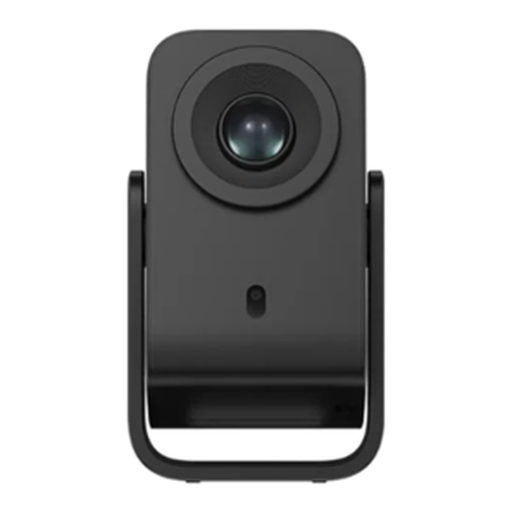
TCL C1 smart projector, Grey, 1080P FHD
This portable model is worth assessing if the projector needs to move around a multipurpose room.
The title lists 1080P FHD and describes 4K as supported rather than native.
Check its required throw distance, image suitability in your room and compatibility with the video source you intend to use.
View on Joybuy
Frequently asked questions
Do I need a special projector for silent films?
No special projector category is required simply because a film is silent. Eye Filmmuseum notes that historic recording speeds varied; choose the digital version you want to watch, then check that your player and projector accept its delivered video signal.
How bright should a projector be for classic films?
Brightness needs to be assessed against your screen size and room lighting, rather than one advertised lumen figure. ProjectorCentral's dark-room home-theatre guidance recommends 13–18 lumens per square foot, but introducing room light changes the requirement; assess the chosen model's output in a suitable picture mode at your intended image size.
Should I choose portable, conventional or ultra-short-throw?
Choose by the placement your room permits: conventional throw requires enough projector-to-screen distance, portable designs suit setups that move, and ultra-short-throw designs address a short available distance. For any of them, check the exact model's image size and how room light affects viewing.
What if an online projector purchase does not work out?
For a UK distance sale, GOV.UK says the seller must tell you about a right to cancel without giving a reason up to 14 days after delivery, subject to applicable conditions and exceptions. Faulty goods are a separate matter: GOV.UK's guidance on the Consumer Rights Act 2015 describes repair or replacement rights. Check the seller's instructions for making a return and any stated return-postage responsibility.
How should I dispose of an old projector in the UK?
Use an appropriate electrical-recycling route rather than ordinary household waste. GOV.UK's guidance on waste electrical and electronic equipment covers recovery and recycling; check your local authority or retailer's arrangements for accepting the projector.


