
24/7 Customer Support

Free returns

Same-day & Next-day Delivery

Quality Guaranteed

Unlock Your Welcome Offers: FREE Delivery | Up to 80% OFF | Free 30-day JoyPlus trial
Download the APP
Living in a British city flat or a cosy modern home often means making every square metre count. While open-plan living is popular, finding space for a dedicated dining area can be a challenge. You want a table for daily meals, but also the flexibility to host friends or family without the room feeling cramped. This is where a small extendable dining table becomes an invaluable piece of furniture.
These clever designs offer the best of both worlds: a compact footprint for everyday life and the ability to expand when you need extra seating. As a Joybuy Product Recommendation Officer, my role is to help you navigate the options. This guide cuts through the clutter, focusing on practical features and designs to help you find a table that truly fits your space and lifestyle.
Choosing the right table involves more than just style. Here are a few key points to consider to ensure you make a practical choice for your home.
Before you fall in love with a design, grab a tape measure. You need to account for the table in both its compact and fully extended forms. A common guideline is to leave at least 90cm of clearance on all sides of the extended table. This ensures there is enough room for people to sit comfortably and walk around the table without shuffling sideways. Don't forget to measure doorways and stairwells to ensure your new table can be delivered without issue.
The way a table extends affects its usability and appearance. The most common types for a space saving dining table include:
The shape and material impact both the function and feel of your dining area. A round extendable dining table can create a more intimate, sociable atmosphere and is easier to navigate in tight spaces as it has no sharp corners. Square or rectangular tables, however, fit neatly into corners or can be pushed flush against a wall.
For materials, a solid wood extending table offers durability and a timeless appeal that can be sanded and refinished over the years. An oak extendable dining table, for example, brings warmth and a classic look. Veneer options can provide the appearance of wood at a more accessible price point, but may be less resilient to deep scratches.
Here are a few standout options that balance style, function and a compact design.
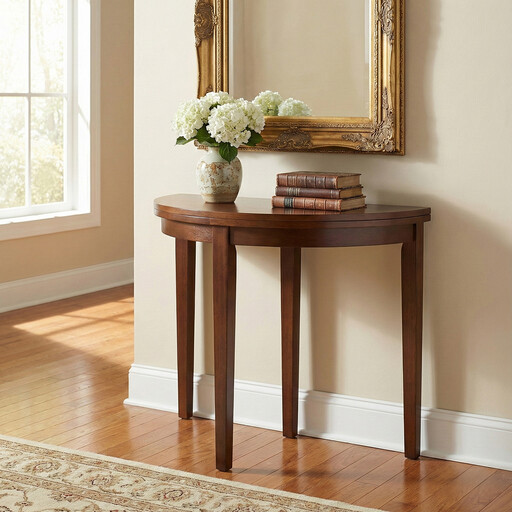
Why It Stands Out: The Hanover is the ultimate convertible dining table. It functions as a slim, half-moon console table that sits flush against a wall, making it perfect for hallways or narrow living areas. When needed, it unfolds into a full 90cm round table, ideal for a cosy dinner for two.
Pros:
Who is it for? This is an excellent choice for those living in studios, one-bedroom flats or homes where a dining table is only needed occasionally. It provides function without sacrificing precious floor space.
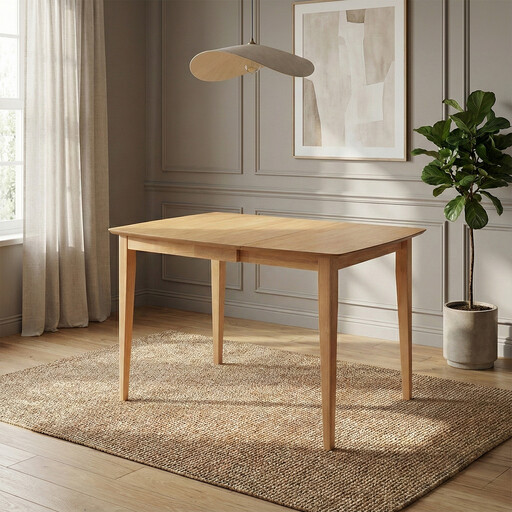
Why It Stands Out: The Seattle table is a modern take on the classic drop leaf dining table. It operates as a neat 75cm square table for two, perfect for a kitchen diner table. When guests arrive, a single leaf extends the length to 120cm, comfortably creating an extendable dining table for 4.
Pros:
Who is it for? Ideal for couples or small families who need a reliable, everyday table for a kitchen or dining nook, with the flexibility to accommodate a couple of extra guests with ease.
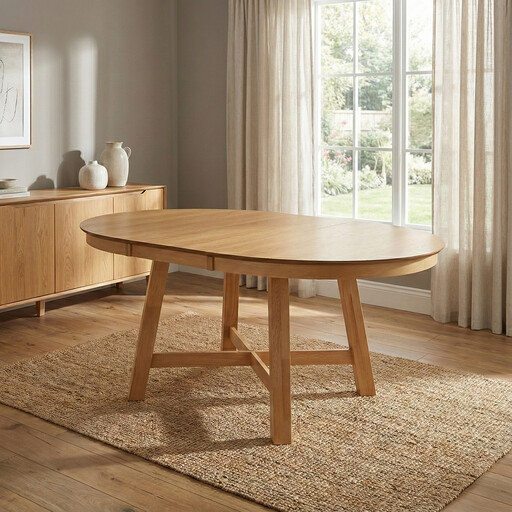
Why It Stands Out: The Roseville table offers a sophisticated solution for those who love to entertain. It features an integrated butterfly extension leaf that is cleverly stored within the table. It transitions smoothly from a 115cm round table for four to a generous 154cm oval table that can seat up to six people.
Pros:
Who is it for? Perfect for homeowners who host regularly and want a stylish, solid wood extending table that can adapt from family meals to larger gatherings without any fuss.
While these three tables offer fantastic solutions for small spaces, your perfect match might have a different finish, size or style. If you're still searching, why not explore our broader collection?
Discover more designs by browsing our full range of extendable wood dining tables.
For comfortable use, plan for at least 90cm of clear space around the table when it is fully extended. This allows guests to pull out their chairs and for people to walk around the table without feeling squeezed. Always measure your room before purchasing.
Yes, a well-constructed extendable table is very sturdy. Look for features like solid hardwood construction, robust leg designs (like a pedestal base or thick tapered legs) and secure locking mechanisms for the extension leaves. Always follow the assembly instructions carefully to ensure maximum stability.
This often comes down to personal preference. Tables with a butterfly leaf are widely considered very convenient because the extension is self-storing. Drop-leaf tables are also very simple to operate, though they may require you to move the table away from a wall to lift the leaf. Convertible tables, like the Hanover, are also incredibly straightforward, transforming in one or two simple steps.