
24/7 Customer Support

Free returns

Same-day & Next-day Delivery

Quality Guaranteed

Unlock Your Welcome Offers: FREE Delivery | Up to 80% OFF | Free 30-day JoyPlus trial
Download the APP
Living in a compact UK home, whether it's a city flat, a studio or a cosy cottage, often means making smart choices about furniture. The dining table, a centrepiece for meals and conversations, can feel like an impossible luxury when floor space is at a premium. You need a solution that works for your quiet weekday dinners but can also welcome friends over on the weekend.
This is where a small extendable dining table proves its worth. It offers the daily convenience of a compact footprint with the flexibility to expand when you need it. As the Joybuy Product Recommendation Officer, my role is to help you navigate the options. This guide will walk you through key considerations and highlight a few standout models that balance style, function and space-efficiency.
Finding the right table involves more than just measuring your space. Understanding the mechanics and materials will help you make a choice that serves you well for years to come.
The way a table extends is a critical factor in its usability. The two most common types for smaller tables are:
Before you commit, measure your dining area twice. First, determine the maximum space you can afford for the table in its fully extended form, ensuring there's still about 90cm of clearance around it for chairs and movement. Second, consider its closed dimensions. A good space saving dining table should feel unobtrusive in its compact state, preserving the flow of your room. This will help you decide between a neat 2 to 4 seater dining table and a more ambitious 4 to 6 seater dining table.
For a piece of furniture that sees daily use, durability is key. A solid wood dining table is a reliable choice, offering longevity and a timeless aesthetic that can handle the rigours of daily life. An oak dining table, for example, provides a warm, natural look with a robust grain that resists wear. The style should complement your existing decor, whether you prefer a modern, minimalist look or a more traditional, rustic feel.
Here are three recommendations that cater to different needs and spaces, selected for their clever design and practical features.
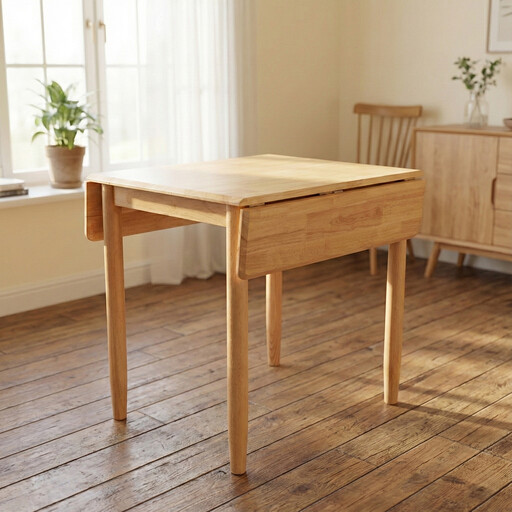
Why It Stands Out: The Cologne table is a masterclass in space efficiency. Its dual-sided drop-leaf system offers incredible flexibility. You can lift one leaf for a solo workspace or both for a small dining setup. When fully folded, its narrow profile allows it to be tucked away with minimal fuss.
Pros:
Who is it for? This is an excellent choice for individuals or couples in studio flats or micro-flats where every square centimetre counts. It’s the quintessential folding dining table for small spaces.
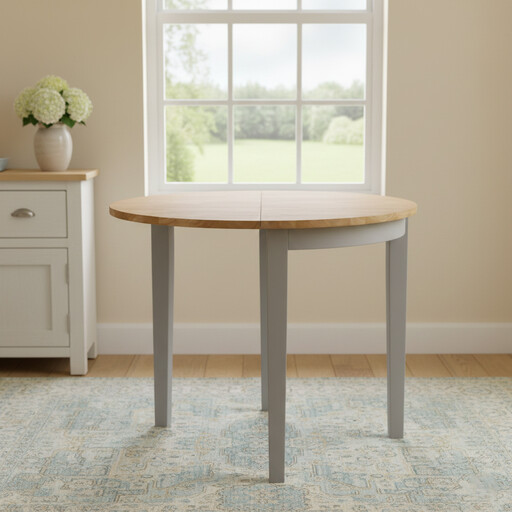
Why It Stands Out: The Altona table offers brilliant dual-functionality. When folded, it serves as a stylish half-moon console table that sits flush against a wall, perfect for a hallway or living room. When needed, it unfolds into a full round extendable dining table.
Pros:
Who is it for? This table is ideal for those who need a dining solution but don't want a traditional table dominating their living space. It’s perfect for small flats where furniture needs to be multi-purpose.
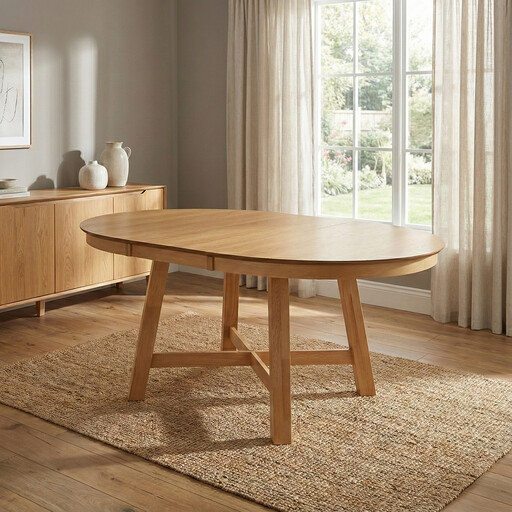
Why It Stands Out: The Roseville table is designed for those who love to host but have limited daily space. Its integrated butterfly extension is cleverly hidden within the table, making it effortless to switch from a round four-seater to an oval six-seater.
Pros:
Who is it for? This is a great fit for small families or couples who entertain regularly. It provides the capacity for dinner parties without overwhelming the room during everyday use.
While these three models address common needs, your perfect fit might be something different. If you're looking for other sizes, finishes or extension styles, there are many more possibilities to consider.
Explore our full collection of extendable kitchen tables to find the ideal match for your home and lifestyle.
1. How do I know what size extendable table to get? Start by measuring the available space in your room. A good rule of thumb is to leave at least 90cm of clearance on all sides of the table when it's fully extended. This ensures guests can sit down and move around comfortably. Consider your daily needs versus how often you host guests to decide between a smaller 2 to 4 seater dining table and a larger model.
2. Is a solid wood dining table difficult to maintain? A solid wood dining table is surprisingly low-maintenance. For daily cleaning, a wipe with a soft, dry cloth is usually sufficient. For spills, use a slightly damp cloth and dry immediately. Avoid harsh chemical cleaners. Using placemats and coasters is a simple way to protect the surface and keep it looking great for years.
3. What is the difference between a drop-leaf and a butterfly leaf table? A drop leaf dining table has hinged sections on the sides that fold down, which is excellent for creating a very narrow profile when not in use. A butterfly leaf is stored in the centre of the table; you pull the tabletop apart to unfold the leaf from within. Butterfly leaves are often found on larger tables and offer a more seamless extended surface.