
24/7 Customer Support

Free returns

Same-day & Next-day Delivery

Quality Guaranteed

Unlock Your Welcome Offers: FREE Delivery | Up to 80% OFF | Free 30-day JoyPlus trial
Download the APP
Finding a daily face sunscreen that you genuinely enjoy wearing can feel like a monumental task. The market is saturated with options, all promising high protection, but the reality of using them can be disappointing. As a Joybuy Product Recommendation Officer, my role is to help you navigate the clutter and find a product that works for your skin and lifestyle, without the marketing fluff.
Before you add another tube to your basket, let's look at the common pitfalls that lead to wasted money and sunscreens gathering dust on your shelf.
To avoid these issues, focus on a few core parameters. Understanding these will empower you to choose a formula that you will use consistently.
The type of UV filter determines how the sunscreen works and feels on your skin. There is no single "correct" choice; it depends on your skin's needs.
How a sunscreen looks and feels on your skin after it has dried down is crucial. This "finish" should align with your skin type and desired look.
Modern sunscreens are often multi-tasking products. Looking for specific ingredients can help you address other skin concerns simultaneously. For instance, formulas containing Vitamin C or Niacinamide can be an excellent sunscreen for dark spots, helping to brighten the complexion over time while preventing further sun-induced pigmentation.
Based on these practical criteria, here are a few options from our catalogue, matched to different user needs.
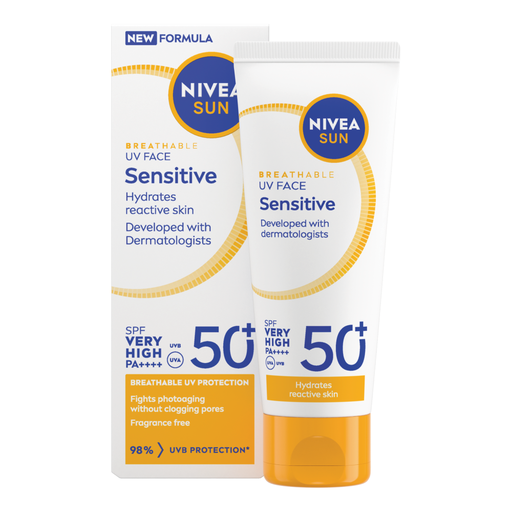
Why This Fits Their Persona: Developed for reactive skin, this is ideal for someone who needs reliable, non-irritating protection for their daily journey to work. It's designed to be worn comfortably all day, even on the most sensitive complexions.
Its lightweight, non-comedogenic formula is specifically designed to be breathable and avoid the heavy, pore-clogging feeling of traditional sunscreens. It leaves an invisible finish that sits well under other products.
Features a soothing complex with Glycyrrhiza Inflata Root Extract to calm irritation and is fragrance-free, making it a solid choice for easily reactive skin.
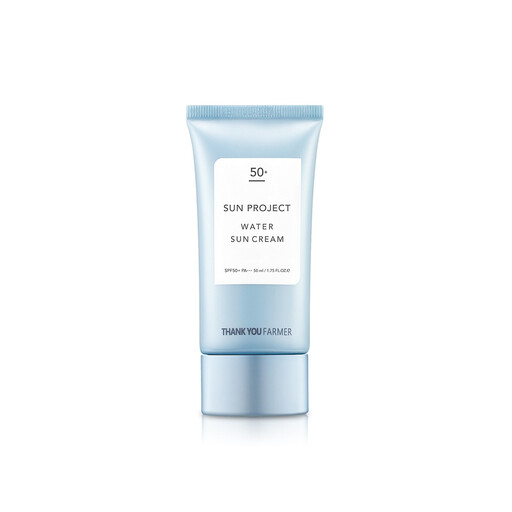
Why This Fits Their Persona: For anyone whose skin feels tight or looks dull, this sun cream acts more like a moisturiser. It's perfect for achieving a comfortable, hydrated "glass skin" look without feeling heavy.
Instead of a chalky cast, this formula is designed to deliver a transparent, dewy finish. Its "Sliding Texture Technique" ensures it glides on smoothly without pilling over other skincare products.
It is infused with hydrating ingredients like Bamboo Water and Sodium Hyaluronate, plus nourishing oils to support the skin's moisture barrier, making it exceptionally good for dry and dehydrated skin types.
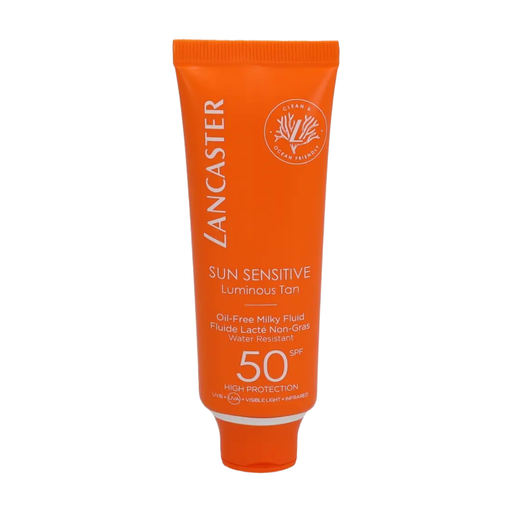
Why This Fits Their Persona: This is for the person who has been let down by "non-greasy" claims in the past. Its oil-free, milky fluid texture is specifically formulated to provide high protection without adding any shine or weight.
It directly counters the "greasy promise" pitfall. The formula is non-comedogenic and absorbs instantly to a "bare-skin" feel with a smooth, matte-like finish, making it an excellent primer for makeup.
It features Lancaster's Full Light Technology, which protects against UVA, UVB, Visible Light and Infrared rays, offering a more comprehensive shield against premature ageing than standard sunscreens.
We have compiled a complete, real-time list of products that fully satisfy these strict selection criteria and UK safety regulations.
The general guidance is the "two-finger rule." Squeeze a continuous line of sunscreen onto both your index and middle fingers from base to tip. This amount is roughly what you need to adequately cover your face and neck to achieve the level of protection stated on the bottle. Applying less will significantly reduce the protection.
This depends on your skin type. If you have oily or normal skin, a well-formulated hydrating sun cream might provide sufficient moisture for your daytime needs. However, if your skin is particularly dry or dehydrated, you will likely get better results by applying your usual moisturiser first, letting it absorb for a minute or two before applying your sunscreen.
SPF 30 filters out approximately 97% of UVB rays, whereas SPF 50 filters out about 98%. While that 1% difference may seem small, it means an SPF 50 formula allows 50% less UV radiation to penetrate your skin compared to an SPF 30. For robust, daily defence against sun damage and photo-ageing, many people in the UK find the higher protection of an SPF 50 face sunscreen to be a worthwhile investment in their skin's health.