
24/7 Customer Support

Free returns

Same-day & Next-day Delivery

Quality Guaranteed

Unlock Your Welcome Offers: FREE Delivery | Up to 80% OFF | Free 30-day JoyPlus trial
Download the APP
Choosing among today’s steam irons is not simply a matter of selecting the highest wattage or the largest steam figure. UK households have different needs: a student may want a compact clothes iron for occasional shirts, while a family may prioritise a larger tank, stronger steam and easier limescale maintenance.
As the Joybuy Product Recommendation Officer, I focus on practical differences that are easy to overlook when product descriptions use broad marketing language. Before buying, watch for these common pitfalls.
A higher wattage can indicate faster heating, but it does not automatically mean better crease removal. Steam output is also important. Check both the continuous steam rate, measured in grams per minute, and the steam boost, which is useful for thick cotton, linen, denim and bedding.
For example, a 2,000W household steam iron may heat efficiently, while a model with 2,200W and a higher continuous steam rate may be more suitable for larger ironing piles.
Tap water is convenient, but mineral deposits can affect steam performance over time. A steam iron without a clear cleaning system may require more frequent attention, particularly in areas with harder water.
Look for a calc-clean, anti-scale or smart cleaning function. These features do not remove the need for maintenance, but they provide a more straightforward way to manage limescale.
A vertical steam iron or handheld garment steamer is useful for refreshing hanging clothes, curtains and upholstery. However, a conventional steam iron with a soleplate generally provides more direct pressure for sharp shirt cuffs, trouser creases and heavily wrinkled bedding.
Consider whether you need a dedicated iron, a travel garment steamer or a product that offers both horizontal and vertical steaming.
Continuous steam helps loosen everyday creases as you move across a garment. A steam boost provides a stronger burst for stubborn areas. As a general shopping guide, compare the figures rather than relying on labels such as “powerful steam iron”.
The Tefal Virtuo 30, for instance, is specified with up to 30g/min continuous steam and a 140g/min boost. The Philips 3000 Series provides up to 30g/min continuous steam and a 140g boost, while the Philips 1000 Series offers up to 20g/min continuous steam and a 90g boost.
A ceramic soleplate iron is designed to glide smoothly and is commonly selected for mixed household fabrics. A non-stick soleplate iron can also provide smooth movement, particularly for everyday garments.
The shape matters too. A slim precision tip helps reach around buttons, collars and seams. Check that the soleplate is suitable for your usual fabrics and always follow the care label on clothing. No soleplate removes the need to use the correct temperature setting.
Tank capacity affects how often you need to refill. Models with around 240–300ml capacity can be convenient for regular household ironing, although a larger tank may also add weight.
A lightweight steam iron can be more comfortable for short sessions, while a heavier model may feel more stable when pressing thicker textiles. Also check cord length, grip design, heel stability and the presence of anti-drip protection.
An iron with auto shut-off can reduce risk if the appliance is left unattended, but it should not replace careful use. Always unplug the iron before filling, emptying or cleaning it, keep children away from the hot soleplate and store the appliance only after it has cooled.
For UK use, check the voltage specification and follow the supplied instructions. Products should also display appropriate conformity markings where applicable, such as UKCA or CE markings, but these markings do not remove the need to use the appliance safely.
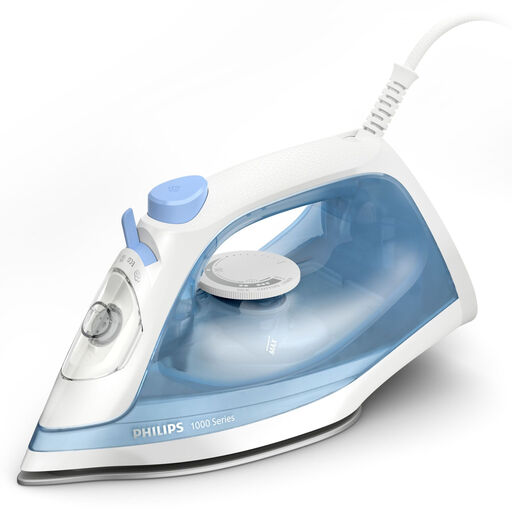
Why This Fits Their Persona: A practical option for students, renters and smaller households that need a straightforward steam iron for shirts, trousers and everyday laundry.
Its 250ml tank, non-stick soleplate and calc-clean function address the common issues of frequent refilling, sticking and neglected maintenance.
2000W power, up to 20g/min continuous steam, 90g steam boost and an approximately 0.88kg body.
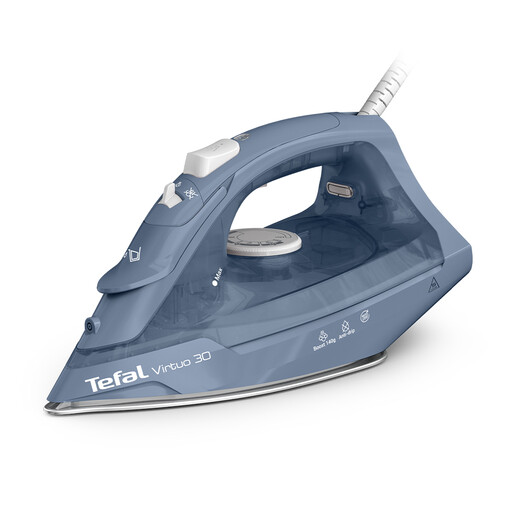
Why This Fits Their Persona: Suitable for busy professionals and households wanting stronger steam, convenient safety functions and flexible use on hanging garments.
The specification lists anti-drip protection, auto shut-off and an anti-scale system, helping address staining, unattended use and limescale concerns.
Up to 30g/min continuous steam, 140g boost, ceramic soleplate, vertical steaming and a 1.9m cord.
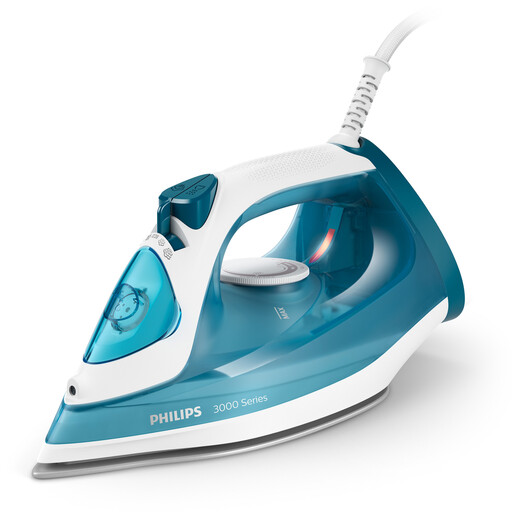
Why This Fits Their Persona: A strong match for families ironing multiple loads, bedding, linen and thicker cotton garments during the week.
Its 300ml tank reduces refill interruptions, while the built-in Calc Clean slider provides a defined maintenance step for regular use.
2100W power, ceramic soleplate, up to 30g/min steam, 140g boost and vertical steam function.
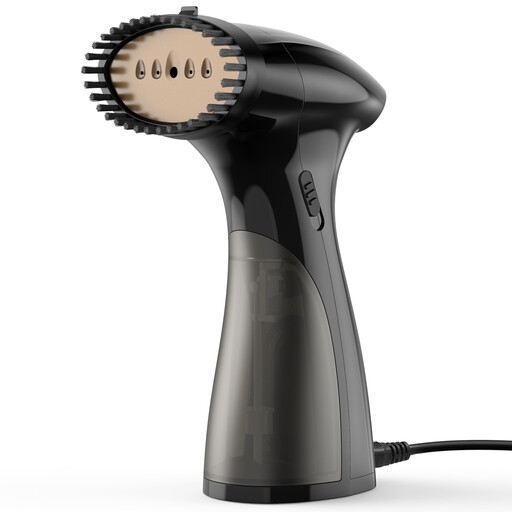
Why This Fits Their Persona: Designed for travellers, office users and anyone who mainly refreshes hanging clothing rather than pressing formal creases.
Its compact 0.8kg design and 150ml tank suit short sessions, while the horizontal and vertical modes offer more flexibility than a vertical-only steamer.
800W power, one-button steam control, bristle brush attachment and 360-degree operating design.
We have compiled a complete, real-time list of products that fully satisfy these strict selection criteria and UK safety regulations.
Running cost depends mainly on power rating, usage time and how often the appliance is used. A higher-wattage iron may heat faster but can draw more power while operating. Short sessions with either appliance generally use less electricity than extended use. Compare wattage and estimated operating time rather than assuming one format always costs less.
Lifespan depends on frequency of use, water quality, cleaning and storage. Regularly removing limescale, preventing the soleplate from collecting residue and avoiding damage to the cord can support continued operation. Warranty length and repair or service provisions are also worth checking before purchase.
Some models support vertical steaming, allowing you to refresh hanging clothes or curtains. This is not identical to pressing fabric on an ironing board. For crisp collars, seams and trouser creases, use the soleplate horizontally and follow the garment’s care instructions.