
24/7 Customer Support

Free returns

Same-day & Next-day Delivery

Quality Guaranteed

Unlock Your Welcome Offers: FREE Delivery | Up to 80% OFF | Free 30-day JoyPlus trial
Download the APP
Choosing a new stunt scooter can feel overwhelming. Whether you're a parent looking for a safe and durable first scooter for your child, or a teen ready to master new tricks at the skate park, the options are vast. The key is finding a model that matches the rider's age, skill and ambitions. A good trick scooter needs to be tough enough to handle repeated impacts while being light enough for aerial manoeuvres.
This guide is designed to help you navigate the choices. We'll break down the essential features to look for and present a few carefully selected options to help you find a suitable freestyle scooter.
Before diving into specific models, understanding a few key components will help you make a more informed decision. A scooter built for tricks has very different requirements from one designed for a school run.
The frame and deck are the backbone of any stunt scooter. They need to withstand the high-impact forces of landing jumps and grinding rails. Most entry-level and pro scooter models use a combination of aluminium and alloy steel. Aluminium keeps the scooter lightweight, which is crucial for performing tricks, while steel reinforces critical stress points. The deck should be a single, solid piece with a non-slip grip tape surface for secure footing. Unlike commuter scooters, a freestyle scooter should never have a folding mechanism, as this creates a weak point that can fail under pressure.
Stunt scooter wheels are typically made from a hard-wearing polyurethane (PU) with a solid core (not spoked) for maximum durability. Common sizes are 100mm and 110mm. Smaller 100mm wheels are often found on a beginner stunt scooter as they offer more control, while 110mm wheels provide more speed and are favoured by intermediate riders.
Bearings determine how smoothly and quickly the wheels spin. They are rated using an ABEC scale (e.g., ABEC-7, ABEC-9). A higher number generally indicates a more precise and faster bearing, which contributes to a smoother ride.
The handlebars on a trick scooter are typically a fixed T-bar design, made from either steel for strength or aluminium for reduced weight. They connect to the fork via a compression system, which keeps the headset tight and the steering smooth. A solid, reliable compression system is vital for safety and performance at the skate park.
Here are a few recommendations that cater to different ages and skill levels, from young riders just starting out to those looking to advance their skills.
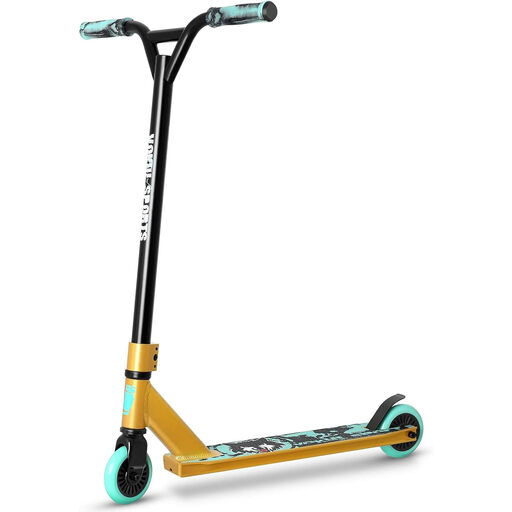
Why It Stands Out: The VOKUL S2 Pro is a well-balanced option for younger riders taking their first steps into the world of stunt scootering. It combines a durable alloy steel and aluminium frame with a manageable weight of just 3.6 kg, making it easy for kids to handle. The fixed handlebar and rigid construction provide the stability needed to build confidence.
Pros:
Who is it for? This is an excellent entry level stunt scooter for kids aged 6 and up. Its features are specifically tailored for beginners who are learning basic manoeuvres and need a reliable and lightweight scooter.
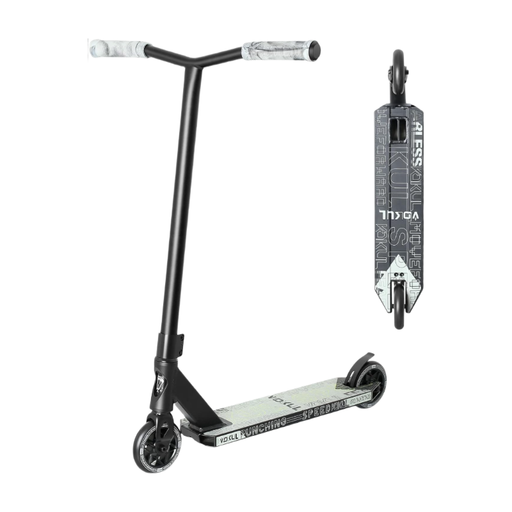
Why It Stands Out: For riders who have mastered the basics and are ready for more, the VOKUL K1 Pro offers a significant step up. It features larger 110mm alloy core wheels and high-performance ABEC-9 bearings for a faster, smoother glide. The deck is crafted from tough T-6061 aluminium alloy, and the one-piece fork is built to withstand more demanding tricks like tailwhips and barspins.
Pros:
Who is it for? This is a great choice for intermediate riders, including older kids and stunt scooter for teens (ages 8-18). It provides the performance features needed to progress at the skate park without being overly complex.
It is important to distinguish between a stunt scooter and an electric scooter. While they may look similar, they are built for entirely different purposes. A stunt scooter is unpowered, lightweight and reinforced for tricks. An electric scooter is a motorised personal transport vehicle designed for commuting. Using an electric scooter for stunts is unsafe and will damage the vehicle.
For those seeking a transportation solution rather than a piece of skate park equipment, an electric scooter might be a more suitable choice.
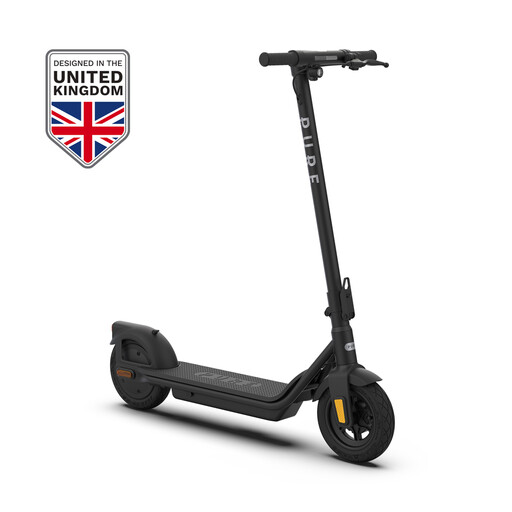
Why It Stands Out: The Pure Air5 Pro is engineered for dependable daily travel. It features an impressive one-charge range of up to 41.2 miles and a powerful 840W maximum power motor capable of tackling hills. It is not designed for tricks. Instead, its strengths lie in comfort, range and reliability for commuting.
Pros:
Who is it for? This electric scooter is for commuters and individuals looking for an efficient way to travel. It is not a stunt scooter and should not be used at a skate park.
LEGAL WARNING: It is illegal to use an e-scooter on a public road, pavement, cycle lane or bridleway. E-scooters should only be ridden on private land with the permission of the landowner.
If the models above aren't quite what you're looking for, or if you'd like to compare a wider range of advanced and professional models, there are many other options available. Exploring a broader collection can help you find the perfect combination of features, style and performance.
Discover more models in our full collection of Professional Scooters.
1. What is the difference between a stunt scooter and a normal scooter? A stunt scooter is built for tricks with a reinforced, one-piece deck, a fixed non-folding frame and durable components designed to withstand impacts. A normal kick scooter is typically designed for casual riding, often featuring a folding mechanism for portability and larger, softer wheels for comfort, but it lacks the strength for skate park use.
2. What age is a stunt scooter for? Stunt scooters are available for a wide range of ages. There are models designed specifically for children as young as 6, with lighter frames and smaller components. There are also larger, more robust models suitable for teenagers and adults. It's important to choose a scooter that is appropriate for the rider's size and skill level.
3. How do I choose the right size stunt scooter? A good rule of thumb is that the handlebars should sit somewhere between the rider's waist and navel when they are standing on the deck. If the bars are too high, the scooter will be difficult to control. If they are too low, it can lead to a hunched and uncomfortable riding posture. Always check the manufacturer's height and age recommendations.