
24/7 Customer Support

Free returns

Same-day & Next-day Delivery

Quality Guaranteed

Unlock Your Welcome Offers: FREE Delivery | Up to 80% OFF | Free 30-day JoyPlus trial
Download the APP
Buying teapots with infusers can seem straightforward until the first few uses reveal a poorly fitting filter, awkward cleaning or a capacity that does not suit your household. Product descriptions often focus on appearance and broad claims, while the details that affect everyday brewing are easy to overlook.
This guide explains the practical specifications to check, common buying traps and suitable options for different UK households.
A stated capacity does not always equal the amount you can comfortably pour. You must leave space below the maximum fill line, particularly in a tea press where the plunger needs room to move. A 1.5L teapot may suit several mugs, but a 500ml or 750ml pot may be more practical for one person and quicker to clean.
Also consider standard cup measurements. Some manufacturers measure cups using approximately 4oz European cup sizes, which may be smaller than a typical British mug.
A narrow stainless steel tea infuser can restrict the expansion of larger leaves and herbal pieces. A spacious, removable basket generally gives ingredients more room to open and makes rinsing easier. Check whether the filter is fixed, removable or part of a plunger mechanism.
For fine tea particles, inspect the mesh or perforation size. Larger openings may allow sediment into the cup, while very fine mesh can slow pouring and require more frequent cleaning.
“Easy to clean” does not necessarily mean dishwasher-safe. Glass, metal, silicone, plastic and bamboo components may have different care instructions. A dishwasher-safe teapot can reduce daily effort, but removable parts still need checking for trapped leaves, staining or limescale.
With electric models, the heating base, cable and plug must not be immersed in water. Always follow the supplied instructions and allow the appliance to cool fully before cleaning.
A borosilicate glass teapot is valued for its transparency and resistance to ordinary temperature changes compared with some standard glass types. It allows you to monitor colour and strength while the tea infuses. However, heat-resistant does not mean shatterproof. Avoid thermal shock, such as filling a chilled pot with boiling water or placing hot glass on a cold surface.
Stainless steel is commonly used for filters, frames and lids because it is durable and does not absorb tea aromas in the same way as some porous materials. Plastic and silicone handles can make pouring more comfortable, but the entire assembly should be kept away from direct heat unless the instructions specifically permit it.
A conventional removable infuser works well for loose-leaf tea, teabags and many herbal infusions. It can be lifted out once brewing reaches the preferred strength. A French press teapot or tea press instead uses a plunger to press the filter down, stopping the leaves from continuing to infuse.
This design is useful if you want to control strength without removing the infuser. The filter must seat correctly, and the plunger should be operated firmly but carefully. Never force it if leaves are blocking the mesh.
For everyday tea, choose capacity according to the number of servings rather than the largest available figure. A 1L pot may suit a couple or a small tea service, while 1.5L is more appropriate when several people want tea together.
An electric herbal tea maker adds temperature settings, preset programmes or keep-warm functions. These can be useful for households preparing different drinks, but they also introduce electrical components, cleaning restrictions and standby power use. Delay-start functions should be used only as directed, particularly when ingredients may spoil if left in water for a prolonged period.
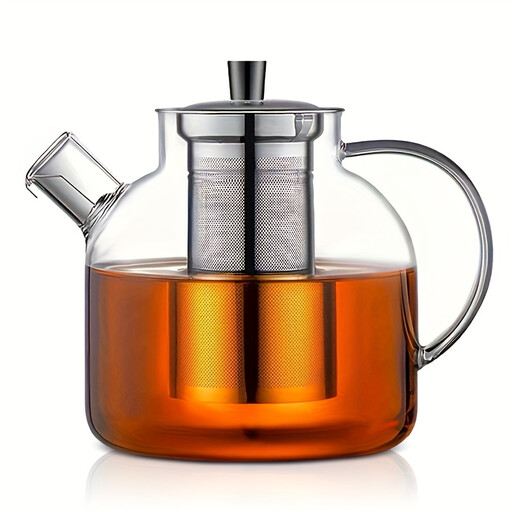
Why This Fits Their Persona: A straightforward glass teapot with a removable infuser is a sensible starting point for UK drinkers moving from teabags to loose-leaf tea without adding electrical controls or complex programming.
The removable filter addresses the common problem of fixed infusers that are difficult to rinse thoroughly after use.
Removable infuser; simple non-electric format suitable for loose-leaf tea and herbal drinks.
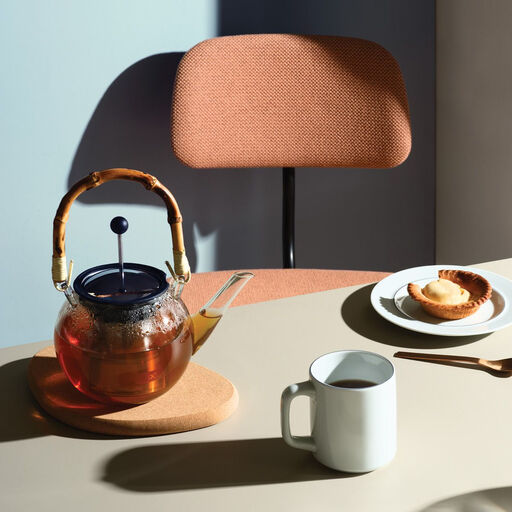
Why This Fits Their Persona: This 1L tea press suits drinkers who value visible brewing, controlled strength and a more considered serving piece for everyday tea.
The plunger stops the brewing process without requiring the filter to be removed, helping avoid over-steeped tea when serving is delayed.
Heat-resistant borosilicate glass; bamboo handle; stainless steel filter; dishwasher-safe glass and filter according to the product information.
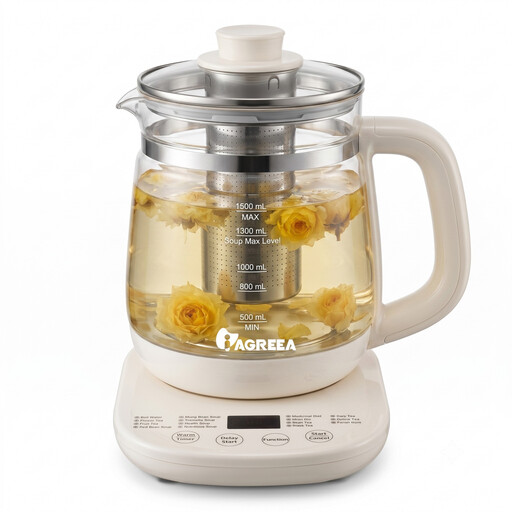
Why This Fits Their Persona: Families and frequent herbal tea users may prefer programmable heating, several temperature settings and a larger vessel for repeated daily preparation.
The wide opening and detachable infuser make residue easier to reach than in a narrow-neck pot, while the controls provide more than a simple on/off boil.
1.5L capacity; 14 preset programmes; six constant-temperature settings from 40°C to 90°C; 800W heating; stainless steel infuser.
If a compact pot is required, a 500ml or 750ml model may reduce waste and heating time. For shared servings, consider a 1L or 1.5L glass teapot with infuser. Those preparing herbal drinks, soups or other heated recipes may need an electric model with temperature control, but should compare its cleaning routine and power requirements with a simple loose-leaf tea pot.
We have compiled a complete, real-time list of products that fully satisfy these strict selection criteria and UK safety regulations.
Yes, provided the filter has enough space for the leaves to expand and its openings suit the tea being used. A removable basket or stainless steel tea infuser is generally convenient for rinsing. For larger herbal ingredients, choose a wide infuser rather than a small, tightly packed filter.
A tea press uses a plunger to press the leaves down and stop further infusion. A standard pot usually requires the infuser to be removed or lifted out. A tea press can help maintain a preferred strength when tea will not be poured immediately, but it should be operated without excessive force.
Running cost depends mainly on the appliance’s wattage, heating time and electricity tariff. For example, an 800W appliance uses 0.8kWh if operated continuously for one hour, although actual use may be shorter. Keep-warm and delay-start functions can increase consumption, so review the settings and switch the appliance off when it is no longer needed.