Daylight kitchen-diner viewers
If windows, ceiling lights or worktops reflect in the screen, assess glare handling before choosing a panel type. Consider whether darker documentary scenes will remain comfortable to watch from your usual seat.


For a kitchen diner used frequently in daylight, start by comparing 4K Mini LED/QLED models whose exact specifications confirm local dimming and an anti-reflection treatment; neither feature follows from the display label alone. If you mostly watch after dark and prioritise dark-scene contrast, compare OLED too, then check how each candidate fits the room and connects to your services and audio equipment.
If windows, ceiling lights or worktops reflect in the screen, assess glare handling before choosing a panel type. Consider whether darker documentary scenes will remain comfortable to watch from your usual seat.
If landscapes, animal detail and night-time scenes matter most, compare the exact model’s 4K and HDR support alongside its stated colour and contrast features. Check that your documentary source uses a compatible HDR format.
If kitchen units, dining furniture or a narrow wall limit placement, measure the full TV width and stand depth. For wall mounting, check the exact model’s weight, VESA pattern, connections and ventilation requirements.
Consider it when: Windows or overhead lights create reflections. TCL lists both local dimming and anti-reflection treatment for its 50C805K, illustrating the exact-model features to look for.
Bear in mind: Reflection treatment, dimming and HDR support vary by model and size; a Mini LED or QLED label does not establish how a TV will look in your room.
Consider it when: You usually watch in the evening or can control daylight, and dark-scene contrast is a priority. LG describes its OLED evo G5 range as using self-lit pixels.
Bear in mind: LG’s range claims do not establish how an individual OLED handles reflections or fits your installation. Check the precise model against your room.
| Concern | What to check | Who this matters to |
|---|---|---|
| Daylight visibility | Look for anti-reflection wording and local-dimming details for the exact model and size; plan a position away from direct sunlight. | If light from a window catches the screen, I want to follow darker wildlife scenes without moving seats or closing the blinds. Around 33% of consumers would put daylight visibility first. |
| Colour and HDR detail | Confirm 4K resolution and HDR formats that match the documentary services or devices you use. | When a programme moves from bright landscapes to night-time animals, I care most about colour and detail across both scenes. Roughly 27% of consumers would make picture fidelity their primary concern. |
| Physical fit | Compare full width and stand depth with the available space; if wall mounting, check weight and the exact VESA pattern. | I need the TV to fit around cupboards and dining furniture without compromising the intended viewing position. About 27% of consumers would prioritise fitting it into the room. |
| Streaming and audio | Check the apps on the specific UK model and a suitable audio output if you intend to connect external speakers. | In a shared kitchen diner, I want straightforward access to my programmes and a workable connection for an audio upgrade. Approximately 13% of consumers would place streaming and audio convenience first. |
A screen’s advertised diagonal does not tell you its full width, stand depth or mounting pattern. Sony lists the K-55XR5 at approximately 122.8 cm wide and 21.0 cm deep with its stand, with a 30.0 × 30.0 cm VESA pattern.
Measure the furniture or wall area, then compare the dimensions, weight and mount pattern of the exact variant you plan to buy.
Kitchen placement needs more than an available patch of wall. Samsung UK advises avoiding heat, direct sunlight, water and high humidity unless a TV is specified for the location; its installation guidance also calls for at least 10 cm of ventilation clearance.
Choose a position away from cooking heat and steam, and follow the chosen model’s installation instructions and required clearances.
An unsuitable position can mean moving the mount or changing the installation plan.
HDR support, local dimming and anti-reflection treatment are separate specifications. TCL lists these features for its 50C805K; that does not establish them for another TCL model or every Mini LED TV.
Check the individual model and screen-size specifications rather than relying on a display label or category filter.
UK government guidance requires energy labels at the point of sale for products in scope. An outgoing TV also needs an appropriate electrical-waste route rather than household rubbish.
Compare the energy label for the exact TV variant and arrange retailer take-back or an appropriate recycling collection point for the old set.
Sony’s BRAVIA 5 range is relevant if you are considering a 4K Mini LED TV and need to check a specific model’s room fit.
LG’s OLED evo G5 range is a reference point for viewers comparing OLED for evening or controlled-light documentaries.
TCL’s 50C805K is a 50-inch specification example for comparing a Mini LED/QLED TV in a reflective room.
These TVs offer different screen sizes and display features to assess for a kitchen-diner documentary setup. Check daylight reflections and the exact installation details before choosing; the product list does not establish which display route will suit every room.
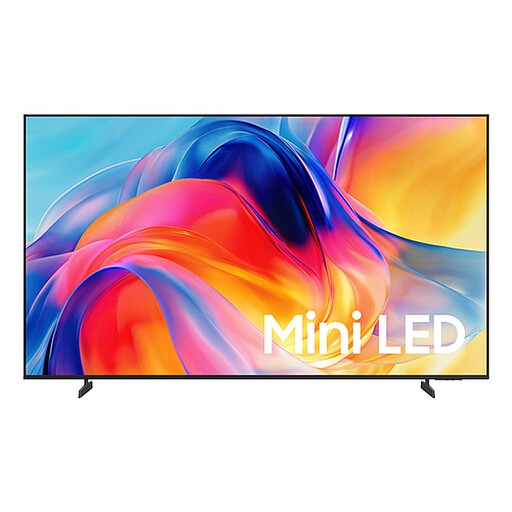 Image unavailable
Consider the 65-inch screen if your viewing position and available wall or furniture width suit a larger TV.
The product name specifies 4K and Mini LED. Check the exact model’s anti-reflection treatment, dimensions and mounting requirements for your room.
 Image unavailable
Consider this 50-inch option where a smaller screen footprint matters alongside 4K documentary viewing.
The product name identifies QD-Mini LED, Google TV and an ONKYO 2.1 audio system. Check reflection treatment and wall-mount compatibility for the exact variant; confirm its refresh-rate specification if that affects another use.
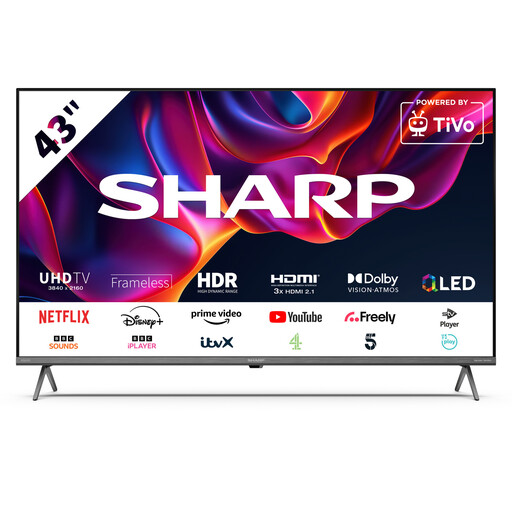 Image unavailable
Consider the 43-inch screen when the available wall or furniture space limits larger options.
The product name specifies 4K resolution. If daylight visibility or dark-scene contrast is important, check the exact model’s reflection treatment and local-dimming specification.
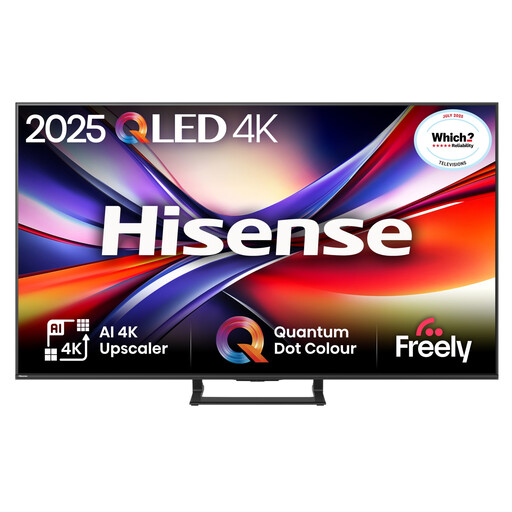 Image unavailable
Consider this 50-inch option if its footprint fits your kitchen-diner seating and furniture arrangement.
The product name identifies 4K QLED, Dolby Vision and VIDAA. Check reflection treatment, local dimming and the exact mounting dimensions before deciding.
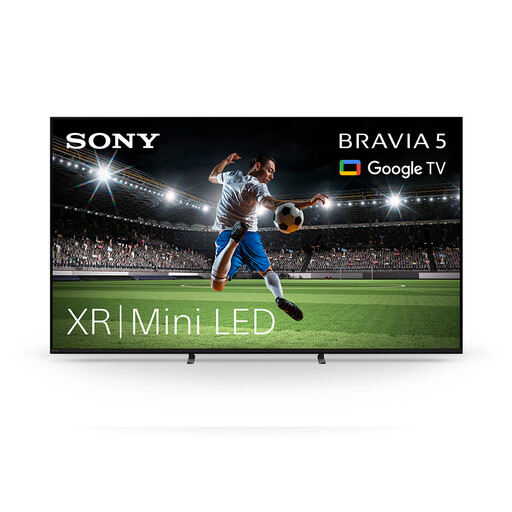 Image unavailable
Consider this 55-inch model if a BRAVIA 5 Mini LED TV fits your preferred viewing position.
The product name lists Dolby Vision and Google TV. Sony UK identifies local dimming for the BRAVIA 5 range; check the K55XR55BP’s reflection treatment, dimensions, stand depth and VESA pattern before installation.
Yes, if the exact TV and mount are compatible and the location follows the model’s installation instructions. Samsung UK advises avoiding heat sources, direct sunlight, water and high humidity unless specified, and calls for at least 10 cm of ventilation clearance in its mounting guidance.
Do not assume installation or a wall mount is included. Check the retailer’s terms and what comes with the exact model, then confirm the mount matches its weight and fixing pattern.
Yes. UK government energy-information guidance requires labels to be displayed at the point of sale for products in scope, including on websites. Compare the label for the precise screen size and variant you intend to buy.
Use an appropriate electrical-waste collection or recycling route rather than putting the TV in household rubbish. GOV.UK says that when you buy a new electrical product, the retailer must accept an old like-for-like product free of charge, whether you purchase online or in store.