What matters when choosing?
Start with the room and its seating positions, then settle screen fit and sound. Mini LED and OLED are useful shortlist routes, but neither label establishes how a particular TV will handle reflections or sound in your kitchen diner.
| Concern |
What to check |
Who this matters to |
| Daylight and reflections |
Check the exact model’s reflection treatment and where windows appear in the screen. Samsung and Philips describe their Mini LED models as bright-screen options, but features vary by model. |
If I watch while daylight falls across the room, I need to see costumes and choreography without distracting reflections. Around 31% of consumers would put daylight and reflection control first. |
| Side-seat picture |
Compare the picture from the dining chairs, not only straight ahead. LG describes wide viewing angles for its OLED range; still assess the model in your lighting. |
With friends spread around the table, I want people at the sides to follow the same scene. Roughly 25% of consumers would make the side-seat picture their first concern. |
| Songs and dialogue |
Listen at a realistic volume, including with kitchen noise. If you may add a soundbar, confirm the TV’s eARC or ARC connection and where the bar could sit. |
When cooking noise competes with vocals, I need to follow the words without turning the film up too far. Around 25% of consumers would prioritise soundtrack clarity. |
| Screen fit |
Measure seat-to-screen distance and the TV’s full width and stand depth. Check mounting details for the exact model if it will go on a wall. |
If the TV must fit a short wall or unit, I cannot choose by screen diagonal alone. Approximately 19% of consumers would put physical fit and installation first. |
Brands to consider
These brands offer models relevant to different parts of the kitchen-diner decision. Compare features on the exact TV rather than treating a brand name as a guarantee of picture or sound performance.
LG
LG’s OLED C5E range is relevant when side seating and film viewing in controllable light lead the shortlist; LG lists several sizes, including 42 and 48 inches.
- LG says its independently controlled OLED pixels produce true blacks and wide viewing angles.
- Check reflections, full dimensions and stand design for the size you intend to buy; the OLED description is not a comparison with every Mini LED model.
Samsung
Samsung’s Neo QLED models provide a Mini LED route to investigate for daytime viewing; its QN80H range includes a 55-inch model.
- Samsung identifies Neo QLED technology on the QN80H.
- Samsung identifies Glare Free on its S95F OLED in its kitchen guidance. Do not assume that feature is present on the QN80H or every Samsung TV.
Sony
Sony’s 55-inch BRAVIA 5 K-55XR5 provides model-specific connection and mounting information for planning a TV and possible soundbar.
- Sony lists Mini LED, four HDMI inputs, eARC/ARC and mounting specifications for the K-55XR5.
- Those specifications do not establish how its reflections, side-seat picture or musical-film sound compare with other TVs.
Philips
Philips offers the 55MLED920/10 QD MiniLED TV with Ambilight for viewers interested in reactive rear lighting.
- Philips lists Ambilight, Dolby Vision and Dolby Atmos support for this model.
- Allow room behind the TV if Ambilight matters to you, and check the apps you want on the exact model. The appeal of rear lighting is a matter of preference.
Joybuy TVs for this setup
These TVs offer Mini LED or OLED options for a musical-film kitchen diner, with screen sizes from 42 to 75 inches. Match each model’s full footprint, reflections and sound to your room before choosing; a panel label alone cannot settle those questions.
 No image available
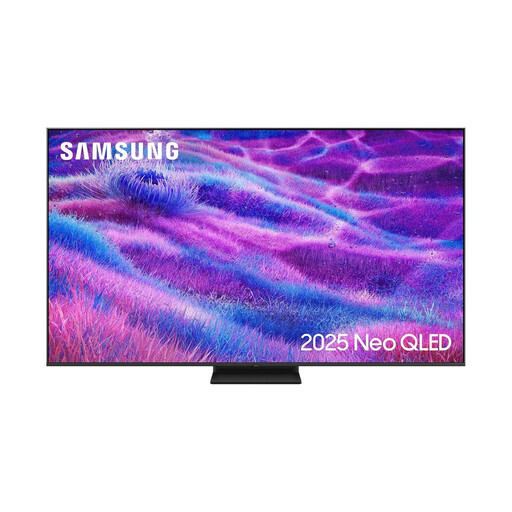
Samsung QE75QN80FAU 75-inch 4K TV
Consider this 75-inch option if the dining seats are well back and the room has space for a large TV. Check the full footprint, viewing distance and exact model’s reflection handling before ordering.
The product name specifies a 190.5 cm (75-inch) 4K Ultra HD smart TV with Wi-Fi.
View on Joybuy
 No image available
Sony BRAVIA A90 XR42A90K 42-inch OLED TV
Consider the 42-inch OLED route where space is tighter and you can manage direct light. Check this model’s complete dimensions, reflections and soundbar connection before planning its position.
The product name specifies 4K HDR, Google TV, Google Cast and Dolby Vision/Atmos support; those format labels do not establish sound quality in your room.
View on Joybuy
 No image available
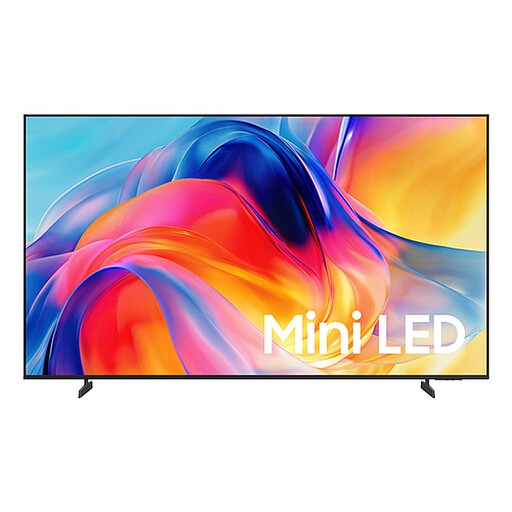
Samsung TU65M70H 65-inch Mini LED 4K TV
This 65-inch Mini LED model belongs on a daylight-viewing shortlist if the seating distance and installation space suit it. Check reflections on the exact screen and listen to a song-and-dialogue scene before deciding.
The product name specifies a 163 cm (65-inch) 4K smart TV.
View on Joybuy
 No image available
Hisense U7Q Pro 55U7QTUK Pro 55-inch Mini LED TV
This 55-inch option may suit a dining area where a 65-inch screen would be difficult to place. Check its full dimensions, reflections and dialogue clarity in the conditions that matter to you.
The product name specifies 4K HDR, VIDAA OS and a built-in subwoofer. Confirm the TV’s audio connections if a soundbar is part of your plan.
View on Joybuy
 No image available
TCL 65Q7C 65-inch QD-Mini LED 4K TV
Consider this 65-inch QD-Mini LED TV if the room can accommodate that screen size. Check the complete dimensions, side-seat picture and reflections, then assess songs and dialogue at your intended volume.
The product name specifies HDR, Google TV and audio by Bang & Olufsen; the audio branding does not establish how clearly it will sound in your kitchen diner.
View on Joybuy
Frequently asked questions
What TV size works in a kitchen diner?
Choose a size using the distance from the dining seats and the TV’s full dimensions, including its stand. Samsung’s 4K guidance gives 1.4 m for 43 inches, 1.5 m for 50 inches and 1.7 m for 55 inches as examples; use them as starting points, then check furniture, circulation space and sightlines in your room.
OLED or Mini LED: which should I look at for a bright kitchen diner?
For a room with strong daylight, begin with exact-model brightness and reflection features rather than assuming either panel type will handle the light well. Mini LED is one shortlist route for daytime viewing; OLED also merits consideration if side-seat viewing matters and you can manage direct light. LG describes wide viewing angles for its OLED range, while reflection treatment still needs checking on the TV you choose.
Do musical films call for a soundbar?
A soundbar is worth considering if songs or dialogue are unclear at the volume you use while cooking or dining. Listen to the TV first with a familiar music-and-speech scene; if you may add external audio, confirm its eARC or ARC connection and allow space for the bar.
Do I need a TV Licence to use this TV in the UK?
GOV.UK says you need a TV Licence to watch or record live TV on any channel or service, or to use BBC iPlayer. You do not need one solely for on-demand viewing that involves neither live TV nor BBC iPlayer; the TV’s location in the kitchen diner does not change that distinction.
What should I check before wall-mounting the TV?
Check the exact model’s dimensions, weight and mounting pattern against the wall and mount you plan to use, and allow for cables and viewing position. Sony publishes a 30.0 × 30.0 cm VESA hole pitch for the K-55XR5, but that measurement applies to that model, not other TVs.


