What should you check before buying?
For home viewing with sight loss, decide whether broadcast navigation or an on-demand interface is the bigger obstacle, then check the controls and content you will actually use.
Accessible smart TV
Choose when: You want broadcast channels, their programme guide and smart-TV functions in one device, with spoken or enlarged menus on the exact model.
Check: Samsung and Sony describe relevant controls, but their availability and operation can differ by model and region.
Separate streaming device
Choose when: You want a separate accessible interface for on-demand and catch-up apps; Apple TV 4K and Fire TV offer different spoken-navigation controls.
Check: RNIB notes that these add-on devices do not show standard broadcast TV, and device or app support can vary.
| Concern |
What to check |
Who this matters to |
| Spoken navigation |
Check the exact model's voice guide or screen reader, its activation shortcut and the supplied remote. |
If I cannot see the guide or menus, I need spoken feedback to find programmes and change settings myself. Around 33% of consumers put independent spoken navigation first. |
| Enlargement and contrast |
Check which menus and apps can be enlarged, and try the controls at your usual viewing distance if possible. |
I can use a visual interface when the text and focus are clear enough, but speech alone is not my preferred way to navigate. Enlarged or higher-contrast information is the main need for around 25% of consumers. |
| Audio description |
Check your programmes and services for audio-description tracks, then check how the intended app finds and enables them. |
To follow on-screen action that dialogue does not explain, I need described programmes that I can find and play. This is the primary concern for around 25% of consumers. |
| Setup and remote |
Read the initial setup steps and check for an accessible shortcut or spoken remote-button guidance. |
If speech is difficult to switch on at the start, I may need help before I can use the device independently. Around 17% of consumers place setup and remote orientation first. |
Smart TVs to consider on Joybuy
These Samsung smart TVs are options if you want broadcast and smart-TV functions in one device and are considering Voice Guide for spoken navigation. Check each model's setup, remote, enlargement controls and the accessibility of your preferred apps before choosing.
 No image available
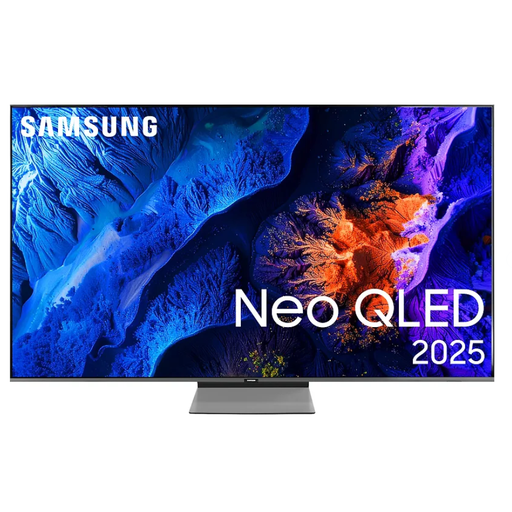
Samsung Neo QE55QN85FAUXXH 55-inch 4K Smart TV
Consider this model if you want broadcast and smart-TV functions together and need to check whether its listed Voice Guide meets your spoken-navigation needs.
The product description lists broadcast tuners, an electronic programme guide and Tizen; the product name specifies a 139.7 cm (55-inch) display. Check Voice Guide activation, enlargement and audio description on the exact model and in your apps.
View on Joybuy
 No image available
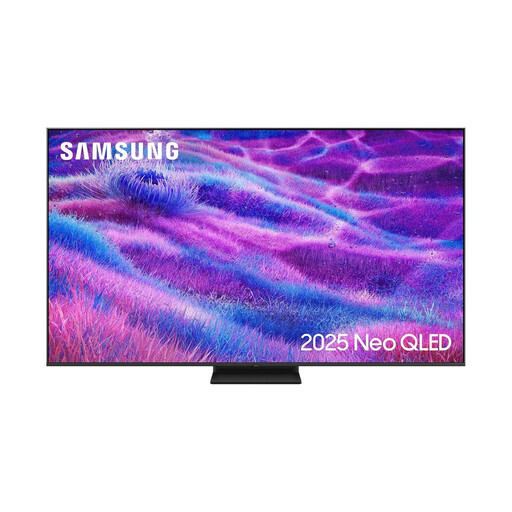
Samsung QE75QN80FAU 75-inch 4K Smart TV
Consider this model if you want broadcast and smart-TV functions together and are assessing Voice Guide for spoken navigation.
The product description lists broadcast reception, a programme guide and Tizen; the product name specifies a 190.5 cm (75-inch) display. Check how Voice Guide works with the supplied remote, plus enlargement and audio-description access in your apps.
View on Joybuy
Frequently asked questions
What accessibility features should I check on a specific model?
Check spoken navigation and how to turn it on, remote operation, enlargement or text scaling, and audio-description controls in the apps you use. Sony says TV features vary by model and region, while Amazon says Fire TV features and language support vary by device.
Can a streaming device replace accessible broadcast-TV controls?
Not if you need to navigate standard broadcast channels and their programme guide through the television. RNIB notes that add-on devices such as Apple TV and Fire TV serve on-demand and catch-up viewing but do not show standard broadcast TV; check the TV or a separate broadcast receiver as well.
Will a screen reader make every streaming programme audio-described?
No. A screen reader helps you navigate the interface, whereas audio description depends on the programme and how the service delivers its track. RNIB reports variation across devices and platforms, so check the titles and apps you rely on.
Is audio description required for every UK TV programme or streaming title?
No: an access-services requirement does not mean every programme or title has an audio-description track. Ofcom says regulated broadcasters must provide access services on a proportion of programming. The UK Government announced requirements for major video-on-demand services in February 2026, but Ofcom's Tier 1 Accessibility Code consultation was marked Pending Statement when its page was last updated on 15 July 2026. Check the particular programme and service before relying on audio description.


