
24/7 Customer Support

Free returns

Same-day & Next-day Delivery

Quality Guaranteed

Unlock Your Welcome Offers: FREE Delivery | Up to 80% OFF | Free 30-day JoyPlus trial
Download the APP
Buying badminton equipment for a garden, park, club or indoor court can look straightforward until you compare racket weights, shuttlecock materials and net designs. A low-priced set may suit occasional family games, while a regular player could quickly outgrow it. The key is matching the equipment to how, where and how often you play.
A badminton racket set may include rackets, shuttlecocks, a net and a carry bag, but that does not automatically mean every component suits club training or competitive matches. Many all-in-one kits are designed for casual outdoor use, where convenience matters more than string tension, frame balance or shuttlecock consistency.
Check the product contents carefully. Confirm how many rackets are included, whether the shuttlecocks are reusable and whether the net includes poles and supports.
Plastic shuttlecocks are usually practical for children, gardens and occasional play, but regular players often prefer goose feather shuttlecocks for a more familiar flight response. Feather models can still vary in durability, speed and storage requirements.
A low price may become less economical if feathers split quickly during frequent smashes. Conversely, tournament-speed shuttlecocks may be unnecessary for relaxed family games, particularly outdoors in changeable UK weather.
Lightweight badminton rackets can be easier to swing, but weight alone does not describe the playing feel. Frame material, shaft flexibility, grip design and balance also affect control. A beginner may benefit from an easy-to-manoeuvre racket, while an experienced player may prioritise a particular shaft response or stringing specification.
Look for practical details such as a pre-strung frame, non-slip grip, alloy construction and whether the product is sold individually or as a pair.
For beginners and family games, an iron-aluminium alloy frame can provide a practical balance between low weight and everyday durability. A fluid box-type frame, as listed on selected Double Fish models, is designed to reduce resistance during the swing.
Also consider:
Avoid assuming that a product described as “professional” is automatically suitable for every player. Match the construction to your technique, frequency of use and playing environment.
For casual outdoor use, synthetic shuttlecocks can be convenient and less sensitive to storage. For club training or match-style practice, durable badminton shuttlecocks made with goose feathers may offer a more traditional trajectory.
Speed ratings such as 76 and 77 are commonly used to indicate shuttlecock speed. The correct choice depends on temperature, altitude, court conditions and playing style. Speed 76 and 77 models should not be treated as interchangeable in every environment, so players may wish to try both before buying in bulk.
Feather shuttlecocks require more care than plastic alternatives. Store them away from direct heat and sunlight, and follow the product instructions regarding humidity. Dry feathers can become brittle, reducing usable life.
A badminton net set should be checked for included poles, supports and carrying equipment. For garden or beach play, assemble it on flat, level ground and secure the supports firmly. Uneven grass, loose paving or strong wind can make a portable net unstable.
Before starting, clear the playing area of furniture, stones, toys and other trip hazards. A portable set is more suitable for casual play than a permanently tensioned club net, so expectations should reflect the design.
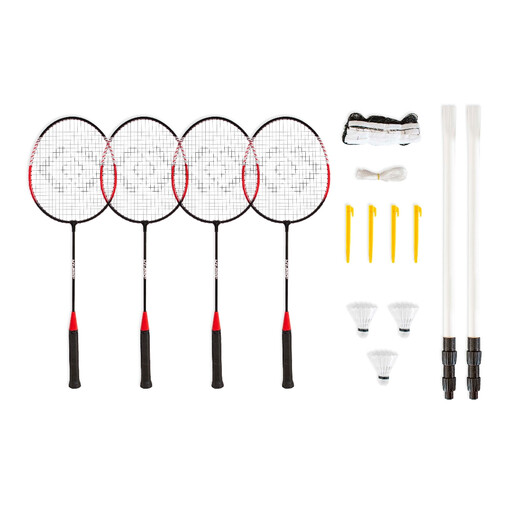
Why This Fits Their Persona: This complete kit is suited to families, beginners and occasional garden or park games where one purchase needs to cover several players.
The listed contents make the package easier to assess: four rackets, three shuttlecocks, a net with support poles and a carry bag.
Four-person format; portable net and bag; comfortable grips; synthetic strings and lightweight shuttlecocks.
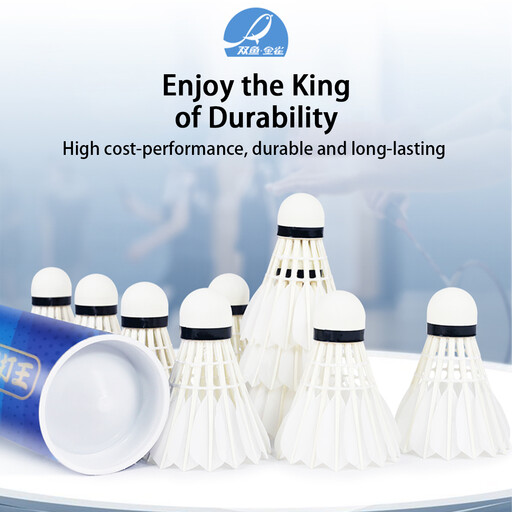
Why This Fits Their Persona: Players seeking feather shuttlecocks for structured practice can consider this 12-pack with a listed speed 76 specification.
The listed feather material, compound ball head and speed rating provide more useful buying information than vague durability wording alone.
Goose feather construction; 12-pack tube; speed 76; high-intensity coil and adhesive bonding listed in the specification.
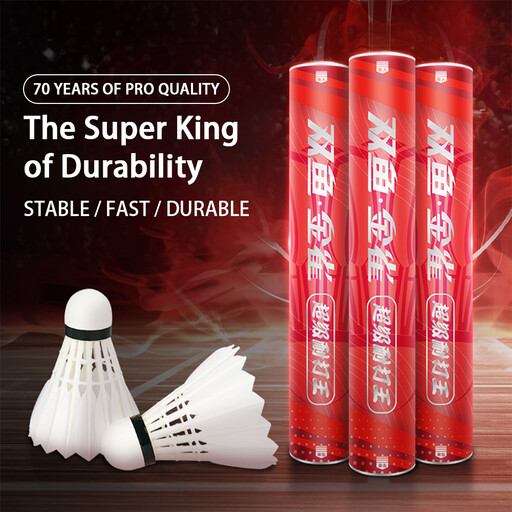
Why This Fits Their Persona: Frequent players and outdoor training groups may prefer a goose feather option with a listed speed 77 rating and wind-resistant design.
The product details identify the feather type, natural cork, composite ball head and storage requirements, helping heavy users plan replacement and care.
Speed 77; thick goose feathers; natural cork; design described for outdoor training and impact-heavy play.
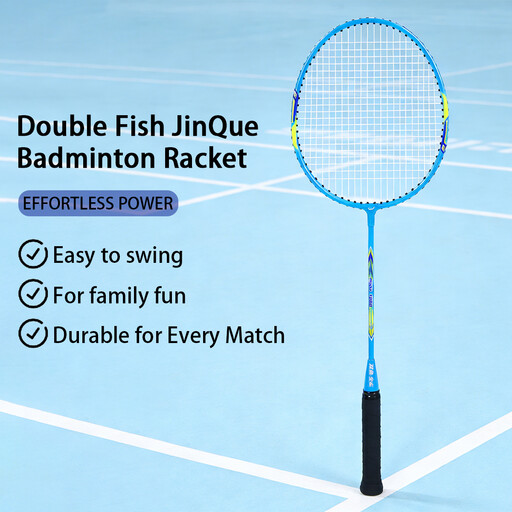
Why This Fits Their Persona: A pair of pre-strung rackets with a carry bag suits players who already own shuttlecocks and want an easy-to-swing option for regular games.
The listing identifies an alloy frame, pre-strung high-tensile string bed and non-slip, sweat-resistant grip rather than relying only on a “lightweight” label.
Double-set format; pre-strung rackets; fluid box-type frame; carry bag included; shuttlecocks are not included.
We have compiled a complete, real-time list of products that fully satisfy these strict selection criteria and UK safety regulations.
For doubles games, you need at least four rackets, several shuttlecocks and a net with poles if you are playing outdoors. A complete set such as the Hy-Pro kit can reduce the need to purchase each item separately. Check whether the included shuttlecocks are feather or synthetic and expect to buy replacements for frequent play.
They can be used outdoors, but wind affects feather shuttlecocks more noticeably than indoor play. Choose a product whose details specify the intended use, store it correctly and expect a shorter usable life if it is exposed to damp grass, rain or strong wind. Synthetic shuttlecocks may be more convenient for informal garden games.
Lifespan depends on impact frequency, storage, playing surface and care. A racket can remain usable while its strings or grip require attention, but a cracked frame or damaged string bed should not be used. Feather shuttlecocks are consumable items: inspect them before play and replace them when feathers split, deform or no longer fly consistently.