Detail-focused evening viewers
If you mainly watch in a dim bedroom, darker interiors, materials and surface textures are likely to matter more to you than daytime glare control. Compare picture features on the exact models you are considering.


Start with the space available and the light in your bedroom: a 43-inch TV is a compact option, while a 48-inch screen is worth considering if your viewing distance and installation space allow it. For darker architectural interiors, compare the stated picture features of compact OLED models; if windows or lamps reflect in the screen, check the exact TV’s glare treatment rather than choosing by panel label alone.
If you mainly watch in a dim bedroom, darker interiors, materials and surface textures are likely to matter more to you than daytime glare control. Compare picture features on the exact models you are considering.
If a window or lamp faces the screen, its position and the TV’s glare treatment may matter as much as the picture features you would notice at night.
If the TV must fit on furniture or a smaller wall, a 43-inch model gives you a compact size to assess against your measurements while you check its streaming features.
For architecture programmes in a bedroom, decide whether dark-scene detail, reflections or physical fit will have the greatest effect on your choice. Then compare the exact models and the programmes you plan to watch.
Consider when: You mainly watch with the lights low and want to compare how models present darker interiors and tonal differences.
Check before choosing: A 42- or 48-inch model still needs to fit your viewing distance and its intended stand or wall position; OLED branding alone does not establish how it will look in your room.
Consider when: Reflections during daytime viewing are your main concern and you want to assess a compact model with a stated glare-reduction feature.
Check before choosing: Samsung lists Glare Free for its 43-inch QN93F, but that specification does not apply to every Mini LED or QLED TV.
Consider when: A compact screen and the streaming features you use are more important to you than seeking a particular premium-panel feature.
Check before choosing: Confirm HDR formats, app support and reflection handling on the individual model; a 4K label does not settle those questions.
| Concern | Buying checks | Who this matters to |
|---|---|---|
| Picture detail and contrast | Compare the exact model’s resolution and picture features, then check the quality available from your usual programme sources. | If I watch evening programmes for their materials and darker interior scenes, I want those differences to remain distinguishable. Around 42% of consumers put picture detail and contrast first. |
| Reflections and lighting | Check where windows and lamps sit relative to the screen and whether the specific model states a glare-reduction feature. | When daylight falls across my viewing position, I need to judge the screen without a distracting reflection. Reflections are the leading concern for roughly 33% of consumers. |
| Size and placement | Measure viewing distance, available width and stand depth; for wall mounting, confirm the model’s VESA pattern. | If the TV has to sit on bedroom furniture or a limited wall area, I need it to fit before considering a larger screen. For about 25% of consumers, placement is the primary concern. |
A larger screen may not fit the intended furniture or wall. Viewing-distance guidance also cannot tell you how much installation space your particular bedroom has.
Measure the available width, stand depth, bed-to-screen distance and intended viewing height. Check the chosen TV’s dimensions and VESA pattern before selecting a mount.
A different stand, wall bracket or installation arrangement may be needed if the original plan does not fit.
Glare treatment and picture features vary by model. Samsung lists Glare Free for its QN93F, while LG describes dark-scene features on its G6; neither description establishes how every TV using those panel technologies will perform in your bedroom.
Match your shortlist to the room’s lighting, then compare stated features for the exact models and check the retailer’s return terms.
The source programme affects what a 4K screen can show. Sony describes its X-Reality PRO processing as upscaling lower-resolution material towards 4K, which is not the same as receiving a native 4K programme.
Check the resolution available from the services and programmes you use. Treat upscaling as a processing feature, not a promise of native 4K source detail.
In the UK, GOV.UK says a TV Licence is required to watch or record programmes as they are broadcast or to watch on-demand BBC programmes on iPlayer. An old television also needs an appropriate electrical-equipment disposal route.
Check whether your viewing requires a TV Licence and ask about retailer take-back or your local authority’s collection and recycling options before replacing a set.
LG’s UK range includes 42- and 48-inch OLED options for viewers considering a compact screen.
Samsung’s 43-inch QN93F is a Mini LED/QLED model to examine when bedroom reflections are a concern.
Sony has a 43-inch 4K BRAVIA 3 option for buyers comparing compact screens and source-processing features.
TCL’s 43T6C-UK is a compact 4K QLED Fire TV option for checking streaming and HDR-format requirements.
These 43-inch 4K TVs are options to assess when a compact bedroom screen is your starting point. Check each model’s placement requirements and how its stated features relate to your lighting and viewing sources.
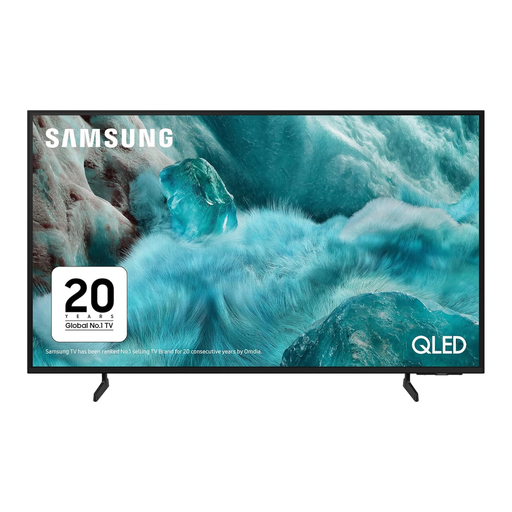 Image unavailable
Consider this model if a 43-inch screen fits your bedroom furniture or wall; check how it handles any window or lamp reflections at the intended position.
The product name specifies Wi-Fi and a one-year warranty. Check the warranty terms if they affect your choice.
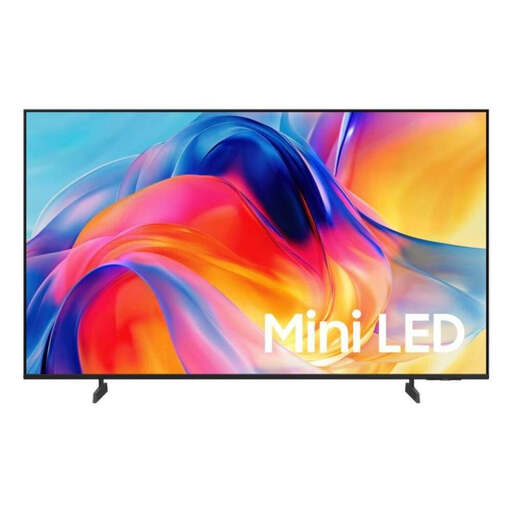 Image unavailable
If you want a compact screen for bedroom viewing, check this 43-inch model against your measured viewing distance and installation space.
Its name specifies Wi-Fi. Check the exact mounting requirements and reflection handling if either is important in your room.
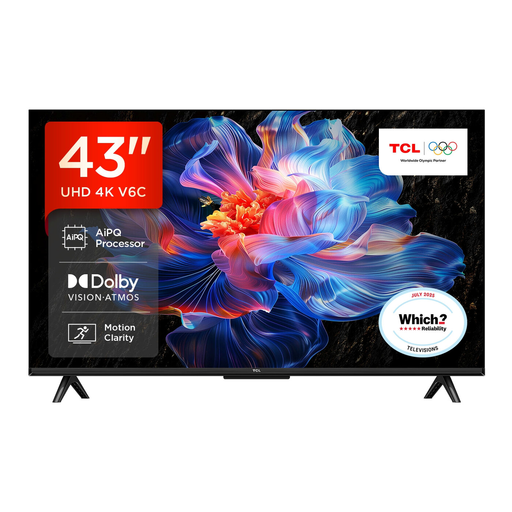 Image unavailable
For streamed architecture programmes in a compact bedroom, check whether Google TV provides the services you use and whether the set fits its intended position.
The name lists Dolby Atmos and an AiPQ Processor. Its 120Hz Game Accelerator is identified as an FHD feature, not a stated 4K/120Hz mode.
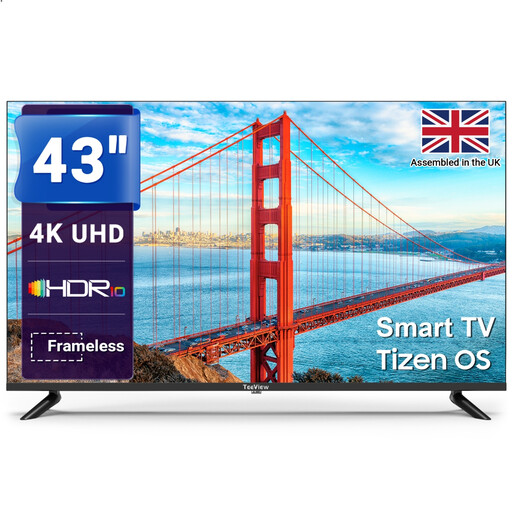 Image unavailable
If a 43-inch TV suits your bedroom layout, check whether its smart-TV platform has the services you need for architecture programmes.
The name identifies Tizen OS. Confirm the dimensions for your furniture and assess reflections from the intended viewing position.
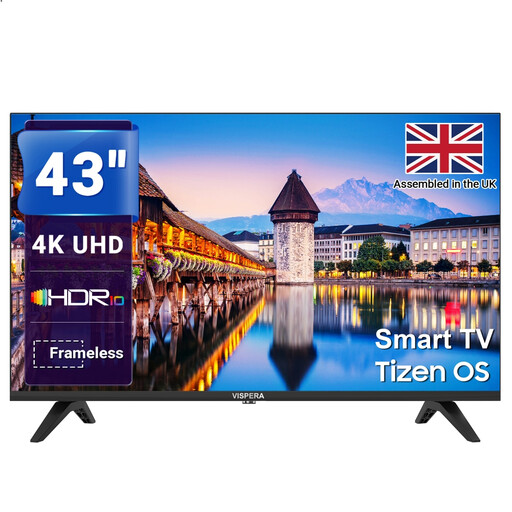 Image unavailable
Consider this 43-inch model where screen size and access to your streaming services are the deciding factors; check its fit before ordering.
The name lists Dolby Audio and HDR without naming an HDR format. Confirm any format you need and check reflections in your planned screen position.
Choose between 43 and 48 inches by measuring both your viewing distance and the available wall or furniture space. Sony advises a distance of at least 1.5 times a 4K screen’s height; treat that as guidance, then check whether the larger model fits your room and makes the programme details easier for you to see.
No: the programme source determines whether native 4K detail is available. Some TVs process lower-resolution material for display on a 4K screen, so check your usual services and programmes rather than relying on the TV’s resolution alone.
According to GOV.UK, you need a TV Licence to watch or record programmes as they are broadcast on any channel or service, or to watch on-demand BBC programmes on iPlayer. The requirement depends on how you watch, not simply on owning or using a bedroom TV.
No: the mount must suit the exact TV’s VESA pattern and weight as well as the wall and intended position. Sony lists a 200 × 200 mm VESA pitch for the K-43S3, but you should check the specification of whichever model you choose.
Use an appropriate electrical-equipment collection or recycling route rather than putting the old television in ordinary household waste. Check the retailer’s take-back arrangements or your local authority’s options; GOV.UK identifies televisions as equipment covered by UK waste electrical and electronic equipment rules.