
24/7 Customer Support

Free returns

Same-day & Next-day Delivery

Quality Guaranteed

Unlock Your Welcome Offers: FREE Delivery | Up to 80% OFF | Free 30-day JoyPlus trial
Download the APP
A perfect bake can be a source of immense pride, but the disappointment of a cake sticking, burning at the edges or collapsing during removal is a frustration every home baker has faced. Often, the culprit isn't the recipe or the oven, but the cake tin itself. Navigating the market for bakeware can be tricky, with many products failing to live up to their promises. Before you invest, it's crucial to understand the common pitfalls that lead to wasted ingredients and effort.
As the Joybuy Product Recommendation Officer, my role is to help you see past the marketing and focus on what truly matters. Here are the key issues to watch out for:
To avoid these issues, focus on a few core parameters that define a quality cake tin. Getting these right will have a far greater impact on your baking than any flashy gimmick.
The material of your tin dictates how it heats up. Carbon steel bakeware and aluminised steel are popular choices because they conduct heat efficiently and evenly, helping to prevent the dreaded combination of burnt edges and an undercooked centre.
Pay close attention to the material's thickness. A specification like 0.8mm thickness indicates a more robust construction that resists warping under heat. This structural integrity ensures the base remains flat, providing consistent contact with the oven shelf and promoting a uniform rise. A heavier, thicker tin is generally a sign of durability and better performance.
How you get the cake out of the tin is critical, especially for delicate bakes.
Based on these practical considerations, here are a few options from our catalogue, matched to different types of home bakers.
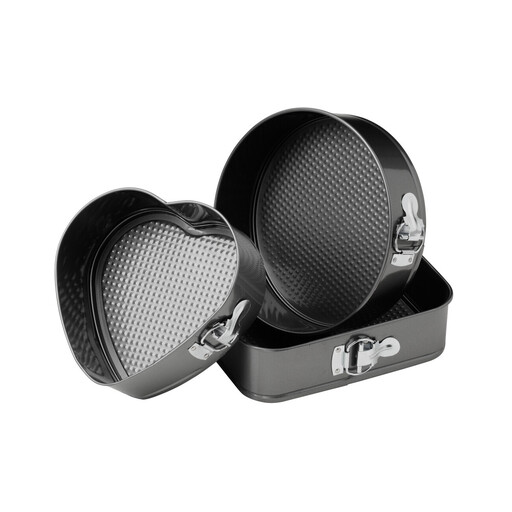
Why This Fits Their Persona: For those new to baking or who bake for occasional family events, this set provides versatility without a large initial investment. Having round, square and heart shapes means you are equipped for birthday parties, seasonal treats and classic cakes from day one.
This set directly counters the "one-size-fits-all" fallacy by providing three different shapes, ensuring you have a suitable tin for various recipes and occasions.
The springform mechanism on all three tins simplifies cake removal for beginners. The non-stick coating and dishwasher-safe design make for easy cleanup.
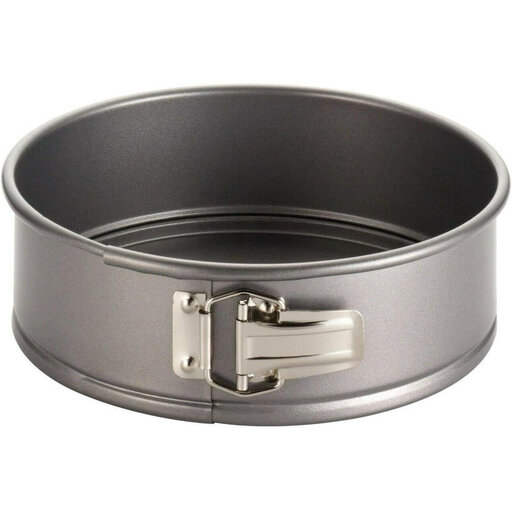
Why This Fits Their Persona: If you love making cheesecakes, layered tortes or delicate mousse cakes where presentation is key, a reliable springform pan is non-negotiable. This user values precision and a clean release above all else.
Its 0.8mm metal thickness provides structural integrity, preventing the warping and poor sealing that causes leaks in flimsier springform tins. This ensures batter stays contained for a perfect finish.
The combination of a sturdy build, reliable springform release and a non-stick interior is specifically designed for damage-free removal of delicate desserts.
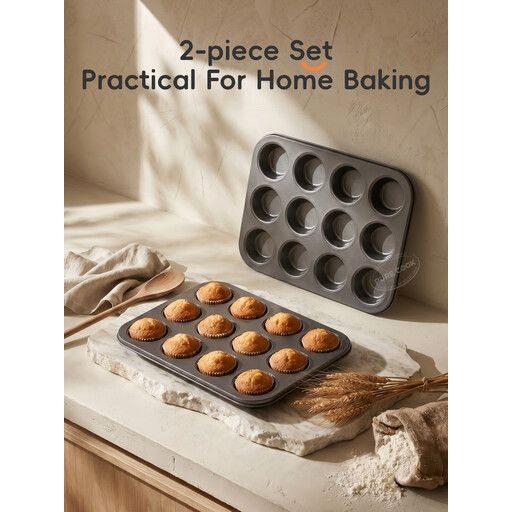
Why This Fits Their Persona: Ideal for parents baking for school events, hosts preparing for afternoon tea or anyone who enjoys making individual portions like muffins, mini-quiches, or lava cakes. This baker values efficiency and consistent results across a large batch.
The single-piece carbon steel construction ensures all 12 cavities heat at the same rate, avoiding the uneven baking that can happen when using multiple, separate tins or a flimsy, warping tray.
This pan allows you to bake 12 uniform cakes at once, saving time and energy. The non-stick coating aids in quick release and cleanup, streamlining the entire batch-baking process.
We have compiled a complete, real-time list of products that fully satisfy these strict selection criteria and UK safety regulations.
1. How do I stop my springform cake tin from leaking? A common trick for thinner batters (like for a cheesecake) is to wrap the outside base of the springform tin in a double layer of heavy-duty aluminium foil before placing it in the oven or a water bath. However, investing in a sturdily built tin with a tight-fitting latch is the most reliable long-term solution.
2. What is the difference between a loose bottom and a springform cake tin? A loose bottom tin has a solid side ring and a base that you push up from below to release the cake. A springform tin has a collar with a latch that unclips to expand and lift away from the base. Springforms are generally preferred for the most delicate desserts that cannot withstand any pushing, while loose bottom tins are excellent, robust all-rounders for most other cakes and tarts.
3. Are carbon steel cake tins better than aluminium? Both are excellent materials for bakeware. Carbon steel is known for its durability and superior heat retention, which can help create a great crust. Aluminised steel (steel coated in an aluminium-silicon alloy) offers excellent heat conductivity for a very even bake and is also highly resistant to corrosion. The choice often comes down to personal preference, but both are a significant step up from thin, basic tinplate or aluminium.