
24/7 全天候客户支持

免费退货

当日/次日达

品质保障

开启新人专享福利: 全场免邮 | 低至 2 折 | 免费试用 30 天 JoyPlus 会员
下载 Joybuy
Navigating the world of 3D printer filament can feel overwhelming. With an ever-expanding market of materials, colours and special properties, selecting the right PLA filament for your project is crucial for achieving a successful print. Whether you're aiming for rapid prototyping, a professional matte finish or a dazzling multicolour effect, the filament you choose directly impacts the final result.
As the Joybuy Product Recommendation Officer, my role is to help you cut through the clutter. This guide offers practical advice and highlights a few standout options to help you find the right material for your FDM printer, ensuring your creative ideas are brought to life with quality and precision.
Before you add a spool to your basket, consider these key factors. A few moments of thought here can save you hours of printing frustration later.
The capabilities of 3D printers have advanced significantly. Many modern machines now boast impressive print speeds, but to take full advantage of them, you need a filament that can keep up.
PLA is no longer just a basic, glossy plastic. The finish can dramatically alter the look and feel of your printed object.
Not all filaments are created equal. Two technical specifications are critical for reliable, jam-free printing.
Based on their features and intended applications, here are our recommendations for makers in the UK.
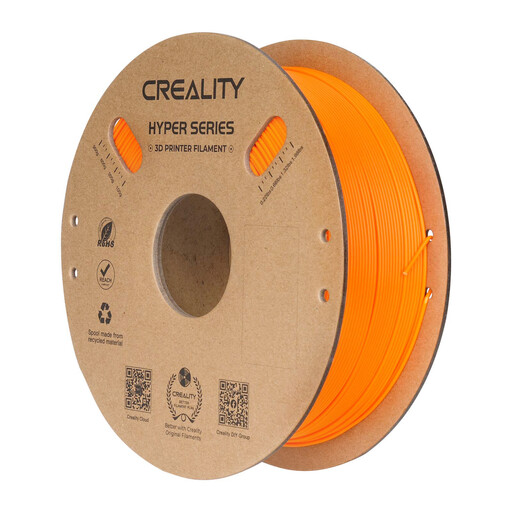
Why It Stands Out: This filament is engineered specifically for speed. Its formulation allows for high fluidity and rapid cooling, enabling it to keep pace with printers running at speeds up to 600mm/s. This makes it possible to complete large prints or batches of parts in a fraction of the time without compromising structural integrity.
Pros:
Who is it for? This is for users of modern, high-speed 3D printers who want to maximise their machine's productivity. It's ideal for rapid prototyping, producing functional parts quickly or simply finishing large projects faster.
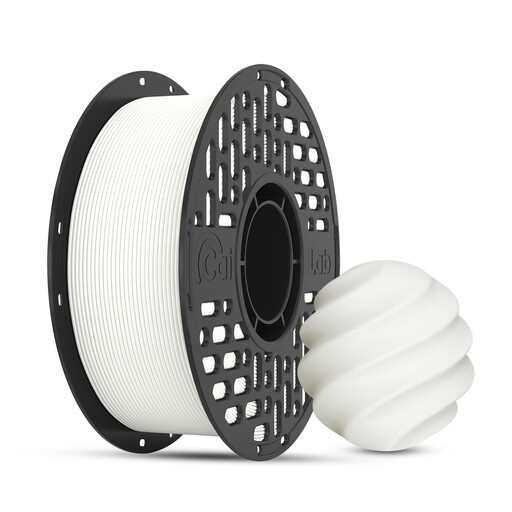
Why It Stands Out: The standout feature of this matte PLA filament is its ability to produce a smooth, non-reflective surface. This finish is exceptionally effective at concealing layer lines, giving your prints a clean, uniform appearance that looks less like a 3D print and more like a finished product.
Pros:
Who is it for? Designers, architects and makers who prioritise aesthetics. It's perfect for creating professional-looking models, display pieces and prototypes where surface quality is paramount.
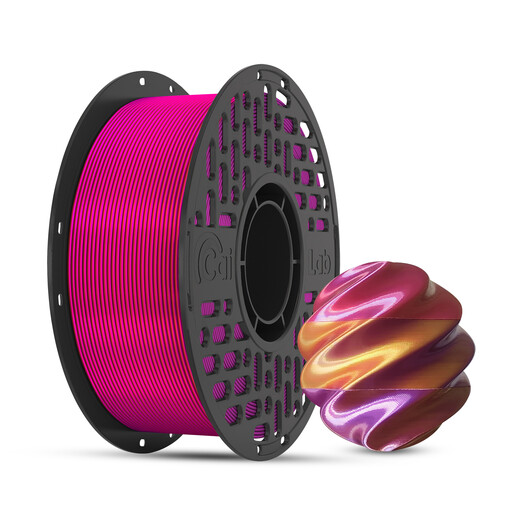
Why It Stands Out: This silk PLA filament takes aesthetics to the next level by co-extruding three distinct colours—Red, Gold and Purple—into a single strand. The result is a print with a stunning, iridescent sheen that shifts and changes depending on the viewing angle and the geometry of the model.
Pros:
Who is it for? Hobbyists and creators who want to produce visually striking objects that stand out. If you're looking to make something truly special with minimal fuss, this tri-colour filament is an excellent choice.
These recommendations cover specific needs for speed, finish and aesthetics, but the world of FDM filament is vast. If you're searching for different colours, materials like PETG or ABS or other speciality filaments, feel free to explore our full range of printer and printing supplies.
1. Is PLA filament strong enough for functional parts? Standard PLA is quite rigid and offers good tensile strength, making it suitable for many functional items like brackets, enclosures and jigs. For most general-purpose applications, it provides a great balance of strength and ease of printing. However, for parts that require high heat resistance or impact durability, other materials like PETG or ABS may be more appropriate.
2. How should I store my PLA filament? PLA is hygroscopic, which means it absorbs moisture from the air. This can make the filament brittle and cause poor print quality (e.g., stringing, popping sounds from the nozzle). To prevent this, it's important to store your 1kg PLA spool in a sealed bag or an airtight container, preferably with a desiccant packet to keep it dry.
3. What is the difference between standard PLA and high-speed PLA? The primary difference lies in the formulation. High speed PLA contains additives that increase its melt flow index, allowing it to melt and extrude much faster without a loss in quality. Standard PLA struggles to melt quickly enough at very high speeds (e.g., above 150mm/s), which can lead to under-extrusion and weak, inconsistent prints. If your printer supports high-speed printing, using a filament designed for it is key to unlocking its full potential.