
24/7 全天候客户支持

免费退货

当日/次日达

品质保障

开启新人专享福利: 全场免邮 | 低至 2 折 | 免费试用 30 天 JoyPlus 会员
下载 Joybuy
As a 3D printing enthusiast in the UK, you know that the quality of your filament is just as important as the printer itself. A great print starts with great material. Yet, the market is flooded with options, and it's easy to fall for marketing claims that don't hold up. Many makers find themselves frustrated with failed prints, wasted time and spools of unusable plastic.
This guide cuts through the clutter. We'll highlight the common pitfalls to avoid when buying 3D printer filament and show you what truly matters for achieving clean, reliable prints. Let's look at the traps that often catch out even experienced users.
Before you add another spool to your basket, be aware of these frequent issues that marketing materials often gloss over:
To ensure you get what you pay for, focus on these non-negotiable technical specifications.
Understanding the fundamental difference between the two most common filament types is your first step.
Always check for a stated diameter tolerance. For a 1.75mm PLA filament, a tolerance of ±0.02mm is the industry standard for high-quality material. A tighter tolerance means the filament flows more consistently through the nozzle, which is essential for achieving smooth walls, accurate dimensions and preventing jams, especially when using high speed PLA settings on modern printers.
A good filament should be wound onto the spool in neat, even rows with no crossovers. This is the true sign of a tangle-free filament. Additionally, the filament should arrive in a vacuum-sealed bag with a desiccant packet. This prevents the material from absorbing atmospheric moisture, which is a primary cause of the bubbles and brittleness that ruin print quality. A standard 3D printer filament 1kg spool should be packaged this way to guarantee it's ready to print straight out of the box.
We've matched some popular filaments to the needs of different UK-based makers.
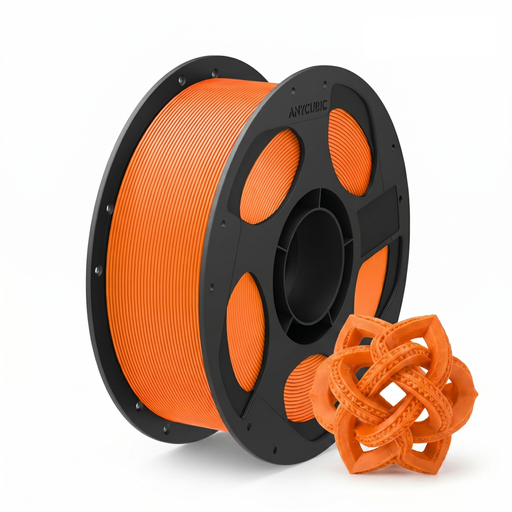
Why This Fits Their Persona: This user prints frequently for fun—creating models, toys and household gadgets. They need a reliable, cost-effective filament in a range of vibrant colours that just works without constant tinkering.
ANYCUBIC's PLA Basic is known for its exceptionally neat winding, directly countering the tangling pitfall. Its precise ±0.02mm tolerance ensures consistent extrusion, avoiding jams and poor quality.
Excellent value for a 1kg spool. The wide range of rich, consistent colours and low-odour formulation make it a pleasure to use for everyday projects.
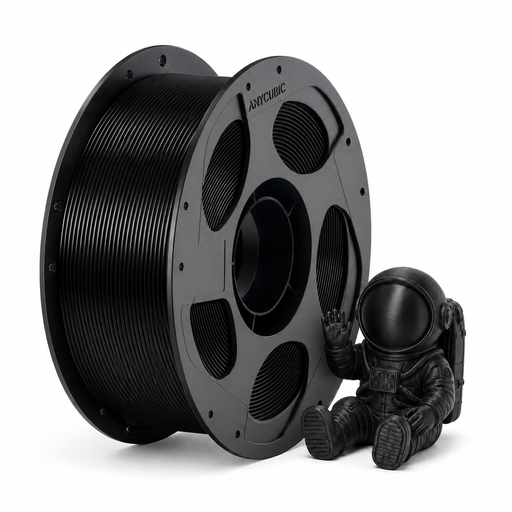
Why This Fits Their Persona: This user designs and prints parts that need to be strong and durable, such as custom brackets, enclosures for electronics or replacement parts for household items. Print failure is not an option.
Cheaper PETG is notorious for being difficult to print. ANYCUBIC's formulation provides better consistency, reducing the stringing and adhesion problems that plague lower-quality PETG filaments.
Offers superior strength, chemical resistance and temperature tolerance compared to PLA. The black colour provides a professional, clean finish for functional components.
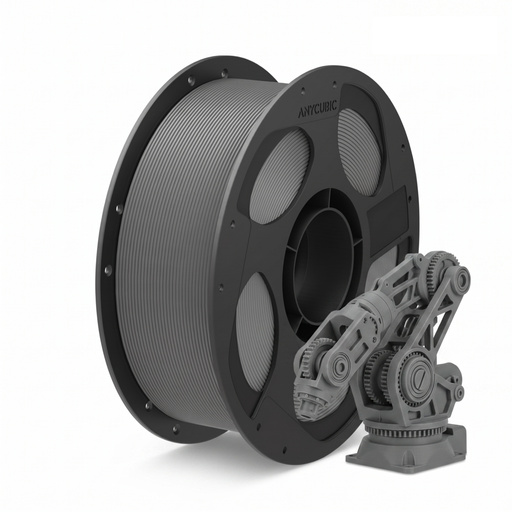
Why This Fits Their Persona: This maker owns a modern, high-speed printer and wants to maximise its output without compromising on quality. They need a filament that can keep up with rapid movements and high flow rates.
Poor quality filaments fail spectacularly at high speeds, causing under-extrusion and jams. This filament's consistent diameter and formulation are designed to support speeds up to 200 mm/s, ensuring reliable performance.
Optimised for high-speed printing. The neat, secure winding prevents snags during rapid filament feeding, which is a common failure point on fast printers.
We have compiled a complete, real-time list of products that fully satisfy these strict selection criteria and UK safety regulations.
While ANYCUBIC filaments are shipped in vacuum-sealed packaging to minimise moisture, drying is always a good practice for achieving the absolute best print quality. The manufacturer recommends drying for 6-8 hours at 45–50 ℃. If you live in a humid area or the spool has been open for a while, drying it can prevent issues like stringing and brittleness.
The choice depends on your project's needs. Use PLA for detailed decorative models, figures and general-purpose items where ease of printing is a priority. Choose PETG for functional parts that require higher strength, durability and heat resistance, such as printer parts, outdoor fixtures, or mechanical components.
The best prevention starts with buying a quality, neatly wound spool. When you open a new spool, secure the loose end with the provided holes or a filament clip. Never let the end go free, as this can create an overlap that will lead to a tangle later. Proper storage in a dry box also helps maintain the filament's integrity and prevents it from becoming brittle and prone to snapping.