
24/7 Customer Support

Free returns

Same-day & Next-day Delivery

Quality Guaranteed

Unlock Your Welcome Offers: FREE Delivery | Up to 80% OFF | Free 30-day JoyPlus trial
Download the APP
A flat battery is an unwelcome surprise, especially on a cold, dark morning. While many UK drivers rely on breakdown services, a modern car jump starter offers a faster, more self-reliant solution. However, the market is flooded with devices making bold claims, making it difficult to choose a reliable unit.
As a Joybuy Product Recommendation Officer, my role is to help you navigate the options and identify the features that truly matter. This guide will break down the common marketing traps and highlight the essential specifications to ensure you get a dependable emergency car starter that won't let you down.
Many shoppers are swayed by impressive-looking numbers that don't always translate to real-world performance. Here are two key pitfalls to watch out for:
To make an informed choice, focus on these three non-negotiable factors.
Instead of focusing solely on peak amps, check the manufacturer's specifications for engine size compatibility. A quality jump starter for diesel engines will require more starting power than one for a small petrol car. Look for clear guidance, such as "Suitable for up to 8.0L petrol and 6.0L diesel engines." This is the most reliable way to match a 12V jump starter to your specific car, van or motorcycle. A device with a "boost" function can also be valuable for starting vehicles with completely flat batteries.
Connecting a power source to your car's battery carries inherent risks. A reliable car battery booster must have built-in safety protections. Look for units that explicitly mention features like:
These features are not luxuries; they are essential for safe and worry-free operation.
Modern jump starters are more than just an emergency tool. Many double as a jump starter power bank, allowing you to charge phones and tablets via USB ports. Some of the most versatile models now include a built-in jump starter with air compressor, turning them into a complete roadside assistance kit. Consider what you truly need. If you already own a portable tyre inflator, a more compact jump pack might be a better choice. Also, check the device's operating temperature range to ensure it can handle the cold snaps of a British winter.
To help you find the right fit, we've matched some well-regarded models to common UK driver profiles.
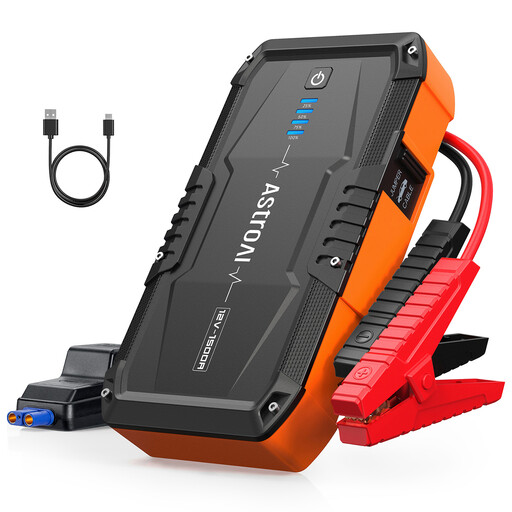
Why This Fits Their Persona: Ideal for drivers of standard petrol or small diesel cars who need a compact, no-fuss solution. It's small enough to live in the glovebox, providing peace of mind for daily commutes without taking up valuable space.
It focuses on clear engine compatibility (up to 6.0L petrol/3.0L diesel) rather than an inflated peak amp figure, giving you a realistic performance expectation.
Features a "BOOST" mode for deeply discharged batteries and includes 8 integrated safety protections for secure operation. Its compact size is a major benefit.
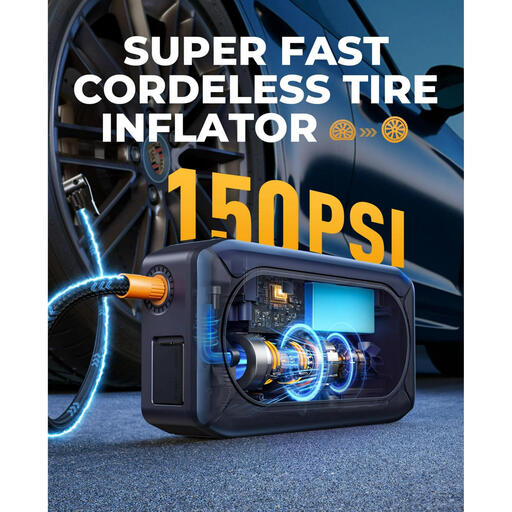
Why This Fits Their Persona: Perfect for those with larger family cars, SUVs or people carriers. The integrated air compressor provides a complete solution for the two most common roadside issues: a flat battery and a flat tyre, making it ideal for family holidays and long journeys.
The value here is in genuine multi-functionality, not just a high amp number. The 150 PSI digital air compressor with auto-shutoff is a practical, high-value feature.
A true 5-in-1 tool with powerful starting capability for large engines (up to 9.0L petrol/8.0L diesel) and a clear LCD screen for easy operation.
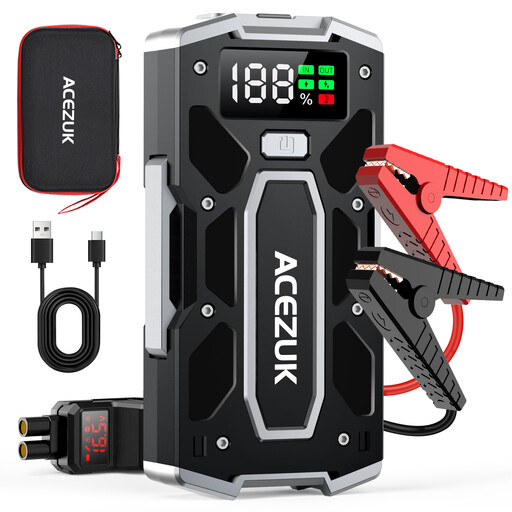
Why This Fits Their Persona: Designed for those who drive high-displacement vehicles like large vans, trucks or 4x4s. Its substantial power output provides the confidence needed for starting large diesel engines, making it a reliable tool for professional use or demanding conditions.
While it advertises a high 8000A peak current, this is backed by a credible and clearly stated engine compatibility (up to 10.0L petrol/8.0L diesel), justifying its power for its intended heavy-duty audience.
Offers immense starting power for large engines and a rugged, durable build with rubberised corners. The clear LCD display and multiple safety protections make it suitable for demanding environments.
We have compiled a complete, real-time list of products that fully satisfy these strict selection criteria and UK safety regulations.
1. How often should I charge my car jump starter? Most manufacturers recommend recharging your portable jump starter every 3 to 6 months to maintain battery health and ensure it's ready when you need it. It's also good practice to recharge it after each use. Always refer to the specific instructions provided with your device.
2. Can I leave a portable jump starter in my car during a cold UK winter? Yes, the majority of modern jump starters are designed to be stored in a vehicle and have a specified operating temperature range (e.g., -20°C to 60°C). However, prolonged exposure to extreme cold can reduce battery efficiency. For optimal performance, it's wise to choose a model rated for low temperatures if you live in a colder part of the country.
3. Is a jump starter with an air compressor worth it? This depends entirely on your needs. If you value having an all-in-one emergency device that can handle both a flat battery and a flat tyre, then a combined unit is an excellent and space-saving investment. If you already have a separate, high-quality tyre inflator, you may prefer a more compact and dedicated jump starter.