
24/7 Customer Support

Free returns

Same-day & Next-day Delivery

Quality Guaranteed

Unlock Your Welcome Offers: FREE Delivery | Up to 80% OFF | Free 30-day JoyPlus trial
Download the APP
A flat battery or a soft tyre can turn a routine commute or a planned road trip into a stressful ordeal. Waiting for roadside assistance isn't always practical, especially on a cold morning or a remote country lane. A multi-functional car jump starter with air compressor is a practical addition to any vehicle's emergency car kit, providing a single, compact solution for two of the most common roadside problems.
These all-in-one devices combine a portable car battery booster with a portable tyre inflator, often including other useful features like a power bank and an emergency light. But with so many models available, how do you choose the right one for your vehicle? This guide will walk you through the key considerations and highlight some of our top recommendations to help you find a reliable roadside companion.
Before making a choice, it's important to understand a few key specifications to ensure the device meets your needs.
The most critical factor is the jump starter's power, measured in Peak Amps (A). This figure indicates the maximum current the unit can deliver to start your engine. A small petrol car requires significantly less power than a large diesel van.
12v jump starter.diesel jump starter or a heavy duty jump starter with a higher peak amp rating.The integrated air compressor is more than just a convenience; it's a vital safety tool. Look for:
Modern jump starters are packed with technology to make them safer and more versatile.
jump starter power bank with USB ports is incredibly useful for charging your phone, tablet or dash cam, especially during a power cut or while camping.Here are a few multi-functional jump starters that offer a great balance of power, features and reliability for UK drivers.
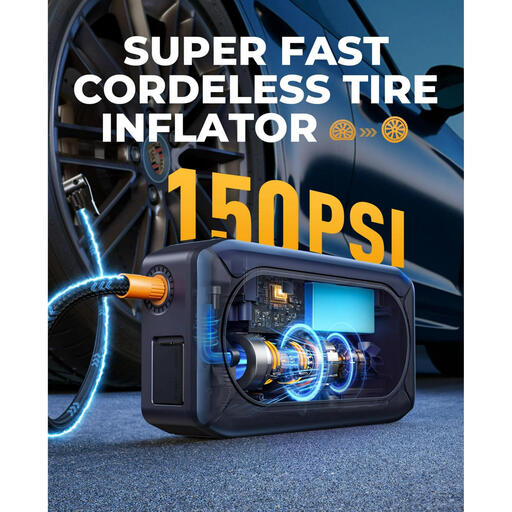
Why It Stands Out: The BUTURE BC02 is a powerful and versatile all-rounder. With 4500A peak current, it has enough power for the vast majority of petrol and diesel vehicles on UK roads, from family cars to SUVs and light commercial vans. Its smart digital air compressor and robust safety features make it a dependable tool for everyday drivers.
Pros:
Who is it for? This is an excellent choice for the daily commuter or family who wants a single, reliable device for their car, SUV or van. It covers a wide range of vehicles and provides peace of mind for road trips and daily driving.
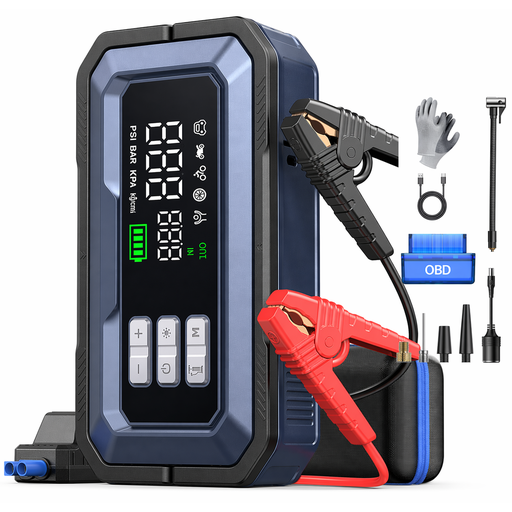
Why It Stands Out: For those with larger vehicles, the UTRAI JS-30 is a true heavy duty jump starter. Its immense 7000A peak current can handle large diesel engines up to 14-litre, making it suitable for trucks, motorhomes and agricultural machinery. The inclusion of an OBD2 fault code reader is a unique feature that allows you to diagnose engine warning lights, adding another layer of utility.
Pros:
Who is it for? This model is ideal for owners of large diesel trucks, vans, motorhomes or even boats. It's also a great fit for mechanics or vehicle enthusiasts who will benefit from the integrated OBD2 reader.
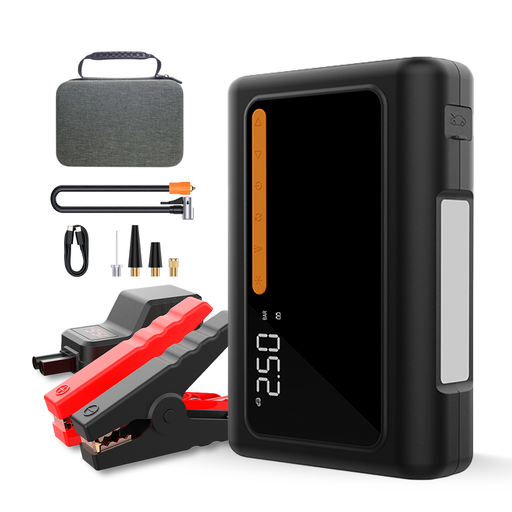
Why It Stands Out: The GOKKCL GK01 moves away from traditional lithium batteries and uses advanced sodium-ion battery technology. This chemistry provides significant advantages in safety and durability. It operates across an exceptionally wide temperature range (-40°C to 80°C), making it safe to store in your car year-round. It also boasts a very long cycle life and low self-discharge rate, meaning it stays ready for years with minimal maintenance.
Pros:
Who is it for? This is the perfect choice for the safety-conscious driver who values longevity and low maintenance. If you want a device you can leave in your glove box and trust to be ready when you need it, regardless of the weather, the GK01 is an excellent option.
If you haven't found the perfect fit for your needs, or if you're looking for a different combination of features, there are many other models to consider. You can explore a wider selection of devices to find the one that best suits your vehicle and budget.
? Explore our full range of Charging Jump Starters
1. How many amps do I need to jump-start my car? For most small-to-medium petrol cars, a jump starter with 1500A-2000A peak current is sufficient. For larger petrol engines, SUVs and most diesel cars, look for 2500A or more. For large trucks and commercial vans with diesel engines, a heavy-duty model with 4000A or more is recommended. Always check the manufacturer's specifications against your vehicle's engine size.
2. Can I leave a jump starter in my car in hot or cold weather? It depends on the battery technology. Standard lithium-ion jump starters have an operating range typically between -20°C and 60°C. Leaving them in a car during a heatwave or a deep freeze can degrade the battery or prevent it from working. Models with sodium-ion batteries, like the GOKKCL GK01, are designed for a much wider temperature range (-40°C to 80°C) and are better suited for being stored in a vehicle year-round.
3. How often should I charge my portable jump starter? To ensure it's ready for an emergency, it's good practice to check and recharge your jump starter every 3 to 6 months. Lithium-ion batteries slowly lose charge over time. Some newer technologies, like sodium-ion, have a much lower self-discharge rate and can hold a charge for several years, but checking them periodically is still a wise habit.