
24/7 Customer Support

Free returns

Same-day & Next-day Delivery

Quality Guaranteed

Unlock Your Welcome Offers: FREE Delivery | Up to 80% OFF | Free 30-day JoyPlus trial
Download the APP
That sinking feeling of turning the key to silence on a frosty morning or in a deserted car park is a moment every UK driver dreads. For years, the go-to solution has been a portable lithium jump starter. However, many owners discover their emergency device is the first thing to fail them, often due to common but overlooked design flaws. Before you invest in another portable power pack, it's crucial to understand the pitfalls that lead to wasted money and a false sense of security.
The most common issues are not about brand or price, but about the fundamental technology inside.
A shift in battery technology is addressing these core problems directly, offering a more reliable and safer alternative for your emergency car kit.
When choosing a 12v jump pack, the single most critical specification is the type of battery it contains. The emergence of sodium-ion battery technology presents a significant step forward from traditional lithium-ion, particularly for a device that needs to be dependable after long periods of storage in a vehicle.
Today’s advanced jump starters are multi-functional tools. Beyond reviving a dead battery, they serve as a central hub for your emergency needs.
A high-quality unit often integrates a car jump starter with air compressor functionality, allowing you to use it as a portable tyre inflator to handle a slow puncture. Another key feature is its role as a high-capacity jump starter power bank. Look for models with PD60W (Power Delivery) fast-charging USB-C ports, capable of rapidly charging modern laptops, tablets and smartphones, ensuring you stay connected in any situation.
We've identified a few options that align with these modern requirements, matching them to the drivers who would benefit most.
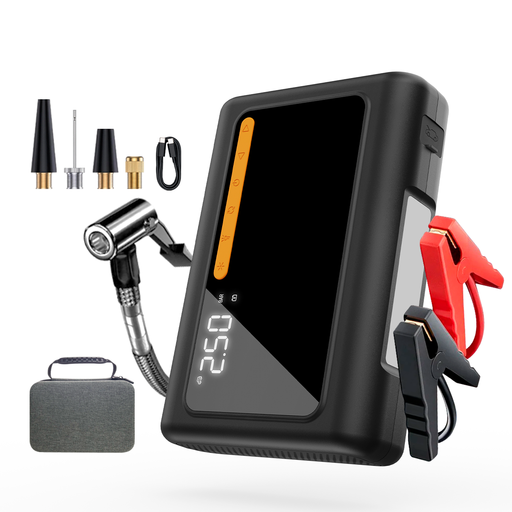
Why This Fits Their Persona: For the family driver or daily commuter who wants a single device to handle the most common roadside emergencies. This combines the jump starter with a powerful tyre inflator, making it a complete, practical emergency tool for the car boot.
Its sodium-ion battery directly counters the maintenance and weather traps. It holds a charge for years and operates safely in the heat and cold, so it's ready when you need it, not just when you remember to charge it.
The integrated 150 PSI air compressor is a standout feature. It also functions as a PD60W fast-charging power bank for your devices.
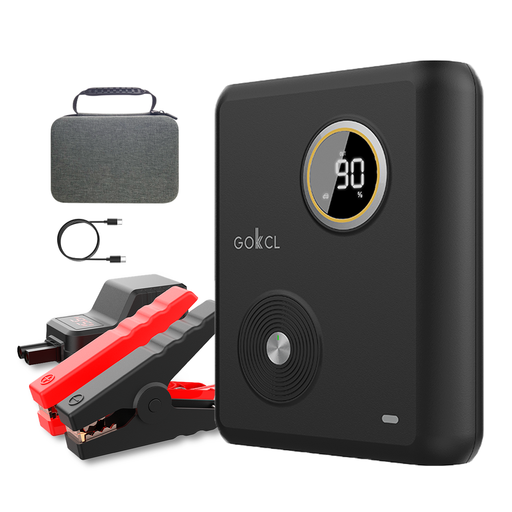
Why This Fits Their Persona: Ideal for owners of larger vehicles like SUVs, vans or even a heavy duty jump starter for trucks (up to 8L engines). The larger battery capacity and robust build are suited for those who rely on their vehicle for work or extensive travel and cannot afford downtime.
It sidesteps the "peak amps" hype by delivering a solid 600A starting current from a large-capacity, stable sodium-ion battery. Its 6,000-cycle life means it's a long-term investment, not a disposable gadget.
The 27500mAh capacity provides more jump starts per charge and longer power bank usage. It features multiple outputs, including a 15V/10A DC port for powering other 12V accessories.
We have compiled a complete, real-time list of products that fully satisfy these strict selection criteria and UK safety regulations.
1. Can I leave a sodium-ion jump starter in my car all year in the UK? Yes. This is one of their main advantages. With an operating temperature range that typically spans from -40°C to 80°C, they are designed to be safely stored in a vehicle through both the freezing cold of winter and the high temperatures of a car interior on a sunny day.
2. How is a sodium-ion jump starter different from a lithium one for everyday ownership? The key difference is maintenance. A sodium-ion unit requires virtually no attention. Its ultra-low self-discharge rate means you can charge it once and store it for years, confident it will have power when needed. A lithium unit, by contrast, typically requires recharging every 2-3 months to remain effective and avoid battery damage.
3. Do I need to charge a sodium-ion jump starter before its first use? It is always good practice to fully charge any new electronic device upon receiving it. While it will likely arrive with a partial charge, topping it up to 100% ensures it is calibrated and ready for long-term storage and maximum performance when you first need it. A full charge with a compatible PD60W charger can take as little as one hour.