
24/7 Customer Support

Free returns

Same-day & Next-day Delivery

Quality Guaranteed

Unlock Your Welcome Offers: FREE Delivery | Up to 80% OFF | Free 30-day JoyPlus trial
Download the APP
There are few things more frustrating for a UK driver than turning the key on a frosty morning only to be met with silence. A flat battery can derail your entire day. For years, portable lithium-ion jump starters have been the go-to solution, but many vehicle owners are discovering their limitations the hard way. If you've ever found your emergency booster dead when you needed it most, or worried about leaving it in a hot car, you're not alone.
As a Joybuy Product Recommendation Officer, my role is to help you navigate the market and find practical solutions that deliver on their promises. Today, we're looking at the common issues with traditional car boosters and exploring why the emergence of the sodium ion car jump starter is a significant development for UK drivers seeking true peace of mind.
Before you invest in another car emergency kit, it's crucial to understand the three most common pitfalls that lead to disappointment and wasted money.
To avoid these issues, focus on the underlying technology. Here are the core parameters that separate a dependable, long-term tool from a short-lived gadget.
The single most important factor is the battery chemistry. This dictates how long the device will hold its charge when stored. While lithium-ion has been the standard, sodium-ion technology presents a compelling alternative. Sodium-ion batteries have an exceptionally low self-discharge rate, often around 1% per month. This means a single full charge can keep the device ready for years, not months, making it a genuine long standby battery booster. It’s a 'set-and-forget' solution that’s ready when you are.
Your emergency kit must function when you need it most, which in the UK often means in poor weather. Look for a device with a wide certified operating temperature range. An all-weather car jump starter should perform reliably from well below freezing to the highest summer temperatures. Sodium-ion technology, for instance, is known for its stability across a broad temperature spectrum (e.g., -40°C to 80°C), making it a safe and effective component for any car emergency kit for cold weather. This thermal stability also mitigates the safety risks associated with storing the device in your vehicle year-round.
Modern jump starters are more than just battery boosters. Many integrate useful tools, but it's important to assess their quality. A jump starter with air compressor can be incredibly useful, but check the maximum pressure (PSI) to ensure it's a capable 12v tyre inflator for your vehicle's tyres. Furthermore, look for its capabilities as a power bank. A model with a PD60W power bank function uses Power Delivery technology to fast-charge compatible devices like laptops and modern smartphones, turning your emergency tool into a versatile power source for travel and daily use.
Based on these practical criteria, here are a few options tailored to different types of UK drivers.
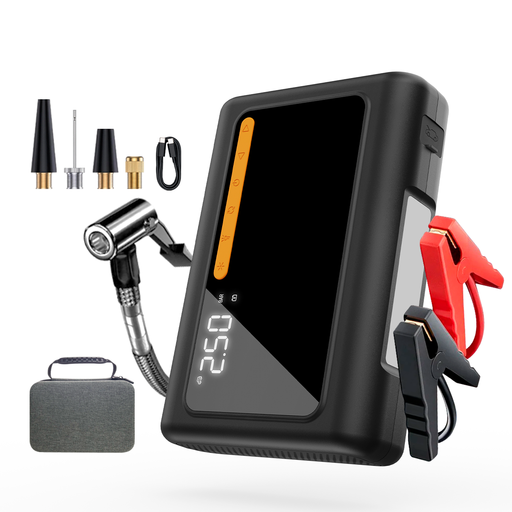
Why This Fits Their Persona: Ideal for the driver who values reliability above all. They want an emergency tool they can store in the car for years without worrying about maintenance or whether it will work in a January cold snap.
The sodium-ion battery directly counters the self-discharge and temperature traps. Its ultra-low discharge rate means it stays ready for years, and its wide operating temperature range ensures it works in extreme UK weather.
Long Standby & Lifespan: One charge can provide years of standby readiness, and the battery is rated for a significantly higher number of charge cycles than lithium. All-Weather Safety: Stable from -40°C to 80°C.
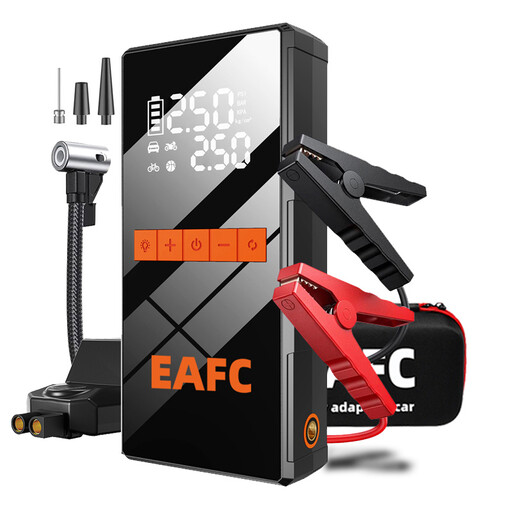
Why This Fits Their Persona: Perfect for the practical driver who loves multi-functional tools for road trips, camping or just saving space in the garage. This device combines several essential car accessories into one compact unit.
While it uses a lithium battery and requires more frequent charging, it avoids the trap of needing to buy, store and carry multiple separate devices. Its value is in its convenient, all-in-one design.
4-in-1 Functionality: Acts as a jump starter, 150 PSI air compressor, power bank and LED torch. Compact & Portable: Small enough to be stored conveniently in a glove box or boot organiser.
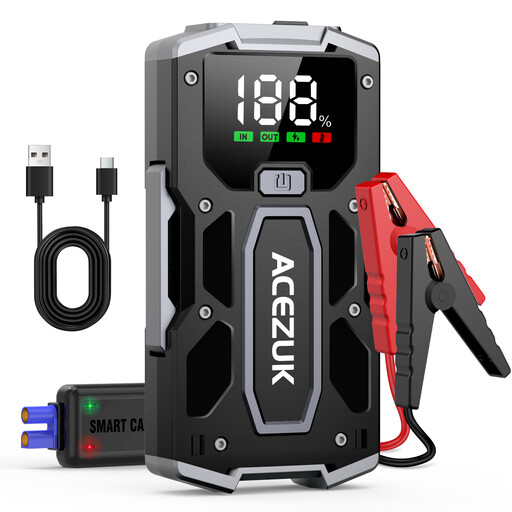
Why This Fits Their Persona: This is for the owner of a large SUV, van or truck with a high-displacement petrol or diesel engine. They need a booster with enough cranking power to handle demanding starts, where standard models might fail.
It directly addresses the pitfall of underpowered boosters. By providing a higher peak current, it ensures you have the necessary power for larger engines, avoiding the frustration of a failed jump start.
High Power Output: Engineered for larger engines (up to 7.0L petrol/5.5L diesel). Smart Display: The LCD screen provides clear status information, including remaining battery and warnings, so you're never caught out.
While a reliable jump starter is the heart of your emergency kit, ensuring your vehicle is visible in all conditions is just as critical. For those with larger vehicles or who drive in poor visibility, upgrading your lighting can be a key safety measure.
We have compiled a complete, real-time list of products that fully satisfy these strict selection criteria and UK safety regulations.
1. How is a sodium-ion jump starter different from a lithium one? The main differences are in chemistry, leading to practical benefits. Sodium-ion batteries typically offer a much longer standby time (years vs. months), a wider and safer operating temperature range and a significantly longer overall lifespan with more charge cycles compared to most consumer-grade lithium-ion models.
2. Can I leave a sodium-ion jump starter in my car all year round in the UK? Yes, this is one of their key advantages. Due to their chemical stability, sodium-ion batteries are designed to be safely stored in a vehicle across a wide temperature range, from freezing winter nights to hot summer days, without the performance degradation or safety concerns associated with some lithium batteries.
3. How long does a sodium-ion jump starter hold its charge? A standout feature is its extremely low self-discharge rate. While you should always check the manufacturer's specifications, it is common for a sodium-ion jump starter to retain most of its charge for several years while in storage, making it an exceptionally low-maintenance and reliable emergency tool.