
24/7 Customer Support

Free returns

Same-day & Next-day Delivery

Quality Guaranteed

Unlock Your Welcome Offers: FREE Delivery | Up to 80% OFF | Free 30-day JoyPlus trial
Download the APP
A digital thermometer can make temperature checks quicker and easier, but choosing the right model involves more than comparing the lowest price. Families may need a forehead thermometer for a sleeping baby, an ear thermometer for quick checks, or a simple medical thermometer for a medicine cabinet. Some models also measure milk, food, bath water or room temperature.
The main risk is buying a device whose features do not match your routine. Before ordering, check how it measures temperature, whether it has useful alerts and whether its instructions are clear enough for consistent readings.
A one-second display is convenient, but speed alone does not guarantee a suitable result. Non-contact infrared thermometers can be affected by positioning, distance, room temperature, sweat, hair or movement. Look for clear distance guidance and follow the manufacturer’s instructions each time.
A traditional pen-style thermometer usually takes longer and requires contact, but it can be a straightforward option for households that do not need an instant forehead scan.
Some forehead and ear thermometers are designed primarily for body temperature. If you want a food and milk thermometer or need to check bath water, choose a model with a clearly specified object mode. Object readings should not be treated as body temperature, and a cooking thermometer should not automatically be used as a fever thermometer.
A CE mark or other regulatory information relates to conformity with applicable requirements; it does not remove the need to use the thermometer correctly. Check the packaging, instructions and seller information for the intended use, measurement range, battery type and cleaning guidance. Claims such as “medical grade” should be considered alongside the actual operating instructions rather than as a substitute for them.
For a thermometer for adults and children, choose controls that can be operated with one hand, a display that is easy to read and a body shape that is comfortable to hold.
A display resolution of 0.1°C allows small changes to be shown, but resolution is not the same as accuracy. Also check the stated operating environment, measurement range and any specified tolerance. Avoid comparing products solely by the number of decimal places.
For Celsius and Fahrenheit users, a Celsius and Fahrenheit thermometer with a simple unit switch can prevent mistakes, particularly when travelling or sharing the device between family members.
A fever alarm can draw attention to a higher reading, while a backlit screen helps in dim rooms. However, alert thresholds and colour indicators vary between models, so read the manual rather than assuming that a red screen gives a medical diagnosis.
A silent thermometer or mute mode is helpful when checking a sleeping child. Memory storage can also help you note temperature changes over time, although it should not replace professional medical advice when someone is unwell.
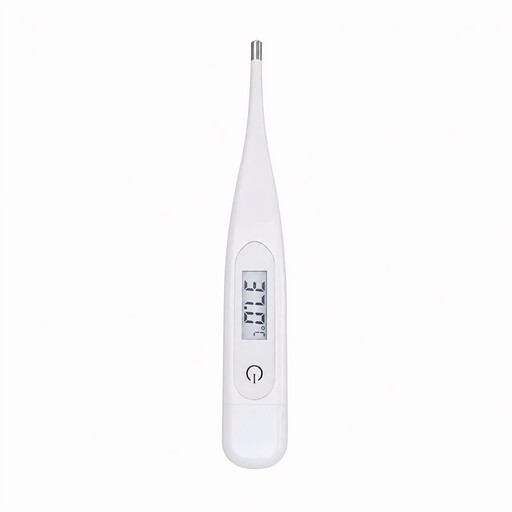
Why This Fits Their Persona: A compact pen-style choice for a home medicine cabinet, travel washbag or family that wants essential temperature monitoring without object-mode extras.
Its intended body-temperature use is clear, avoiding confusion with food or surface thermometers. It is also mercury-free.
0.1°C display resolution; switchable °C/°F; compact ABS pen-style body.
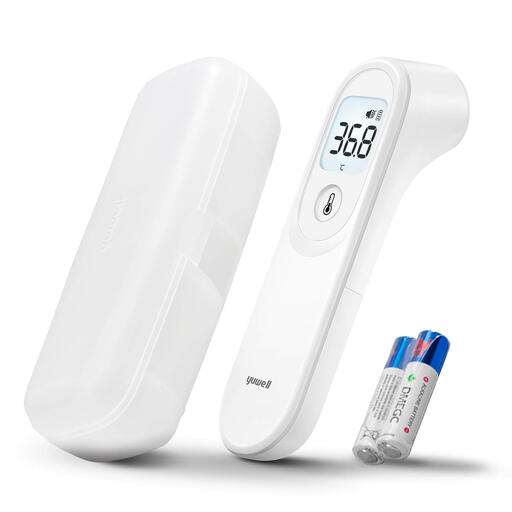
Why This Fits Their Persona: Designed for households prioritising quick, non-contact checks, a large display and quiet night-time operation.
A distance-detection sensor helps guide positioning, addressing a common source of inconsistent forehead readings.
One-second measurement; mute mode; backlit large display; supplied carrying case and two AAA batteries.
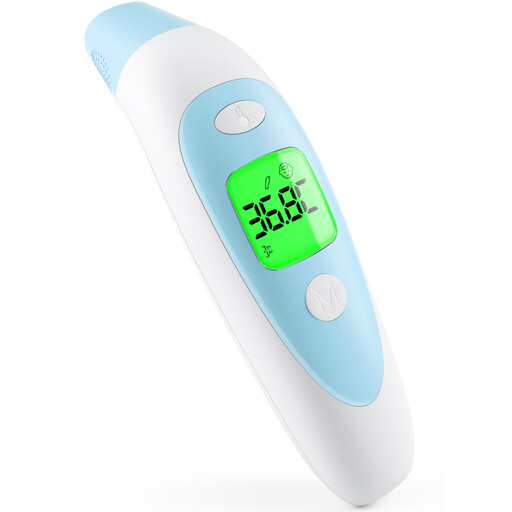
Why This Fits Their Persona: Suitable for families wanting forehead, ear and object modes in one device, including regular checks of milk, food or room temperature.
The separate modes make the intended use clearer than relying on a general-purpose infrared thermometer without mode selection.
Forehead, ear and object modes; 32-reading memory; fever alarm; silent mode; °C/°F switching.
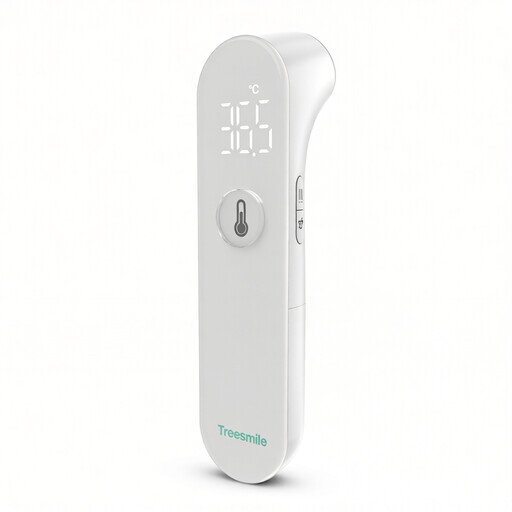
Why This Fits Their Persona: A portable option for travellers, nurseries and families that want body and object measurement with clear controls.
Its listed body and object modes are distinct, while the storage bag helps protect the device between uses.
One-second readings; 35-memory storage; mute function; °C/°F switch; two AAA batteries included.
We have compiled a complete, real-time list of products that fully satisfy these strict selection criteria and UK safety regulations.
There is no single lifespan for every model. Battery condition, cleaning, storage and frequency of use all matter. A thermometer should be replaced if its casing, display, probe or buttons are damaged, or if readings become inconsistent after following the instructions.
A non-contact thermometer can be convenient for a baby who is asleep or unsettled. Use the correct distance and forehead position, and remember that movement, sweat and room conditions can affect infrared readings. Follow the product instructions and seek medical advice when needed.
Mute mode is useful for night-time checks in a nursery or shared bedroom. It prevents beeps from disturbing sleep, but make sure the screen remains visible and that any vibration or visual fever alarm is easy for you to notice.