
24/7 Customer Support

Free returns

Same-day & Next-day Delivery

Quality Guaranteed

Unlock Your Welcome Offers: FREE Delivery | Up to 80% OFF | Free 30-day JoyPlus trial
Download the APP
Choosing an ECE 22.06 motorcycle helmet is more involved than selecting a colour or comparing a discount. UK riders need a helmet that fits correctly, carries the appropriate approval marking and suits the way they ride. A commuter travelling through town may value a built-in sun visor, while a touring rider may prioritise washable padding and space for an intercom.
The product listing should also be read carefully. Marketing language can make a helmet appear more suitable than it is for your particular head shape, riding style or daily routine.
A listing may state “ECE approved”, but buyers should still check the helmet’s approval marking and documentation when the product arrives. ECE R22.06 is the newer motorcycle helmet approval standard, with updated test requirements compared with older R22.05 approval. Certification does not remove the need to choose the correct size, fasten the chin strap properly or inspect the helmet before use.
A motorcycle helmet with sun visor can be convenient when moving between bright and shaded roads. However, an integrated visor is not a substitute for checking the product’s optical clarity, operating mechanism and compatibility with your preferred eyewear. Make sure the visor moves smoothly and does not obstruct your view when fully raised or lowered.
Helmet sizing is not the same as buying a cap or beanie. Measuring around the widest part of your head is essential, but the shape of the helmet also matters. The MY 935 and MY 936 listings specify an oval shape, so riders with a noticeably round or narrow head profile should pay close attention to pressure points.
A helmet that feels loose may move during a ride. One that is excessively tight can become uncomfortable on longer journeys and encourage poor fastening habits.
Look for ECE 22.06 or ECE R22.06 in the product details, then verify the approval label on the helmet. This is particularly important when comparing an ECE-approved helmet with an unverified model that only uses general phrases such as “safety helmet” or “impact-resistant”.
Approval is one part of the selection process, not a guarantee that every helmet will suit every rider. Check the manufacturer, model number, size range and included instructions before use.
A full-face motorcycle helmet covers the head, sides and chin area in one fixed configuration. It is commonly considered by riders who want continuous coverage and a streamlined design for commuting, touring or leisure riding.
A modular flip-up motorcycle helmet has a movable chin section. This can be practical for riders who stop frequently, use an intercom or want easier access when stationary. Before riding, check the manufacturer’s instructions for the approved position of the chin section. Do not assume that every flip-up helmet is designed to be ridden with the front raised.
The MY 935 and MY 936 models use an ABS shell with a high-density EPS liner. These are objective construction details, but they should not be confused with a personal guarantee of performance in a collision.
Interior comfort also affects regular use. A motorcycle helmet with washable lining is easier to freshen after warm-weather commuting or touring. Removable padding can also make inspection and cleaning more practical. Avoid harsh solvents and follow the care instructions supplied with the helmet.
Measure your head in centimetres and compare it with the seller’s chart. The MY 936 range covers approximately 54–55 cm in XS through 61–62 cm in XXL. The MY 935 range runs from approximately 53–54 cm in XS through 63–64 cm in XXL.
A size XXL motorcycle helmet is not automatically suitable for every larger-headed rider. The internal shape, cheek-pad pressure and crown fit still need to be considered. The listed models use a buckle closure; fasten it securely each time and check that it does not sit loosely beneath the chin.
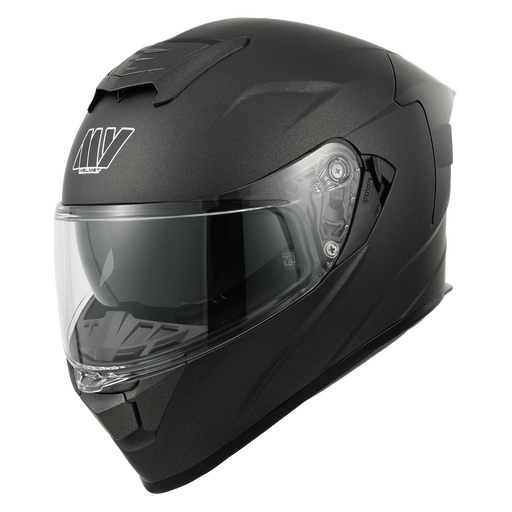
Why This Fits Their Persona: A straightforward option for adult commuters and newer riders who want a fixed full-face design with an integrated inner sun visor.
The listing identifies ECE R22.06 approval, an ABS shell, EPS liner and a defined XL measurement range rather than relying only on broad safety wording.
Fixed full-face format, integrated sun visor, removable washable inner lining and sizes from XS to XXL.
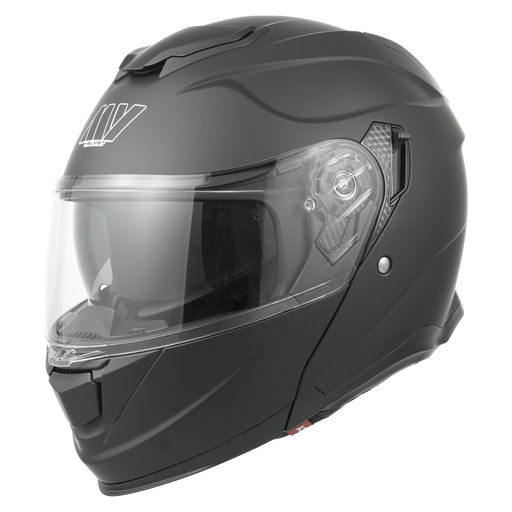
Why This Fits Their Persona: Suits touring riders and regular users who value a flip-up mechanism, dual-visor arrangement and a larger listed size range.
Its listing clearly separates the modular design from a fixed full-face helmet and provides measurements up to 63–64 cm for XXL.
ECE 22.06 specification, ABS shell, EPS liner, dual visor and a reserved Bluetooth headset slot under the chin pads.
Why This Fits Their Persona: A practical match for frequent riders who want washable interior padding and a fixed format for everyday road use.
The removable lining addresses a common maintenance issue, while the M size is listed for approximately 57–58 cm rather than using a generic one-size label.
Integrated inner sun visor, removable washable lining, ABS construction and buckle fastening.
We have compiled a complete, real-time list of products that fully satisfy these strict selection criteria and UK safety regulations.
An ECE 22.06 helmet is designed around the ECE R22.06 approval standard. Before riding, check that the helmet carries the correct approval marking and meets current UK motorcycle helmet requirements. The approval label should correspond with the product documentation and model.
They can suit commuters who value easier access at stops or want room for a communication system. However, riders should follow the instructions for when the chin section may be raised. Check the helmet’s weight, fit and visor operation before committing to long journeys.
There is no single replacement date that applies to every helmet. Service life depends on usage, storage, impacts, exposure and the condition of the shell, EPS liner, visor and straps. Inspect it regularly and replace it after an impact or when the interior becomes loose, damaged or difficult to secure.