
24/7 全天候客户支持

免费退货

当日/次日达

品质保障

开启新人专享福利: 全场免邮 | 低至 2 折 | 免费试用 30 天 JoyPlus 会员
下载 Joybuy
Navigating the varied and often unpredictable terrain of the British Isles requires a bicycle that can handle more than just smooth tarmac. If you've found yourself wishing for a bike that can confidently tackle muddy trails, sandy beaches and even snowy paths, a fat tyre mountain bike might be the solution you're looking for.
These versatile machines, also known as a fat bike or all terrain bike, are designed for stability and traction where standard bikes falter. This guide is designed to cut through the clutter and provide clear, practical advice to help you choose a durable and capable bike for your recreational adventures, whether for yourself or your family.
Making the right choice doesn't have to be complicated. Focusing on a few key features will ensure you get a bike that meets your needs for performance and safety.
The defining feature of a fat bike is its oversized tyres, typically 4.0 inches wide. This large contact patch provides exceptional grip and allows the bike to "float" over soft surfaces like sand and snow, making it a true sand bike and snow bike. When choosing, consider the wheel size:
British terrain is rarely flat. A reliable gear system is essential for tackling hills efficiently. A 7 speed mountain bike setup, often featuring components from established brands like Shimano, provides a good range for most recreational riding without being overly complex.
Equally important is the braking system. A bike with disc brakes, specifically dual mechanical disc brakes, offers consistent and powerful stopping power. Unlike traditional rim brakes, their performance is less affected by water, mud or snow, which is a significant safety advantage for all-weather, all-terrain cycling.
The frame is the backbone of your bike. For an entry-to-mid-range off-road bike, a Hi-ten steel frame is a popular and practical choice. It is known for its strength and ability to absorb vibrations from bumpy ground, contributing to a more comfortable ride. While heavier than aluminium or carbon fibre, its durability makes it well-suited for the demands of off-road use.
Based on their features, versatility and overall value, here are our recommendations for those seeking a capable fat tyre bike.
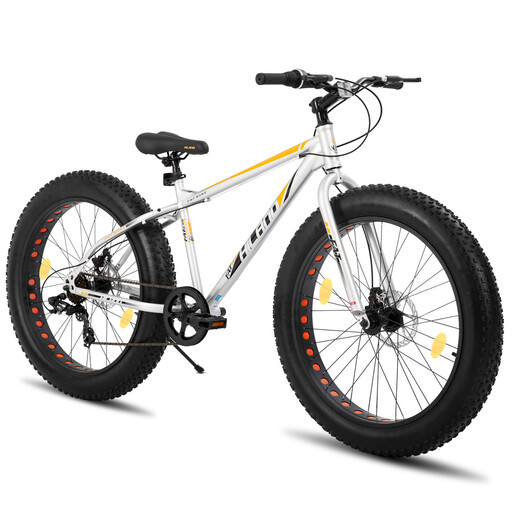
Why It Stands Out: This model is a well-rounded option for adults. It combines a durable Hi-ten steel frame with the core components needed for genuine all-terrain performance. The full-size 26-inch wheels and 4.0-inch tyres are ready to take on challenging surfaces straight away.
Pros:
Who is it for? Adults and taller teenagers looking for a single, robust bike for year-round recreational riding on trails, beaches and country paths.
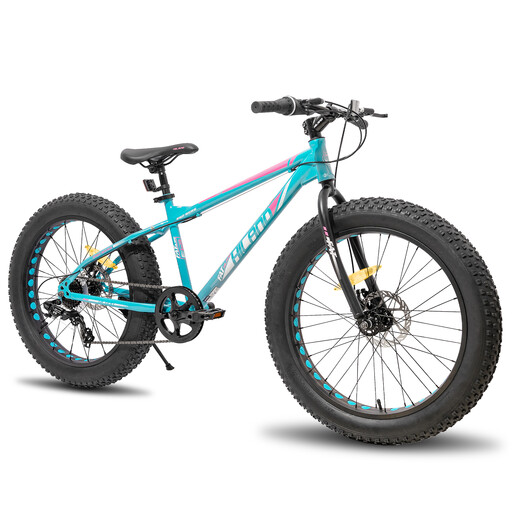
Why It Stands Out: This HILAND fat bike brings all the advantages of the adult version to a younger audience. The 20-inch frame and wheels are properly proportioned for children, while the wide tyres offer a huge boost in stability and confidence for riders who are still developing their skills.
Pros:
Who is it for? Children and pre-teens ready to move beyond the pavement and join the family on more adventurous rides across parks, forests and beaches.
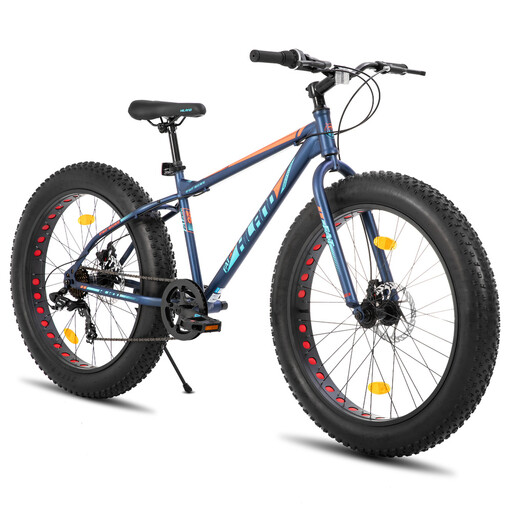
Why It Stands Out: This model perfectly bridges the gap between the kids' and adult sizes. The 24-inch wheel size is ideal for growing teenagers or shorter adults, providing a comfortable fit and confident control without compromising on the bike's all-terrain capabilities.
Pros:
Who is it for? Teenagers and shorter adults who need a capable off-road bike that fits them correctly, allowing them to tackle varied terrain with confidence.
These recommendations represent a great starting point for all-terrain cycling. If you're interested in exploring different sizes, colours or specifications, you can browse our full collection to find the perfect fit for your adventures.
Explore Our Complete Fat Tyre Bike Collection
On soft surfaces like sand or snow, fat tyre bikes are often easier to pedal because their wide tyres prevent them from sinking in. On smooth tarmac, they have more rolling resistance than a road bike, but a good 7-speed gear system helps manage the effort, making them highly versatile for mixed-terrain rides.
Absolutely. A fat bike is perfectly capable of being ridden on roads and pavements. While it won't be as fast as a dedicated road bike, its major advantage is the ability to transition seamlessly from the road to a trail, park or beach without missing a beat.
The primary advantage is exceptional traction and stability. This allows you to ride confidently in conditions where standard bikes would struggle, such as deep mud, loose gravel, sand and snow. It effectively expands the types of terrain you can explore and can extend your cycling season into the winter months.