
24/7 Customer Support

Free returns

Same-day & Next-day Delivery

Quality Guaranteed

Unlock Your Welcome Offers: FREE Delivery | Up to 80% OFF | Free 30-day JoyPlus trial
Download the APP
A fitness trampoline, or rebounder, can be a fantastic addition to your home fitness routine, offering a low-impact cardio workout that’s both effective and fun. However, the market is flooded with options, and it's easy to fall for marketing hype that leads to a disappointing purchase. As a Joybuy Product Recommendation Officer, my role is to help you see past the sales pitch and focus on what truly matters. Before you buy, let's look at the common pitfalls that many UK shoppers encounter.
To ensure you get a product that lasts, focus on these core technical specifications.
The mechanism that provides the bounce is crucial. This is typically either steel springs or elastic bands (bungees).
The foundation of any good mini trampoline is its frame. Look for models made from heavy-duty steel with a powder-coated finish to resist corrosion. Pay close attention to the maximum user weight. For long-term durability, it's wise to choose a model where your weight is comfortably below the maximum limit, especially if you plan on vigorous daily workouts. For an indoor trampoline for adults, stable, non-slip rubber feet are essential to protect your floors and prevent the unit from shifting during use.
Beyond the basics, certain features can significantly improve safety and usability.
Based on these practical criteria, here are a few options from our catalogue, matched to different user needs.
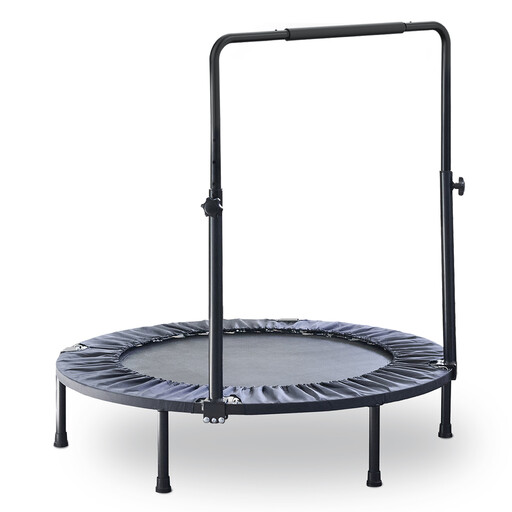
Why This Fits Their Persona: This model is ideal for those in flats or smaller homes who are starting their rebounding journey. The foldable design is practical for storage, and the adjustable handle provides crucial stability and confidence for beginners. The 70kg weight limit is suitable for lighter users.
It directly counters the "impractical fold" pitfall with a simple fold-and-store design. The clear 70kg weight limit avoids ambiguity, and the integrated foam pad over the springs adds a layer of safety.
The pre-assembled core components reduce setup time, and the adjustable handle accommodates different user heights for improved safety.
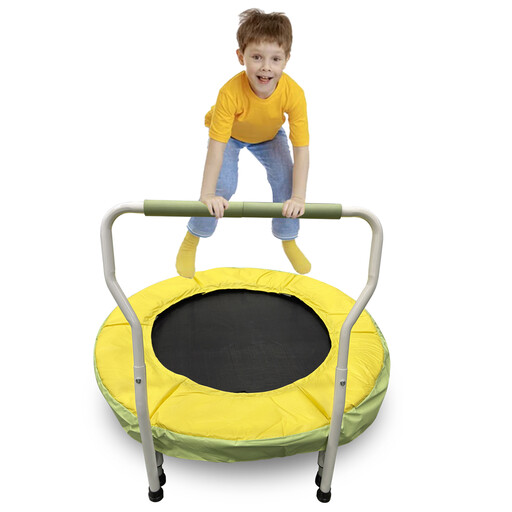
Why This Fits Their Persona: This is built from the ground up for young children. The 36-inch size is manageable, the foam-covered handle is easy for small hands to grip, and the 25kg weight limit is appropriate for toddlers and young kids, making it a great way to burn off energy indoors.
Its standout feature is the full-coverage spring safety pad. This completely covers the springs, eliminating the risk of feet slipping through—a major safety concern and a common flaw in budget kids' trampolines.
The combination of an adjustable handle and comprehensive spring cover provides an enhanced level of safety for unsupervised (but monitored) play.
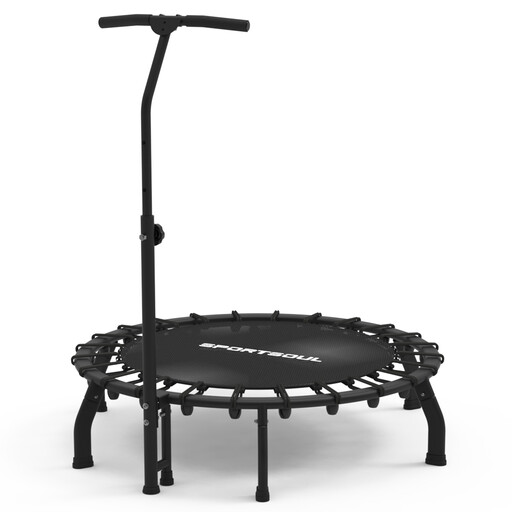
Why This Fits Their Persona: For those committed to a regular rebounding routine, this model offers durability and performance. The high 120kg maximum user weight and robust steel frame can handle intense, frequent workouts. The 42-inch diameter provides ample space for a variety of exercises.
It tackles the "silent squeak" pitfall by using an elastic rope system instead of steel springs, offering a quieter workout. It also avoids the "sagging mat" issue with a high-quality polypropylene mat and a frame built to support its high weight capacity.
The elastic band system provides a smooth, low-impact bounce ideal for protecting joints during high-intensity cardio. The pre-assembled mat and ropes simplify the setup process.
We have compiled a complete, real-time list of products that fully satisfy these strict selection criteria and UK safety regulations.
For a typical 40-inch (102 cm) mini trampoline, you should have a clear, flat area of at least 2x2 metres. Crucially, ensure you have adequate overhead clearance—at least enough to stand with your arms fully extended above your head without touching the ceiling. Always place it away from furniture, walls and other hazards.
Neither is definitively "better"; they just offer different experiences.
Regular, simple maintenance can significantly extend its life. Before each use, give it a quick visual inspection to check that all legs are secure and that the mat and springs/bands show no signs of fraying or damage. Wipe the mat and frame with a damp cloth and mild soap as needed, and ensure it is completely dry before storing. Storing it indoors, away from damp conditions, will prevent rust and material degradation.