Movement-focused players
If counter-strafes, peeks and changes of direction are central to your play, adjustable actuation and Rapid Trigger give you settings to consider. You will need to tune them rather than assume the defaults suit you.


Choose adjustable actuation and Rapid Trigger if quick movement-key releases and directional reversals are central to your tactical games and you are willing to tune the settings. Choose the physical layout by balancing mouse space against access to your usual binds; check the exact key arrangement before ordering, and avoid assuming the shallowest actuation setting will suit both play and typing.
If counter-strafes, peeks and changes of direction are central to your play, adjustable actuation and Rapid Trigger give you settings to consider. You will need to tune them rather than assume the defaults suit you.
If you use broad mouse movements, a compact keyboard may free desk space. Check whether its dedicated keys and function layers still accommodate your usual game binds.
If the same keyboard handles games and everyday typing, consider key sensitivity, physical layout and how readily you can reach non-game keys.
For a tactical-game keyboard, decide which compromise would affect you most: movement-key tuning, access to binds, control during typing or the physical setup.
| Concern | What to check | Who this matters to |
|---|---|---|
| Movement-key response | Check Rapid Trigger on the exact model and whether actuation can be adjusted. | If quick releases and repeated direction changes decide how I play, I want movement-key settings I can tune; roughly 33% of consumers put this need first. |
| Keys and mouse space | Compare physical width with dedicated arrow and navigation keys or their function-layer access. | When I need room for wide mouse movements, I still want my usual binds within easy reach; around 27% of consumers prioritise that balance. |
| Sensitivity for mixed use | Check the actuation range and whether separate settings can be saved. | If I also type on the keyboard, an overly sensitive setting could make ordinary key presses less deliberate; roughly 27% of consumers put controllable sensitivity first. |
| Physical setup | Confirm the selected variant’s UK ISO or ANSI arrangement and any keycap setup required. | I want the key arrangement I expect and a setup I am comfortable completing; around 13% of consumers make physical layout and setup their primary concern. |
Sensitive settings can make unintended inputs more likely. For its K70 PRO TKL, Corsair warns that settings outside its recommended 0.3–3.6 mm range may increase sensitivity and affect consistency.
Begin at a moderate setting, try movement stops and normal typing, then adjust gradually. Use separate settings for gaming and typing if the model offers them.
A smaller layout can move familiar commands to a function layer, while UK ISO and US layouts have different physical arrangements. A UK-facing listing does not by itself establish the selected keyboard’s layout.
Inspect the exact variant, key diagram and layer map against the binds you use. If readily accessible extra keys matter, consider a layout that retains them.
Manufacturer descriptions of Rapid Trigger, polling and response apply to particular models and configurations; they do not establish how much a keyboard will change an individual player’s results.
Compare the exact model’s controls, switch type and layout, then decide whether its available adjustments address your movement and everyday-use needs.
The Wooting 80HE is an 80% analogue Hall Effect option for players interested in adjustable movement-key behaviour.
The Huntsman V3 Pro Tenkeyless is an analogue-optical TKL option with configurable actuation.
The PRO X TKL RAPID offers a TKL layout for players seeking configurable movement inputs without moving to a 60% board.
The K70 PRO TKL is a Hall Effect TKL option with per-key actuation adjustment.
These compact keyboards are choices to examine if adjustable movement inputs and desk space matter to you. Compare each one’s stated layout with the keys you need for tactical games and everyday use.
 No image available
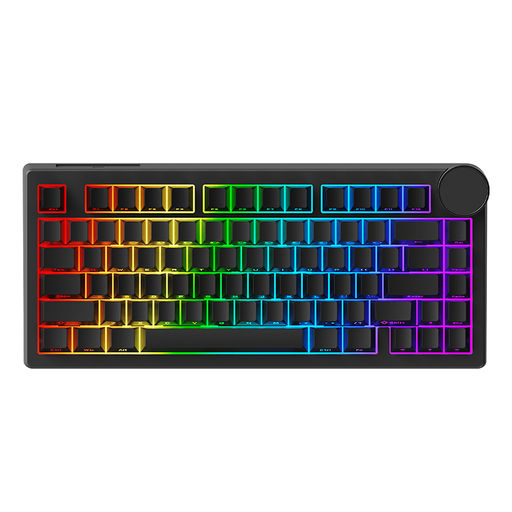
Consider this analogue gaming keyboard if you want a compact option identified as a UK-layout variant. Check the pictured physical key arrangement against your usual binds.
 No image available
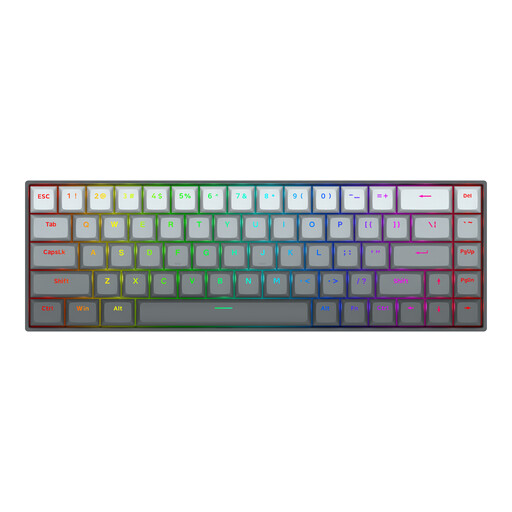
Consider the 75% format if you want a compact board without choosing a 60% layout. Confirm the selected physical key arrangement and legends before ordering.
 No image available
This compact magnetic-switch model lists Rapid Trigger and 8,000 Hz polling. Its stated US layout may not suit UK typing habits; check how to access your arrow, navigation and game-bind keys.
 No image available
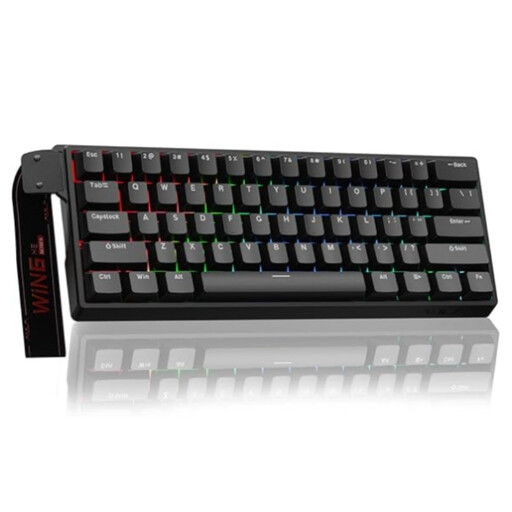
Consider this wired 60% option if a small footprint takes priority and you are comfortable checking how to access additional keys. Its listing describes adjustable actuation and Rapid Trigger; confirm that the selected key arrangement and adjustment controls suit you.
No. It is a feature to consider if quick movement-key releases and repeated directional inputs are important to how you play, and you are willing to tune it. Wooting, Razer, Logitech G and Corsair describe it on specific models, but those manufacturer descriptions do not establish an improvement in every player’s results.
Yes, if the UK physical key arrangement matters to you. Check the exact variant rather than relying on the shop’s location. Wooting’s 80HE quick-start guide lists a United Kingdom ISO keycap-language option and says ISO or JIS versions arrive without keycaps pre-installed.
Check the cancellation terms that apply to your online purchase and the seller’s return process before ordering. For purchases covered by UK distance-selling rules, GOV.UK describes a cancellation period after receipt and a further period for returning the item; remedies for faulty, damaged or misdescribed goods are separate from a change-of-mind return.
Check which product requirements apply rather than treating a marking alone as proof of suitability. GOV.UK guidance recognises CE marking alongside UKCA marking in relevant cases for products placed on the market in England, Scotland and Wales; the process for Northern Ireland differs.