City builders using a USB-C laptop
You want fewer connections at the desk. A single-cable setup depends on your laptop supporting video over USB-C and the monitor supplying enough power for that laptop; the monitor itself still uses a plug socket.


If you play city-building games on a compatible USB-C laptop, a monitor with USB-C video input and sufficient Power Delivery may let one cable carry video and charging, freeing the socket otherwise used by the laptop charger. The monitor still needs mains power. For a desktop PC, prioritise a screen size and resolution that suit your maps, menus and graphics hardware; a very high refresh rate matters more if you also play faster-paced games.
You want fewer connections at the desk. A single-cable setup depends on your laptop supporting video over USB-C and the monitor supplying enough power for that laptop; the monitor itself still uses a plug socket.
Your PC needs its own power connection, so monitor-based laptop charging will not solve the socket shortage. Screen dimensions, resolution and desk fit become the more useful selection checks for maps and dense menus.
You mainly build cities but also play faster-moving games. Once the screen and connections suit your main setup, check whether the refresh rate and adaptive-sync options match what your gaming system can deliver.
Start with the device you play on and the sockets it needs. Then choose the screen space you want for city-building interfaces before deciding how much refresh-rate capability you will use.
| Concern | What to check | Who this matters to |
|---|---|---|
| Laptop connections | Confirm USB-C video input, Power Delivery wattage and the laptop’s video and charging requirements. Check that the cable supports the intended connection. | If I have few free sockets, I want the monitor connection to replace a separate laptop charging connection without losing video output. Around 46% of consumers put that single-cable need first. |
| Map and menu space | Compare native resolution and screen dimensions with your desk space and graphics hardware; consider whether the stand offers the placement you need. | When city maps and management panels fill the screen, I care most about having room to read and arrange them comfortably. Around 36% of consumers prioritise visual workspace. |
| Motion in other games | Check the refresh rate for your intended connection and whether your system can sustain the resolution and frame rates you want. | If I switch regularly from city builders to faster games, I want motion performance to influence my choice. Roughly 18% of consumers make that their primary concern. |
USB-C ports have different roles. BenQ UK lists DisplayPort Alt Mode and 65 W Power Delivery for the EX271Q, while Dell UK describes a downstream USB-C charging port rated at up to 15 W on an Alienware model. Those descriptions do not establish the same laptop connection.
Check the exact monitor’s USB-C video-input specification and power output against your laptop’s capabilities and charging requirement.
If the connection cannot do both jobs, a separate laptop charger or another compatible connection may still be needed.
The single-cable charging route concerns a compatible laptop. A desktop PC and its monitor remain separately mains-powered devices.
Count both devices when planning your sockets; assess the monitor’s USB-C features separately from the desktop’s power needs.
MSI UK specifies 4K and 240 Hz for the MPG 272URX, but that specification alone does not show that city-building play needs 240 Hz or that your system can reach it at your chosen settings.
Set your screen-size, resolution and connection requirements first. Give high refresh rate more weight if faster games are a regular part of your library.
The EX271Q is a model to examine for a compatible USB-C laptop setup. BenQ UK specifies a 27-inch, 2560 × 1440 display and a USB-C connection with DisplayPort Alt Mode, data and 65 W Power Delivery.
MSI UK specifies the MPG 272URX QD-OLED as a 26.5-inch 4K monitor with a 240 Hz refresh rate and USB-C DisplayPort Alt Mode.
Dell UK lists Alienware gaming-monitor options with high-refresh specifications. Port roles need particular attention when sockets are scarce.
These monitors cover a wide USB-C-equipped screen and several 4K or QHD gaming-display options. If freeing a laptop charger socket is your priority, confirm video input and adequate Power Delivery on the exact model before choosing it; screen specifications alone cannot establish a single-cable setup.
 No image available
Consider this 32:9 ultrawide format if you want space for a city map and its surrounding panels, and have room on your desk.
The title specifies Double Quad HD, a 240 Hz refresh rate and USB-C alongside HDMI and DisplayPort. Confirm the USB-C video and charging functions against your laptop before planning to use one cable; the monitor still needs mains power.
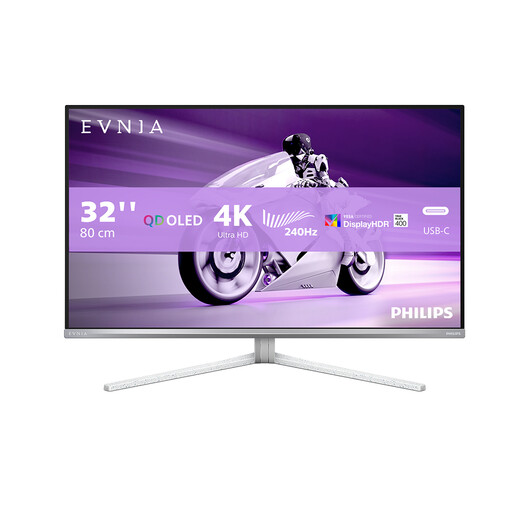 No image available
This 32-inch UHD option suits a setup where screen size and map detail take priority, provided the desk and graphics system suit it.
The title states a 240 Hz refresh rate. Before relying on laptop charging or video through the monitor, confirm the exact USB-C port functions and power output. For long sessions with static maps or menus, review the OLED care guidance.
 No image available
Consider this larger curved screen if you want a 3840 × 2160 display for maps and menus and can accommodate it on your desk.
The title lists 165 Hz and Type-C 65 W. Check whether Type-C accepts video from your laptop and whether 65 W meets its charging requirement. The monitor requires its own power connection.
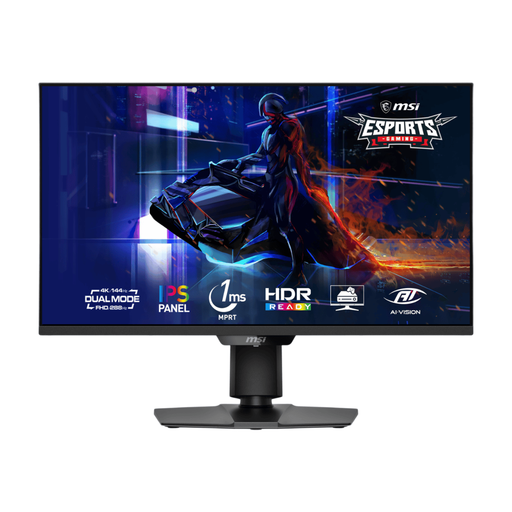 No image available
This is a conventional screen-connection choice if you want 4K detail for city building rather than making laptop charging the deciding feature.
The title specifies dual modes: UHD at 144 Hz and FHD at 288 Hz. Check which mode your gaming system can use satisfactorily, and confirm the port details if charging through the monitor matters to you.
 No image available
This 2560 × 1440 screen is an option for a conventional gaming setup where QHD resolution and mixed-genre play matter more than laptop charging through the monitor.
The title lists a 240 Hz refresh rate. Check that your connection and graphics system support the resolution and refresh rate you intend to use; confirm the exact ports if reducing laptop power connections is essential.
Yes, if the laptop supports the required USB-C video connection and the monitor supplies enough Power Delivery to replace its separate charger at the desk. BenQ UK specifies DisplayPort Alt Mode and 65 W Power Delivery for the EX271Q as one example of the functions to look for. The monitor still needs its own mains socket.
No. A USB-C port may have a different role or insufficient power output. Check for video input and the stated Power Delivery wattage on the exact model, then compare both with your laptop’s requirements.
Not necessarily. Choose resolution and screen size for the maps and interface you want to view, while checking what your graphics system can run at your preferred settings. A 240 Hz specification becomes more relevant if you also play faster-moving games and can make use of the higher refresh rate.
Arrange an appropriate electrical-waste recycling route rather than putting the monitor in general rubbish. If you are replacing it, ask the seller what take-back service applies to your purchase and check local collection options.